

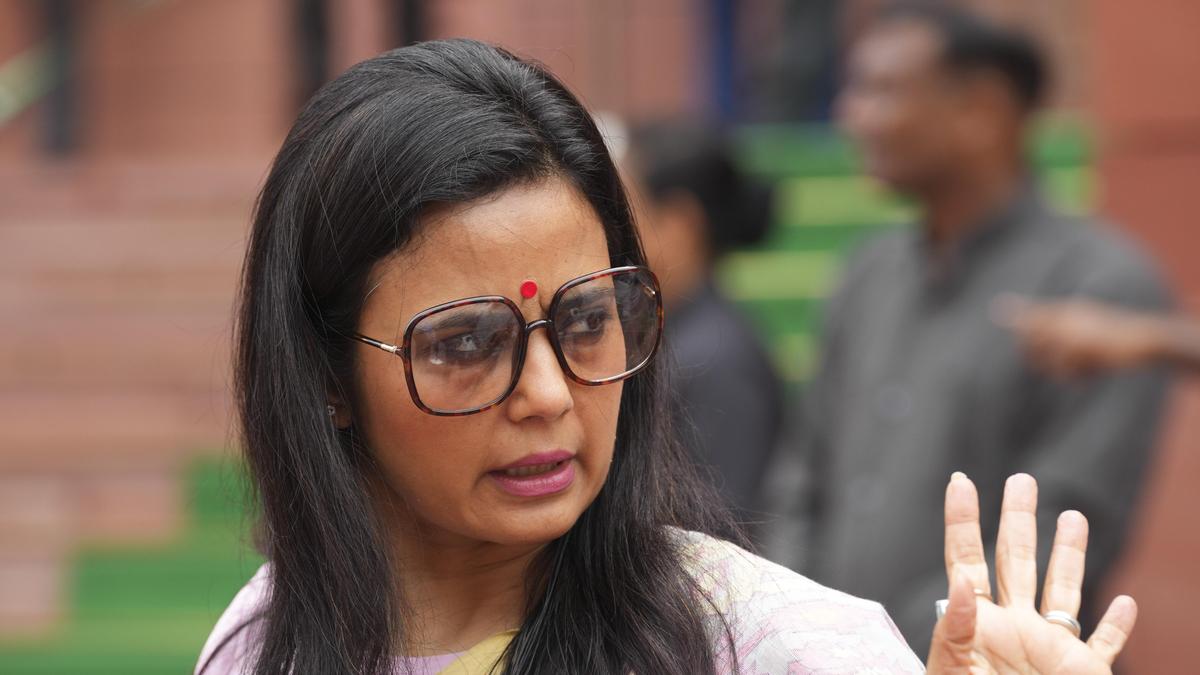
The Lokpal has extended the period by two months for deciding on the sanction to file a chargesheet against former MP Mahua Moitra.
GK and monthly revision
Cash-for-query: Lokpal gets more time to decide on sanction to file chargesheet against Mahua Moitra
The Lokpal has granted a two-month extension to decide on the sanction required to file a chargesheet against former MP Mahua Moitra in the 'Cash-for-query' case. This development highlights the ongoing legal process concerning allegations of corruption against a public figure and the role of India's anti-corruption ombudsman, the Lokpal, in ensuring accountability. It is significant for understanding the functioning of anti-corruption bodies and legal procedures in India.
Revision structure
Monthly events and exam calendar context
Static GK and one-liner notes
Quiz and mock-test revision path
Key points
Exam-ready takeaways
The case against Mahua Moitra is widely known as the 'Cash-for-query' alleged scam.
The decision was made by a Bench comprising Justices Anil Kshetarpal and Harish Vaidyanathan Shankar.
The Lokpal is an anti-corruption authority or ombudsman body established under the Lokpal and Lokayuktas Act, 2013.
This extension relates to the legal requirement of obtaining sanction for prosecution against public servants.
Detailed analysis
Full exam-oriented breakdown
The 'Cash-for-query' scandal, involving former Trinamool Congress MP Mahua Moitra, has brought India's anti-corruption mechanisms, particularly the Lokpal, under intense scrutiny. This recent development, where the Lokpal has granted a two-month extension to decide on the sanction for filing a chargesheet against Moitra, underscores the complex and often protracted nature of legal proceedings against public figures in India. **Background Context and What Happened:** The controversy erupted in October 2023 when BJP MP Nishikant Dubey accused Mahua Moitra of accepting cash and gifts from businessman Darshan Hiranandani in exchange for asking questions in Parliament targeted at the Adani Group. The allegations claimed that Moitra provided Hiranandani with her Parliament login credentials. Hiranandani later submitted an affidavit confirming these allegations. The matter was referred to Parliament's Ethics Committee, which, after an inquiry, recommended her expulsion. On December 8, 2023, Mahua Moitra was expelled from the Lok Sabha based on the Ethics Committee's report, citing 'unethical conduct' and 'contempt of the House'. Subsequently, the Central Bureau of Investigation (CBI) initiated a preliminary inquiry into the allegations, following a directive from the Lokpal. The CBI's findings would then require the Lokpal's sanction to proceed with a formal chargesheet under relevant sections of the Prevention of Corruption Act, 1988. The current news piece highlights that the Lokpal, specifically a Bench of Justices Anil Kshetarpal and Harish Vaidyanathan Shankar, has granted a final two-month extension to decide on this crucial sanction, emphasizing that no further extensions will be entertained. **Key Stakeholders Involved:** Several key players are central to this ongoing saga. **Mahua Moitra**, the former Member of Parliament, is the primary accused, facing allegations of corruption and breach of parliamentary ethics. The **Lokpal**, an independent anti-corruption ombudsman, plays a critical role as the sanctioning authority for prosecuting public servants, including MPs, under the Prevention of Corruption Act. Its decision is pivotal for the CBI to file a chargesheet. The **Central Bureau of Investigation (CBI)** is the premier investigative agency tasked with probing the allegations and gathering evidence. **Nishikant Dubey**, the BJP MP who initially brought the allegations, and **Darshan Hiranandani**, the businessman whose affidavit corroborated the claims, are also significant. Finally, the **Parliament of India**, specifically the Lok Sabha, through its Ethics Committee, already took action by expelling Moitra, demonstrating its role in upholding parliamentary conduct. **Significance for India and Historical Context:** This case holds immense significance for India's governance and anti-corruption framework. Firstly, it tests the efficacy and independence of the **Lokpal and Lokayuktas Act, 2013**. This Act, born out of a massive anti-corruption movement led by Anna Hazare in 2011, aimed to establish an independent body to investigate corruption charges against public functionaries, including the Prime Minister. The Lokpal became operational only in 2019, years after the Act was passed. This case is one of the high-profile instances where the Lokpal's powers and decision-making process are under public glare, demonstrating its role in ensuring accountability at the highest levels. Secondly, it underscores the importance of **parliamentary ethics and integrity**. The expulsion of an MP for 'cash-for-query' allegations sends a strong message about the expected standards of conduct for elected representatives. Such incidents erode public trust in democratic institutions and highlight the need for robust internal mechanisms within Parliament to address ethical breaches. The case also brings to the fore the challenges of investigating and prosecuting corruption involving public servants, often complicated by legal safeguards like the requirement of 'sanction for prosecution' under Section 19 of the Prevention of Corruption Act, 1988, or Section 197 of the CrPC for other offences. These provisions are designed to protect public servants from vexatious litigation but can also be perceived as hurdles in ensuring swift justice. **Future Implications:** The Lokpal's decision in the next two months will be crucial. If sanction is granted, the CBI will likely file a chargesheet, leading to a trial that could have significant legal and political ramifications for Mahua Moitra. It would set a precedent for future cases involving similar allegations against public functionaries. Conversely, if sanction is denied, it would raise questions about the sufficiency of evidence or the Lokpal's interpretation of the legal requirements. Regardless of the outcome, the case will continue to shape public discourse on corruption, parliamentary accountability, and the role of independent investigative and quasi-judicial bodies in India. It also highlights the persistent efforts required to strengthen India's anti-corruption architecture and foster greater transparency in governance. **Related Constitutional Articles, Acts, or Policies:** 1. **Lokpal and Lokayuktas Act, 2013:** This is the foundational law establishing the Lokpal and defining its powers, jurisdiction, and procedures for investigating corruption against public functionaries. The current decision by the Lokpal directly stems from its powers under this Act. 2. **Prevention of Corruption Act, 1988:** This Act deals with various forms of corruption by public servants. Any chargesheet against Mahua Moitra would likely be filed under relevant sections of this Act (e.g., Section 7 for taking gratification, Section 13 for criminal misconduct). Section 19 of this Act mandates prior sanction for prosecution of a public servant. 3. **Article 105 of the Indian Constitution:** This article deals with the powers, privileges, etc., of the Houses of Parliament and of the members and committees thereof. While Mahua Moitra's expulsion was based on ethical grounds rather than a direct breach of privilege, the broader context of parliamentary conduct and the powers of the House to regulate its members are related. 4. **Code of Criminal Procedure (CrPC), 1973:** Sections related to investigation, filing of chargesheets, and sanction for prosecution (e.g., Section 197 for judges and public servants not removable save by or with the sanction of the Government) are relevant to the legal process that the CBI and Lokpal are following.
How to study
Turn news into exam marks
Revise monthly events by exam family instead of reading random updates.
Pair one-liners with mock tests so mistakes become the next revision list.
Keep state job pages, calendar pages and GK packs connected in one path.