

India will be the Partner Country at Gulfood 2026.
GK and monthly revision
161 agri exhibitors from India at Gulfood 2026
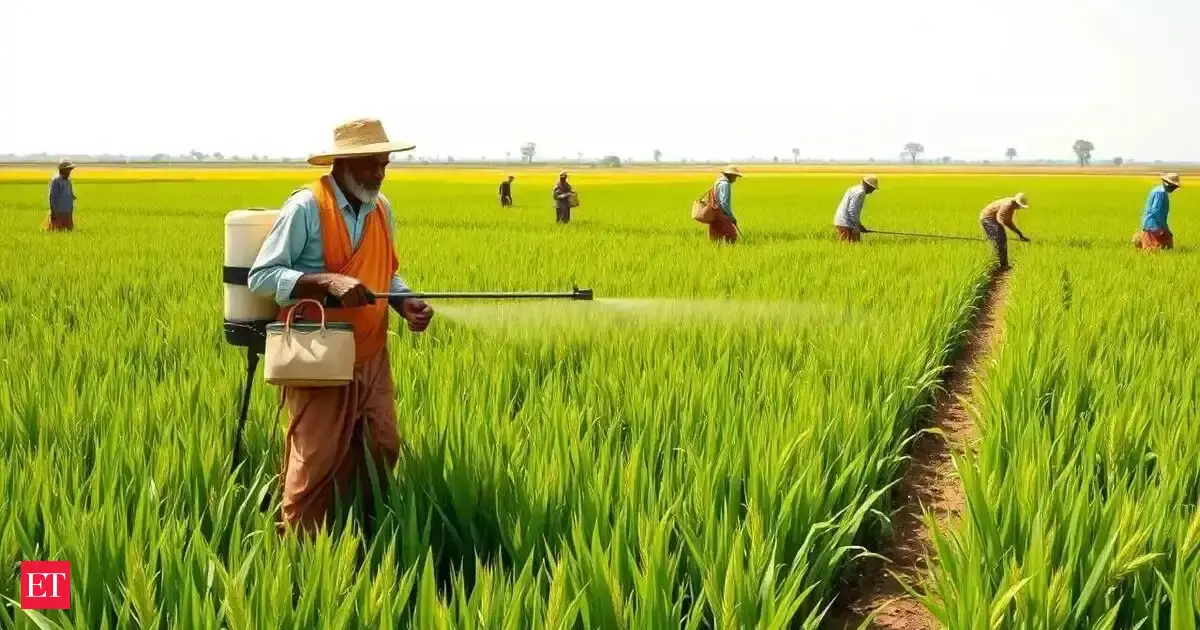
India will serve as the Partner Country at Gulfood 2026 in Dubai, showcasing its diverse agri-exports. Over 160 exhibitors from 25 Indian states will participate, aiming to significantly boost trade in processed foods, frozen products, and pulses. This initiative is crucial for India's agricultural export promotion, highlighting region-specific and GI-tagged products on an international platform, making it relevant for economic and trade-related exam questions.
Revision structure
Monthly events and exam calendar context
Static GK and one-liner notes
Quiz and mock-test revision path
Key points
Exam-ready takeaways
Gulfood 2026 is scheduled to be held in Dubai.
Over 160 exhibitors from 25 Indian states will participate in Gulfood 2026.
The participation aims to boost India's exports of processed foods, frozen products, and pulses.
The event will specifically highlight India's region-specific agri-products and GI-tagged items.
Detailed analysis
Full exam-oriented breakdown
India's designation as the Partner Country at Gulfood 2026 in Dubai marks a significant milestone in its ongoing efforts to bolster agricultural and processed food exports. This development is not just about showcasing products; it's a strategic move to position India as a global leader in the agri-food sector, leveraging its vast agricultural diversity and burgeoning food processing capabilities. **Background Context and What Happened:** India, a country with diverse agro-climatic zones, is one of the world's largest producers of various agricultural commodities. Historically, India's agricultural exports primarily consisted of raw materials. However, over the past few decades, there has been a concerted push towards value addition and export of processed foods. This shift is driven by the need to increase farmers' income, create employment, and earn valuable foreign exchange. The government's Agricultural Export Policy (AEP), launched in 2018, explicitly aims to double agricultural exports to $60 billion by 2022 (though this target was later adjusted due to global factors) and to diversify the export basket, focusing on high-value and processed products. Initiatives like 'One District One Product' (ODOP) also seek to identify and promote unique products from specific regions. Gulfood, one of the world's largest annual food and beverage trade exhibitions, provides an unparalleled platform for global market access. India's participation as the Partner Country for 2026, with over 160 exhibitors from 25 states, signifies a substantial commitment to this international outreach. The focus will be on processed foods, frozen products, and pulses, alongside highlighting India's unique region-specific agricultural produce and Geographical Indication (GI)-tagged items. **Key Stakeholders Involved:** Several key players are central to this initiative. The **Government of India**, primarily through the **Ministry of Commerce & Industry** and the **Agricultural and Processed Food Products Export Development Authority (APEDA)**, is the chief facilitator and promoter. APEDA, established under the APEDA Act of 1985, is mandated to promote the export of scheduled products, including fruits, vegetables, meat, dairy, and processed foods. Indian **farmers and farmer producer organizations (FPOs)** are fundamental stakeholders, as increased exports translate into better prices and demand for their produce. **Food processors and exporters** are the direct participants, showcasing their products and forging international partnerships. The **UAE government and businesses** in the Gulf region are crucial as they represent a major market and trading partner for India. Finally, the **organizers of Gulfood** provide the essential international platform for these interactions. **Significance for India:** This participation holds immense significance for India. Economically, it promises to significantly boost agricultural exports, contributing to higher farmer incomes and rural prosperity. It will also attract investments into the food processing sector, leading to job creation and technological advancements. By promoting processed and value-added products, India can move up the global value chain, earning more per unit of export. Strategically, being a Partner Country enhances 'Brand India' on a global stage, projecting the nation as a reliable and diverse supplier of quality food products. It facilitates market access, particularly in the lucrative Gulf Cooperation Council (GCC) region, a traditional trade partner, and potentially beyond. The emphasis on GI-tagged products like Darjeeling Tea, Basmati Rice, Alphonso Mangoes, or Naga Chilli, helps protect and promote India's unique culinary heritage globally, adding a cultural and heritage dimension to trade. **Historical Context and Future Implications:** India has a long history of trade with the Gulf region, driven by geographical proximity and cultural ties. From being a food-deficient nation in the mid-20th century, India has transformed into a food-surplus country, capable of meeting domestic demand and contributing to global food security. The shift from exporting primarily raw agricultural commodities to processed and value-added items reflects a maturation of India's agricultural and industrial policies. Looking ahead, this initiative is expected to lead to sustained growth in India's agri-exports, fostering greater integration of Indian agriculture into global supply chains. It will likely spur further investments in cold chain infrastructure, quality control, and food safety standards, aligning Indian products with international benchmarks. The success at Gulfood 2026 could also pave the way for similar 'Partner Country' opportunities at other major international trade fairs, further solidifying India's position in global food trade. This move aligns with India's broader foreign policy objectives of strengthening economic partnerships and enhancing its global economic footprint. **Related Constitutional Articles, Acts, or Policies:** While there isn't a single constitutional article directly dictating international trade fair participation, the broader framework of economic development and international relations is relevant. **Article 246** (Seventh Schedule) places trade and commerce within the Union List (Entry 41: Trade and commerce with foreign countries; import and export across customs frontiers; customs), empowering the Union government to formulate policies like the Agricultural Export Policy. The **APEDA Act, 1985**, is the foundational legislation for the organization spearheading these export promotion efforts. The **Geographical Indications of Goods (Registration and Protection) Act, 1999**, is crucial for protecting and promoting GI-tagged products globally. Furthermore, the **Food Safety and Standards Act, 2006**, ensures that Indian food exports meet stringent quality and safety requirements, which is vital for international acceptance. Government policies like the **National Policy on Food Processing** and various schemes under the **Ministry of Food Processing Industries** further support the sector's growth and export potential.
How to study
Turn news into exam marks
Revise monthly events by exam family instead of reading random updates.
Pair one-liners with mock tests so mistakes become the next revision list.
Keep state job pages, calendar pages and GK packs connected in one path.