

Industry leaders have urged the government to double infrastructure project allocations in the upcoming Union Budget.
GK and monthly revision
Union Budget 2026: Industry leaders urge govt to double infra spending to Rs 3 lakh crore
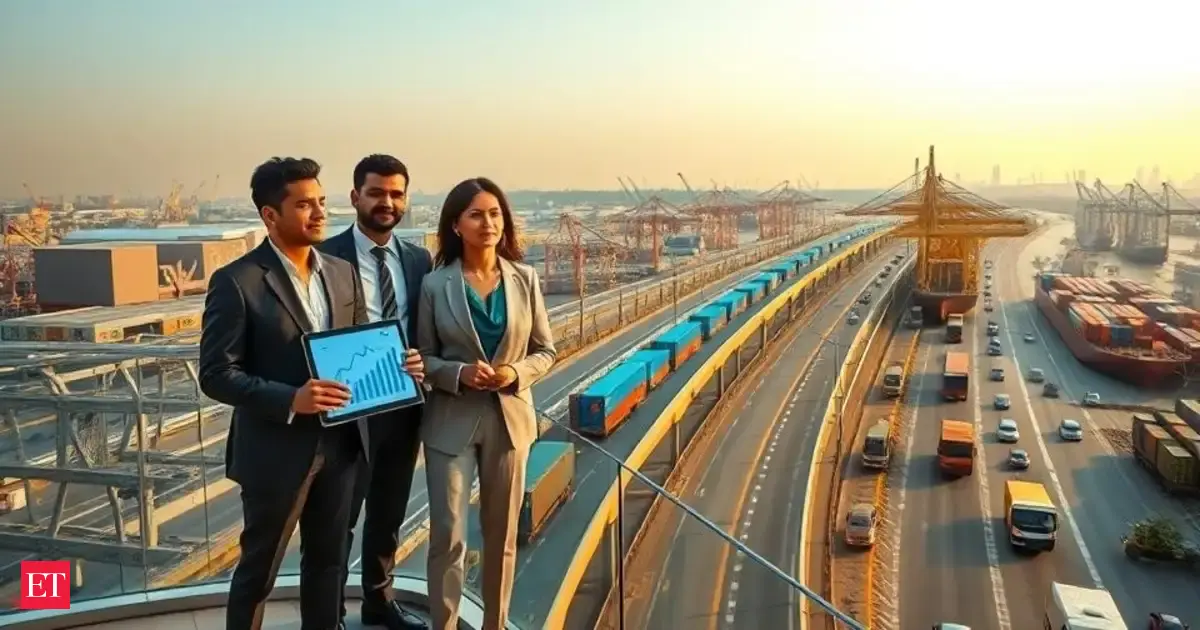
Industry leaders are urging the Indian government to significantly increase infrastructure project allocations to Rs 3 lakh crore in the upcoming Union Budget 2026. This proposed doubling of spending is considered vital for boosting overall economic growth, enhancing supply-chain efficiency, and solidifying India's position as a global economic powerhouse. This development is crucial for competitive exams as it highlights key economic policy debates, budget priorities, and the focus on infrastructure development.
Revision structure
Monthly events and exam calendar context
Static GK and one-liner notes
Quiz and mock-test revision path
Key points
Exam-ready takeaways
The proposed target for infrastructure spending in the Union Budget 2026 is Rs 3 lakh crore.
The increase is sought to boost economic growth and enhance supply-chain efficiency.
The recommendations specifically target the Union Budget 2026.
Key demands include reforms in logistics, warehousing, cold-chain, and renewable energy infrastructure.
Detailed analysis
Full exam-oriented breakdown
India's journey towards becoming a global economic powerhouse is intrinsically linked to the strength of its infrastructure. The recent call by industry leaders for the government to double infrastructure project allocations to Rs 3 lakh crore in the Union Budget 2026 highlights this critical economic imperative. This demand is not merely about increasing spending; it's a strategic push to accelerate economic growth, enhance supply-chain efficiency, and bolster India's global competitiveness. **Background Context and Historical Trajectory:** For decades, India has grappled with an infrastructure deficit, a legacy of underinvestment that hindered its economic potential. Recognizing this, successive governments have increasingly focused on infrastructure development. The 12th Five-Year Plan (2012-2017) aimed for significant investments, and post-2014, the emphasis intensified with initiatives like the 'Make in India' program, which inherently relies on robust infrastructure. In the Union Budget 2023-24, the capital outlay for infrastructure was significantly increased to Rs 10 lakh crore (approximately 3.3% of GDP), a substantial jump from previous years. This consistent push underscores the government's understanding of infrastructure as a key economic multiplier. However, industry leaders believe that even higher investment is necessary to meet India's ambitious growth targets and compete effectively on the global stage. **The Demand and Key Stakeholders:** Industry leaders, representing various sectors such as manufacturing, logistics, and services, are the primary proponents of this increased spending. Bodies like the Confederation of Indian Industry (CII), Federation of Indian Chambers of Commerce & Industry (FICCI), and Associated Chambers of Commerce and Industry of India (ASSOCHAM) often consolidate these demands. Their motivation stems from the direct impact of infrastructure quality on business operations – reduced logistics costs, faster movement of goods, improved market access, and enhanced productivity. The Union government, particularly the Ministry of Finance, NITI Aayog, and various infrastructure ministries (Road Transport & Highways, Railways, Power, Ports, Shipping & Waterways), is the key stakeholder responsible for budget formulation and policy implementation. The public, as beneficiaries of better services and job creation, is also a crucial, albeit indirect, stakeholder. **Significance for India's Economic Trajectory:** Doubling infrastructure spending to Rs 3 lakh crore carries profound significance for India. Firstly, it provides a massive stimulus to economic growth through the 'multiplier effect'. Every rupee spent on infrastructure generates multiple rupees in economic activity, creating jobs across various sectors, from construction to manufacturing and services. Secondly, it directly addresses supply-chain inefficiencies. Better roads, railways, ports, and airports reduce transit times and logistics costs, making Indian products more competitive domestically and internationally. The specific focus on logistics, warehousing, cold-chain, and renewable energy infrastructure is crucial. Improved cold-chain facilities, for instance, can significantly reduce post-harvest losses in agriculture, boosting farmer incomes and food security. Investment in renewable energy infrastructure aligns with India's climate commitments and energy security goals. This push is vital for achieving the vision of 'Atmanirbhar Bharat' (self-reliant India) and positioning India as a global manufacturing and export hub. **Constitutional and Policy Framework:** The Union Budget, presented annually by the Finance Minister, is mandated by **Article 112** of the Indian Constitution, which requires the government to lay before Parliament an 'Annual Financial Statement'. The allocation of funds for infrastructure falls under this constitutional provision. The government's fiscal policy is guided by the **Fiscal Responsibility and Budget Management (FRBM) Act, 2003**, which aims to ensure fiscal prudence. Major policy frameworks driving infrastructure development include the **National Infrastructure Pipeline (NIP)**, launched in 2019, which projects over Rs 111 lakh crore investment in infrastructure projects by 2025. More recently, the **PM Gati Shakti National Master Plan**, launched in October 2021, aims for integrated planning and coordinated implementation of infrastructure connectivity projects, addressing issues of last-mile connectivity and reducing logistics costs. The **National Logistics Policy 2022** further streamlines the logistics sector, aiming to reduce logistics costs as a percentage of GDP. **Future Implications:** If the government accedes to this demand, the future implications could be transformative. Accelerated infrastructure development would likely lead to sustained higher GDP growth, improved ease of doing business, and increased foreign direct investment. It would also create a robust foundation for India's demographic dividend to be fully realized through job creation. However, challenges remain. Ensuring efficient project execution, timely land acquisition, environmental clearances, and securing adequate financing (including through Public-Private Partnerships) will be crucial. The fiscal implications of such a significant spending hike would also need careful management to avoid undue pressure on the fiscal deficit, necessitating a balance between growth impetus and fiscal prudence. The emphasis on renewable energy infrastructure also aligns with India's long-term goal of achieving Net Zero emissions by 2070, as announced at COP26, fostering a sustainable growth path.
How to study
Turn news into exam marks
Revise monthly events by exam family instead of reading random updates.
Pair one-liners with mock tests so mistakes become the next revision list.
Keep state job pages, calendar pages and GK packs connected in one path.