

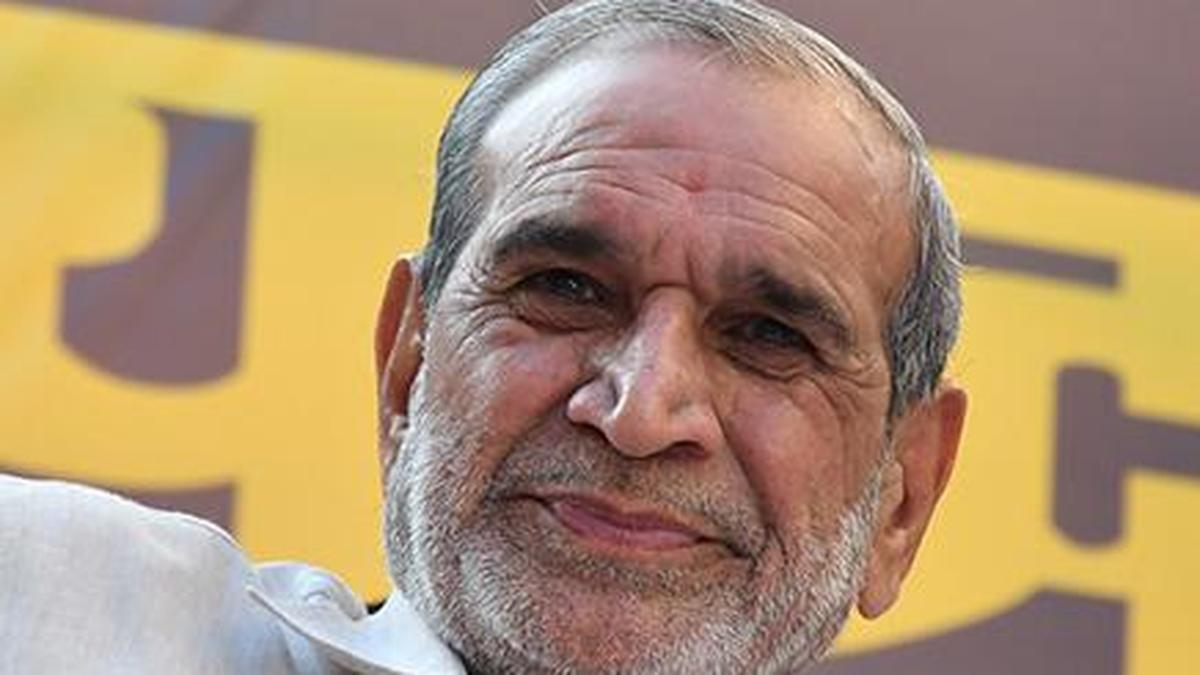
Former Congress leader Sajjan Kumar was acquitted in the 1984 anti-Sikh riots cases.
GK and monthly revision
1984 anti-Sikh riots: Delhi court acquits Sajjan Kumar in Vikaspuri, Janakpuri violence case
A Delhi court has acquitted former Congress leader Sajjan Kumar in connection with the 1984 anti-Sikh riots cases in Vikaspuri and Janakpuri. This development follows charges framed against him in August 2023 for rioting and promoting enmity, while he was discharged from murder and criminal conspiracy. The acquittal is significant for competitive exams due to its historical context, legal proceedings, and the long-standing demand for justice for the 1984 riot victims.
Revision structure
Monthly events and exam calendar context
Static GK and one-liner notes
Quiz and mock-test revision path
Key points
Exam-ready takeaways
The acquittal pertains to violence in Vikaspuri and Janakpuri areas of Delhi.
In August 2023, Sajjan Kumar was charged with rioting and promoting enmity.
He was discharged of murder and criminal conspiracy offences in the August 2023 order.
The cases relate to the anti-Sikh riots that occurred in 1984.
Detailed analysis
Full exam-oriented breakdown
The acquittal of former Congress leader Sajjan Kumar in connection with the 1984 anti-Sikh riots cases in Vikaspuri and Janakpuri, Delhi, marks another significant, albeit controversial, chapter in India's long struggle for justice in cases of mass violence. This development, nearly four decades after the horrific events, underscores the complexities, challenges, and enduring pain associated with such historical episodes. The genesis of the 1984 anti-Sikh riots lies in the tragic assassination of then Prime Minister Indira Gandhi on October 31, 1984, by her two Sikh bodyguards, Beant Singh and Satwant Singh. This act was a response to 'Operation Blue Star' carried out in June 1984, where the Indian Army entered the Golden Temple complex in Amritsar to flush out Sikh militants. The assassination immediately triggered a wave of retaliatory violence against the Sikh community across northern India, particularly in Delhi. For three days, from October 31 to November 3, 1984, mobs targeted Sikh homes, businesses, and individuals, resulting in widespread arson, looting, rape, and murder. Official figures estimate around 3,000 Sikhs were killed, though independent sources suggest the toll was much higher. The violence was widely perceived as organized, with allegations of political patronage and police complicity. In the specific context of the recent development, Sajjan Kumar was acquitted by a Delhi court in the Vikaspuri and Janakpuri violence cases. It is important to note that in August 2023, the court had framed charges against him for rioting (Section 147, 148 IPC) and promoting enmity between different groups (Section 153A IPC). However, he had been discharged from graver charges of murder (Section 302 IPC) and criminal conspiracy (Section 120B IPC) at that time. This acquittal means that the prosecution failed to prove the charges of rioting and promoting enmity beyond a reasonable doubt in these particular cases. This is distinct from his 2018 conviction by the Delhi High Court in another 1984 riots case (related to the killing of five members of a family in Raj Nagar), where he was sentenced to life imprisonment – a conviction upheld by the Supreme Court, leading to his surrender. Key stakeholders in this prolonged saga include the **victims and survivors** of the riots, predominantly from the Sikh community, who have tirelessly campaigned for justice and accountability for nearly 40 years. Their trust in the justice system often wavers with each acquittal or delayed judgment. **Sajjan Kumar**, as the accused and now acquitted in these specific cases, represents the political figures alleged to have instigated or facilitated the violence. The **Indian judiciary**, from trial courts to the Supreme Court, plays a critical role in upholding the rule of law, albeit with challenges of immense caseloads and the complexities of prosecuting historical crimes. **Investigating agencies** like the Delhi Police and later the Central Bureau of Investigation (CBI), along with various Special Investigation Teams (SITs) constituted over the decades, have been central to gathering evidence. Finally, successive **governments** and **political parties** have been under scrutiny for their handling of the investigations and their perceived political will (or lack thereof) to ensure justice. This case holds immense significance for India. Firstly, it highlights the persistent challenges in delivering justice for victims of mass violence, particularly when alleged perpetrators hold political influence. The nearly four-decade delay in these proceedings itself is a denial of justice, undermining the principle of a speedy trial inherent in **Article 21** (Right to Life and Personal Liberty) of the Indian Constitution. Secondly, it raises questions about accountability and the rule of law. The repeated formation of commissions of inquiry (e.g., Ranganath Misra Commission in 1985, Nanavati Commission in 2000, under the **Commissions of Inquiry Act, 1952**) and SITs, without conclusive outcomes in many cases, erodes public faith. This impacts India's commitment to secularism and communal harmony, key tenets enshrined in the Preamble of the Constitution. The riots and their aftermath also test the principle of **Article 14** (Equality before Law), as many believe justice has not been meted out equally to all perpetrators. Historically, the 1984 riots are often cited alongside other instances of communal violence, such as the 2002 Gujarat riots or the 1989 Bhagalpur riots, as examples where the state machinery was perceived to have failed in its duty to protect citizens or bring perpetrators to justice swiftly. These events serve as stark reminders of the fragility of social fabric and the potential for political opportunism during times of crisis. Looking ahead, this acquittal, even as Sajjan Kumar remains incarcerated for another conviction, could have several implications. For the victims, it might further deepen their sense of disillusionment and injustice, potentially fueling renewed demands for a more robust and time-bound justice delivery mechanism. Legally, such complex cases, with aging witnesses and evidence, serve as a potent argument for judicial reforms to expedite trials, especially in cases of heinous crimes and mass violence. Politically, the issue of the 1984 riots remains a sensitive topic, often resurfacing during elections, and this development could reignite political debates on past injustices and accountability. The broader theme it connects to is the need for institutional reforms in India's criminal justice system, police, and judiciary to ensure that justice is not just done, but seen to be done, within a reasonable timeframe, thus upholding democratic values and strengthening the rule of law in India. Relevant constitutional articles and acts include **Article 21** (Right to Life and Personal Liberty, encompassing speedy justice), **Article 14** (Equality before Law), and various sections of the **Indian Penal Code (IPC)** such as 147 (Punishment for rioting), 148 (Rioting, armed with deadly weapon), 153A (Promoting enmity between different groups), 302 (Punishment for murder), and 120B (Punishment of criminal conspiracy). The **Commissions of Inquiry Act, 1952** has been repeatedly invoked to investigate these events.
How to study
Turn news into exam marks
Revise monthly events by exam family instead of reading random updates.
Pair one-liners with mock tests so mistakes become the next revision list.
Keep state job pages, calendar pages and GK packs connected in one path.