

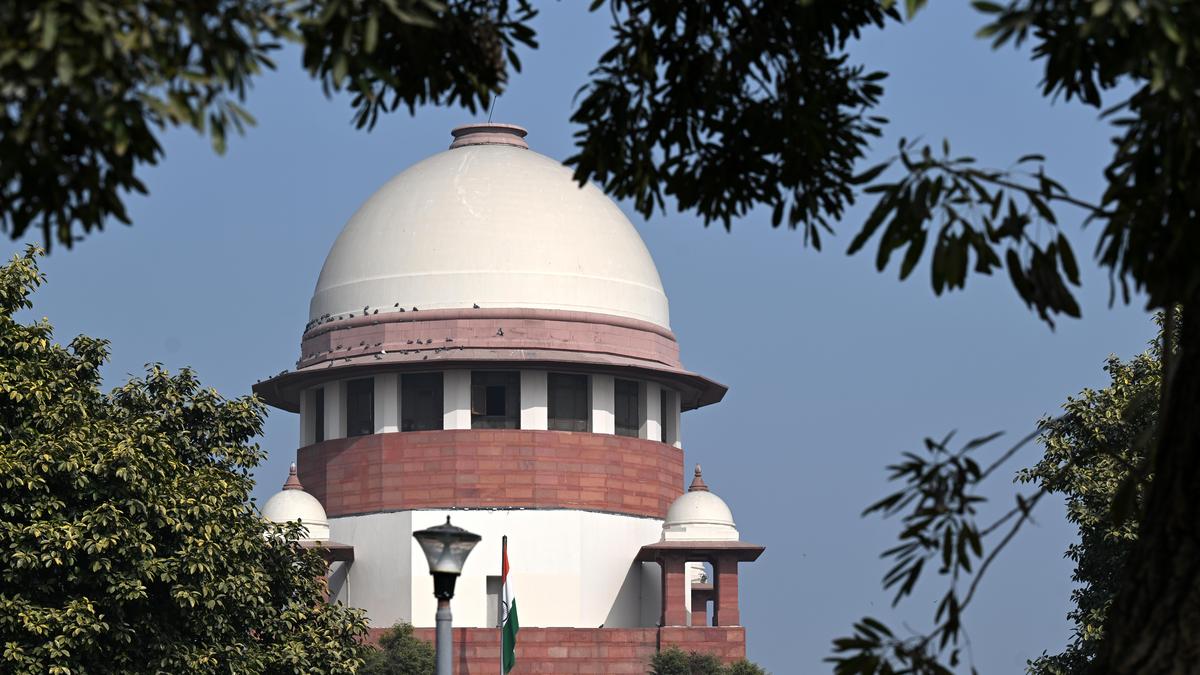
The Supreme Court has mandated all states and Union Territories to formulate a policy on police media briefings.
GK and monthly revision
Supreme Court tells States to frame policy on police media briefing in three months
The Supreme Court has directed all states and Union Territories to frame a comprehensive policy on police media briefings within three months. This directive aims to balance media freedom with the integrity of investigations, fair trial rights, and individual privacy. The policy is based on a manual prepared by the amicus curiae, emphasizing police communication for public safety and law and order, making it crucial for governance and legal studies.
Revision structure
Monthly events and exam calendar context
Static GK and one-liner notes
Quiz and mock-test revision path
Key points
Exam-ready takeaways
The deadline for framing this policy is set at three months from the Supreme Court's directive.
The policy is based on a manual prepared by the amicus curiae, focusing on maintaining investigation integrity.
The manual highlights police communication's role in preventing harm, correcting rumours, enlisting public cooperation, and maintaining law and order.
The directive addresses the critical balance between media's right to information and the accused's right to a fair trial and privacy.
Detailed analysis
Full exam-oriented breakdown
The Supreme Court's recent directive to all states and Union Territories to formulate a comprehensive policy on police media briefings within three months marks a significant step towards balancing the fundamental rights of freedom of speech and expression with the imperative of maintaining the integrity of criminal investigations and ensuring fair trial rights. This directive, stemming from a manual prepared by an amicus curiae, addresses a long-standing challenge in India's criminal justice system. **Background Context:** For years, the Indian media's coverage of ongoing criminal investigations has been a subject of intense debate and judicial scrutiny. Often termed 'media trials,' this phenomenon involves extensive and sometimes sensationalized reporting, speculation, and even premature pronouncements of guilt or innocence by the media. Such reporting, while ostensibly serving the public's right to know, frequently risks prejudicing potential jurors, influencing witnesses, and compromising the impartiality of the investigating agencies. This issue gained prominence in numerous high-profile cases where details of investigations were leaked, suspects were vilified, or victims' privacy was violated, raising serious questions about the ethics of reporting and the accountability of the police. **What Happened:** The Supreme Court, recognizing the need for a standardized approach, has now mandated that all states and UTs develop a clear policy framework for police interactions with the media. The core of this directive lies in a manual prepared by the amicus curiae, which emphasizes that police communication should primarily aim to 'prevent harm, correct rumours, enlist public cooperation and maintain law and order.' Crucially, it upholds the integrity of investigations, implying that information shared should not jeopardize ongoing inquiries, reveal sensitive details, or infringe upon the rights of individuals involved. The three-month deadline underscores the urgency the apex court places on this matter, pushing for swift implementation across the nation. **Key Stakeholders Involved:** Several key actors are directly impacted by this directive. The **Supreme Court**, as the custodian of the Constitution, acts to protect fundamental rights and ensure the smooth functioning of the justice system. The **State Governments and Union Territories** are tasked with framing and implementing these policies through their respective **Police Forces**. The police are critical stakeholders, as they are often the primary source of information for the media at the initial stages of a crime. They must now navigate the delicate balance between transparency and investigative secrecy. The **Media** — print, electronic, and digital — is another crucial stakeholder, whose right to freedom of speech and expression (Article 19(1)(a)) is central to this debate. Finally, the **Accused, Victims, and Witnesses** are paramount, as their rights to a fair trial (implicit in Article 21) and privacy (recognized under Article 21, following the Puttaswamy judgment of 2017) are directly impacted by police briefings and media reporting. **Why This Matters for India:** This directive holds immense significance for India's democratic and legal framework. Politically, it aims to professionalize police conduct and communication, fostering greater accountability and public trust. Socially, it seeks to protect individual liberties, particularly the right to a fair trial and privacy, from the potential excesses of media scrutiny. By regulating police interaction with the media, it prevents the trial by media phenomenon, which can irreparably damage reputations and undermine the judicial process even before formal charges are laid. Economically, while not directly impactful, a more predictable and fair legal environment can indirectly contribute to investor confidence and reduce arbitrary actions. Ultimately, it reinforces the rule of law and strengthens the institutional mechanisms of justice delivery. **Historical Context:** The concern over media trials is not new. Various judicial pronouncements and legal commissions have, over the decades, highlighted the need for a balance. The **200th Report of the Law Commission of India (2006)** on 'Trial by Media: Free Speech vs. Fair Trial under Criminal Procedure (Amendment) Bill, 2006' extensively discussed this issue, recommending statutory provisions to regulate media reporting of criminal cases. The Supreme Court itself has, in several cases like *R.K. Anand v. Registrar, Delhi High Court (2009)* and *Saibal Kumar Gupta v. B.K. Sen (1961)*, commented on the dangers of media interference with justice. This latest directive is a culmination of these ongoing efforts to institutionalize a framework. **Future Implications:** The implementation of these policies will likely lead to more structured and responsible communication from police departments. It may necessitate training for police personnel on media relations and legal aspects of information disclosure. For the media, it could mean a shift towards more fact-based reporting and away from speculative narratives, fostering greater journalistic ethics. While challenges in implementation, especially concerning interpretation and enforcement, are anticipated, this move is expected to enhance the fairness and integrity of criminal investigations and trials across India. It could also set a precedent for other government agencies in their public communication strategies, emphasizing transparency without compromising sensitive operations or individual rights. **Related Constitutional Articles, Acts, or Policies:** * **Article 19(1)(a):** Guarantees the right to freedom of speech and expression, which includes the freedom of the press. However, this right is not absolute and can be subject to reasonable restrictions under Article 19(2) in the interests of public order, decency, morality, and contempt of court. * **Article 21:** Enshrines the right to life and personal liberty, which the Supreme Court has interpreted to include the right to a fair trial, the right to dignity, and the right to privacy. * **Article 14:** Ensures equality before the law and equal protection of the laws, meaning every individual, including the accused, must be treated fairly by the legal system. * **Criminal Procedure Code (CrPC), 1973:** Governs the procedure for criminal investigations and trials. The integrity of investigations, as mentioned in the manual, directly relates to the procedures outlined in CrPC. * **Indian Evidence Act, 1872:** Deals with the admissibility of evidence in courts. Media reports or leaked information not presented as per the Act can prejudice a case. * **The Police Act, 1861 (and various State Police Acts):** These acts govern the functioning and duties of police forces, including aspects of public order and investigation. The new policy will likely be framed under the ambit of these acts.
How to study
Turn news into exam marks
Revise monthly events by exam family instead of reading random updates.
Pair one-liners with mock tests so mistakes become the next revision list.
Keep state job pages, calendar pages and GK packs connected in one path.