

US President Donald Trump expressed confidence in an upcoming India-US Bilateral Trade Agreement.
GK and monthly revision
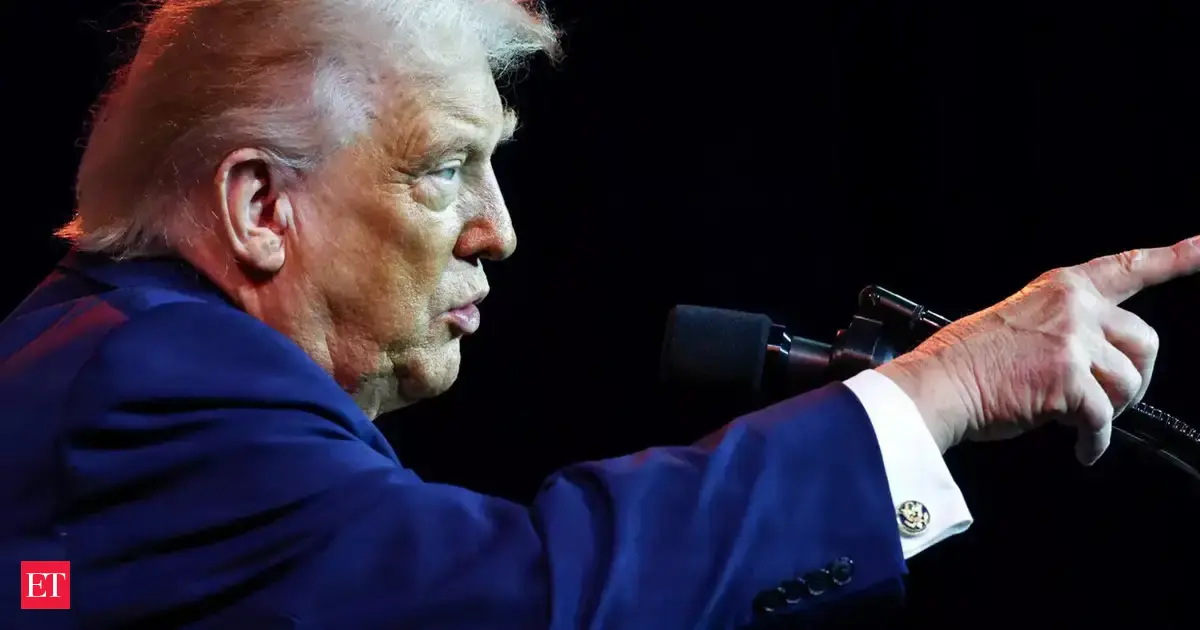
'Going to have a good deal': Trump on India-US trade deal, says has "great respect" for PM Modi
US President Donald Trump expressed confidence in an upcoming India-US Bilateral Trade Agreement, highlighting his respect for PM Narendra Modi. This potential deal aims to significantly boost bilateral trade between the two nations, with a target of reaching $500 billion by 2030. This development is crucial for understanding India's international trade relations and economic policy for competitive exams.
Revision structure
Monthly events and exam calendar context
Static GK and one-liner notes
Quiz and mock-test revision path
Key points
Exam-ready takeaways
The agreement aims to significantly boost bilateral trade between India and the US.
The target set for India-US bilateral trade is $500 billion.
The target year to achieve $500 billion in bilateral trade is 2030.
US President Trump referred to Indian Prime Minister Narendra Modi as a close friend and respected leader.
Detailed analysis
Full exam-oriented breakdown
The statement by then US President Donald Trump regarding a prospective India-US Bilateral Trade Agreement and his commendation of Prime Minister Narendra Modi underscored the growing strategic and economic convergence between the two largest democracies. This development was not an isolated event but a continuation of a trajectory set decades ago, reflecting a deeper commitment to strengthening ties. Historically, the India-US relationship, particularly during the Cold War, was characterized by India's non-alignment and closer ties with the Soviet Union, leading to somewhat strained economic relations. However, the economic liberalization in India in 1991 and the end of the Cold War paved the way for a dramatic reorientation. Over the past two decades, the relationship has evolved into a 'Comprehensive Global Strategic Partnership,' encompassing defence, technology, energy, and, critically, trade. Regular high-level visits, dialogues like the 2+2 Ministerial Dialogue, and joint military exercises have solidified this partnership. Despite this, trade relations have often been marked by specific frictions, such as market access issues, tariffs, intellectual property rights, and data localization policies. The immediate context of President Trump's statement was a period where both nations were actively engaged in negotiations to resolve these trade irritants and finalize a 'mini-deal' or a limited trade package. This deal aimed to address immediate concerns rather than pursuing a comprehensive Free Trade Agreement (FTA), which is far more complex and time-consuming. The ambitious target of boosting bilateral trade to $500 billion by 2030, from around $145 billion in 2019-2020, reflects the immense untapped potential and mutual desire for greater economic integration. This target necessitates significant policy adjustments, reduced trade barriers, and enhanced cooperation in diverse sectors. Key stakeholders in this potential agreement are numerous and varied. On the Indian side, the Government of India, particularly the Ministry of Commerce & Industry and the Ministry of External Affairs, plays a pivotal role in negotiating terms. Indian industries, ranging from pharmaceuticals, IT services, textiles, and agriculture, stand to gain from greater market access in the US. Indian consumers could benefit from a wider array of goods and potentially lower prices. For the United States, the US Government, through the Office of the United States Trade Representative (USTR) and the Department of Commerce, leads negotiations. American industries, including technology, defence, medical devices, and agriculture, seek expanded opportunities in India's vast and growing market. Both leaders, PM Modi and President Trump (at the time), were key drivers, with their personal rapport often highlighted as a facilitating factor in diplomatic and trade discussions. For India, the significance of such a trade deal is multi-faceted. Economically, it promises to boost exports, attract foreign direct investment (FDI) from the US, and help diversify India's trade portfolio, reducing reliance on any single region. Access to the advanced US market can spur technological upgrades and innovation in Indian industries. Politically and strategically, strengthening economic ties with the US reinforces India's position as a key player in the Indo-Pacific region, aligning with its broader foreign policy objectives, including the Quad initiative and countering China's growing influence. It also enhances India's global standing and leverages its geopolitical importance. However, challenges remain, including balancing domestic industry protection with opening markets, ensuring fair competition, and addressing persistent issues like tariffs (e.g., US tariffs on steel and aluminum, India's retaliatory tariffs), the withdrawal of India's Generalized System of Preferences (GSP) status by the US, and differing views on intellectual property rights and data localization. From a constitutional perspective, international trade agreements fall under the purview of the Union List (Entry 14 of the Seventh Schedule), granting the Parliament exclusive power to legislate on 'entering into treaties and agreements with foreign countries and implementing of treaties, agreements and conventions with foreign countries.' Article 253 of the Indian Constitution specifically empowers Parliament to make any law for implementing any international treaty, agreement, or convention. Any changes to tariffs or trade regulations arising from the deal would typically be implemented through amendments to the Customs Act, 1962, and India's Foreign Trade Policy. India's 'Make in India' initiative and Production Linked Incentive (PLI) schemes are also relevant, as they aim to boost domestic manufacturing and exports, potentially benefiting from enhanced US market access. Looking ahead, a successful bilateral trade agreement could serve as a stepping stone towards a more comprehensive Free Trade Agreement (FTA) between India and the US, which would significantly deepen economic integration. It could also influence global supply chain restructuring, potentially positioning India as an attractive alternative to China for manufacturing and sourcing. However, navigating complex issues like non-tariff barriers, environmental and labor standards, and digital trade rules will be crucial. The continuity of strong bilateral relations, irrespective of changes in leadership in either country, will be vital for achieving the ambitious $500 billion trade target and realizing the full potential of this strategic partnership.
How to study
Turn news into exam marks
Revise monthly events by exam family instead of reading random updates.
Pair one-liners with mock tests so mistakes become the next revision list.
Keep state job pages, calendar pages and GK packs connected in one path.