

Yes Bank recorded a standalone net profit of Rs 952 crore for Q3FY26.
GK and monthly revision
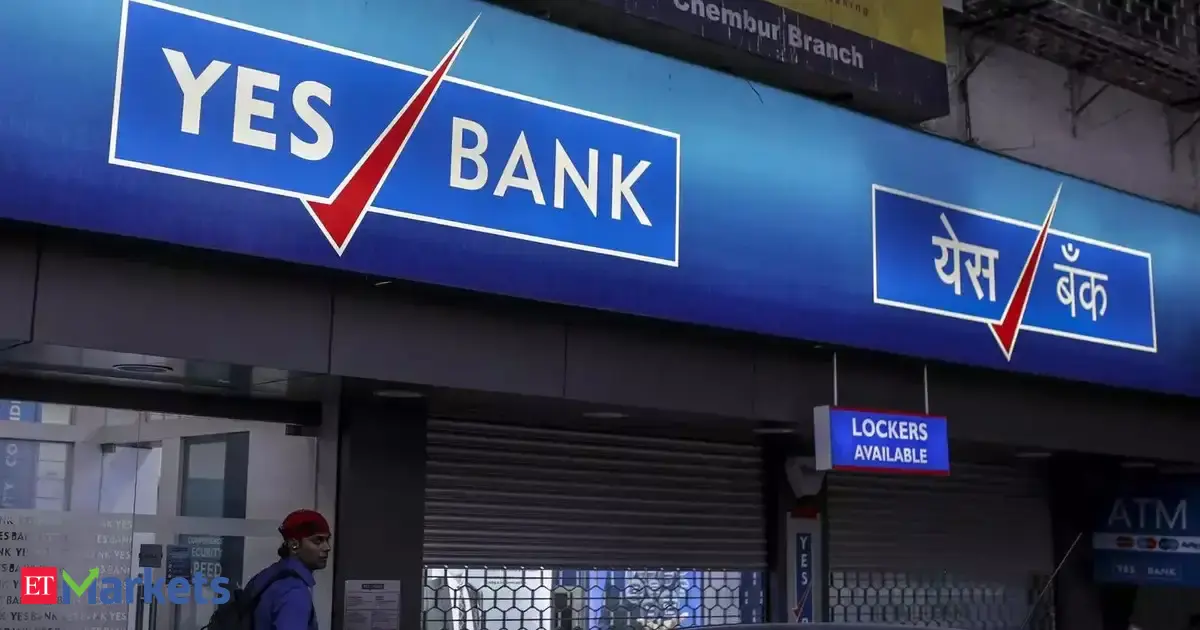
Yes Bank shares in focus after 55% YoY spike in Q3 profit
Yes Bank announced a robust Q3FY26 performance, with standalone net profit surging 55% year-on-year to Rs 952 crore. This significant growth, also up 45% sequentially, indicates improving financial health for the private sector lender. For competitive exams, these figures highlight key banking sector performance indicators and are crucial for questions on economic trends and financial institutions' health.
Revision structure
Monthly events and exam calendar context
Static GK and one-liner notes
Quiz and mock-test revision path
Key points
Exam-ready takeaways
The bank's net profit for Q3FY26 increased by 55% year-on-year (YoY).
Yes Bank's net profit also rose by 45% sequentially in Q3FY26.
Net Interest Income (NII) for Yes Bank grew by 11% in Q3FY26.
The bank's Net Interest Margin (NIM) improved to 2.6% during Q3FY26.
Detailed analysis
Full exam-oriented breakdown
The recent announcement of Yes Bank's robust financial performance for Q3FY26, with a standalone net profit soaring by 55% year-on-year to Rs 952 crore, marks a significant milestone in its journey of recovery. This impressive growth, also registering a 45% sequential increase, coupled with an 11% rise in Net Interest Income (NII) and an improved Net Interest Margin (NIM) of 2.6%, signals a positive trajectory for the private sector lender. To truly grasp the gravity of this achievement, it's crucial to delve into the bank's turbulent past and understand its broader implications for India's financial ecosystem. **Background Context and Historical Journey:** Yes Bank, once a rapidly growing private sector bank, faced a severe crisis in early 2020. Years of aggressive lending, particularly to stressed corporate accounts, and alleged governance lapses led to a massive build-up of Non-Performing Assets (NPAs) and a significant erosion of depositor confidence. The Reserve Bank of India (RBI) had to step in, imposing a moratorium on the bank in March 2020, capping withdrawals, and superseding its board. This unprecedented intervention was critical to prevent a systemic collapse, as Yes Bank's failure could have triggered a domino effect across the Indian financial sector. The RBI, in consultation with the Government of India, orchestrated a 'Yes Bank Reconstruction Scheme, 2020'. Under this scheme, State Bank of India (SBI) emerged as the anchor investor, infusing capital alongside a consortium of other public and private sector banks like ICICI Bank, HDFC Bank, Axis Bank, and Kotak Mahindra Bank. This collective effort helped recapitalize the bank, restore liquidity, and stabilize its operations. **What Happened in Q3FY26:** Yes Bank's Q3FY26 results highlight a strong turnaround. The 55% YoY increase in net profit to Rs 952 crore demonstrates effective cost management and a focus on improving asset quality. Net Interest Income (NII), which is the difference between interest earned on assets (like loans) and interest paid on liabilities (like deposits), grew by 11%, indicating healthy core banking operations. Furthermore, the improvement in Net Interest Margin (NIM) to 2.6% suggests better profitability from its lending activities, supported by lower interest expenses. These figures collectively showcase a bank that is steadily moving away from its crisis-ridden past towards sustainable growth. **Key Stakeholders Involved:** Several stakeholders have been intrinsically linked to Yes Bank's fate. **Yes Bank itself**, including its management, employees, and shareholders, is at the forefront, striving for sustained recovery. **Depositors** are crucial, as their confidence is paramount for any bank's stability. The **Reserve Bank of India (RBI)**, as the central banking authority and primary regulator, played a pivotal role in the reconstruction and continues its oversight. The **Government of India** supported the RBI's efforts, recognizing the systemic importance of Yes Bank. **State Bank of India (SBI)**, as the largest public sector bank and the lead investor in the reconstruction plan, bore significant responsibility in stabilizing the bank. Other **public and private sector banks** that participated in the capital infusion were also key in demonstrating solidarity and strengthening the financial system. **Significance for India:** Yes Bank's recovery holds immense significance for India. Firstly, it bolsters **financial stability**. A healthy banking sector is the backbone of any economy, facilitating credit flow and investment. The successful turnaround of a systemically important bank like Yes Bank reassures both domestic and international investors about the resilience of India's financial system and the effectiveness of its regulatory framework. Secondly, it reinforces **investor confidence** in Indian banks and financial markets, potentially attracting more foreign direct investment (FDI) into the sector. Thirdly, it underscores the **effectiveness of regulatory intervention**. The RBI's decisive action in 2020 prevented a larger crisis, showcasing its capability to manage financial distress. Lastly, a revived Yes Bank can continue to contribute to **economic growth** by providing credit to various sectors, including MSMEs, thereby supporting job creation and economic activity. **Related Constitutional Articles, Acts, and Policies:** The RBI's actions and the broader banking sector's regulation are rooted in several legal frameworks. The **Reserve Bank of India Act, 1934**, establishes the RBI as the central bank and outlines its powers and functions, including monetary policy and banking supervision. The **Banking Regulation Act, 1949**, is the primary legislation governing the functioning of commercial banks in India. It empowers the RBI to license banks, regulate their management, conduct inspections, and issue directions, notably under **Section 35A**, and also provides for schemes of amalgamation or reconstruction under **Section 45**, as was done in Yes Bank's case. The **Deposit Insurance and Credit Guarantee Corporation (DICGC) Act, 1961**, provides insurance cover for bank deposits, which was critical in assuaging depositor fears during the crisis. While not directly applied for Yes Bank's reconstruction, the **Insolvency and Bankruptcy Code (IBC), 2016**, represents India's modern framework for resolving financial distress for various entities, including financial service providers, though specific provisions for banks are under the RBI's purview. **Future Implications:** Yes Bank's journey is a continuous test of its resilience. The strong Q3FY26 results are encouraging, but the bank must maintain its focus on improving asset quality, strengthening governance, and expanding its retail and SME loan book while managing risks prudently. Its performance will be closely watched as a case study for regulatory intervention and bank revival in India. For the broader banking sector, it serves as a reminder of the importance of robust risk management and corporate governance. The lessons learned from the Yes Bank crisis will continue to inform regulatory policies and oversight, ensuring greater stability and trust in India's financial institutions. This positive trajectory could also pave the way for a more diversified and competitive private banking landscape in India, driving innovation and better services for customers.
How to study
Turn news into exam marks
Revise monthly events by exam family instead of reading random updates.
Pair one-liners with mock tests so mistakes become the next revision list.
Keep state job pages, calendar pages and GK packs connected in one path.