

The Indian Rupee experienced depreciation for the fourth consecutive trading session.
GK and monthly revision
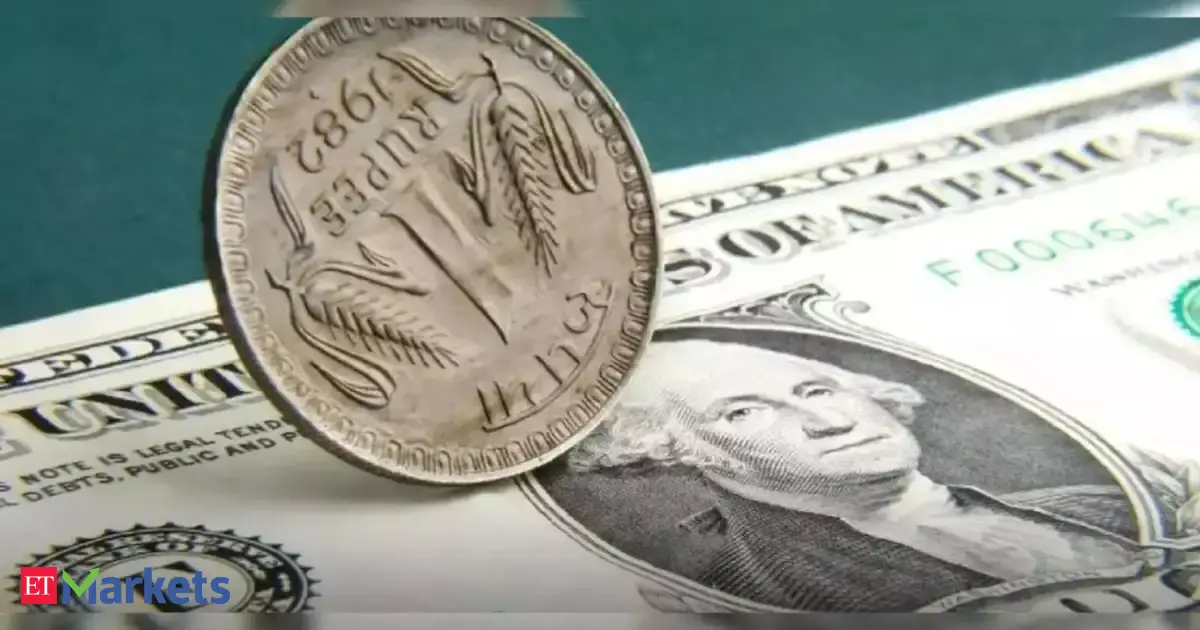
Rupee declines for fourth straight day amid corporate dollar demand
The Indian Rupee depreciated for the fourth consecutive session on Monday, primarily due to strong corporate demand for US dollars coupled with a shortfall in dollar supply. This trend is significant for competitive exams as it reflects India's macroeconomic stability, influences import costs and export competitiveness, and highlights currency market dynamics. Understanding such movements is crucial for economic sections.
Revision structure
Monthly events and exam calendar context
Static GK and one-liner notes
Quiz and mock-test revision path
Key points
Exam-ready takeaways
The decline was specifically noted on Monday, indicating a consistent short-term trend.
A key factor driving the rupee's fall was increased corporate demand for US dollars.
The depreciation was further complicated by a prevailing shortfall in the supply of US dollars.
This currency movement impacts India's import bill, export competitiveness, and overall macroeconomic stability.
Detailed analysis
Full exam-oriented breakdown
The recent depreciation of the Indian Rupee for four consecutive sessions, driven primarily by strong corporate dollar demand and a simultaneous shortfall in dollar supply, serves as a crucial indicator of India's macroeconomic landscape. To truly grasp its significance, let's break down the underlying mechanics and broader implications. **Background Context: Understanding Currency Dynamics** At its core, a currency's value is determined by the forces of demand and supply in the foreign exchange market. When demand for a foreign currency (like the US Dollar) increases relative to the domestic currency (Indian Rupee), or when the supply of the foreign currency decreases, the domestic currency tends to depreciate. Conversely, if dollar supply is abundant or demand for rupees increases, the rupee appreciates. India follows a managed floating exchange rate system, meaning the Reserve Bank of India (RBI) intervenes occasionally to smooth volatility, but largely allows market forces to determine the rupee's value. Historically, the rupee has faced pressure from global economic shocks, rising crude oil prices, capital outflows, and domestic economic conditions. **What Happened: Corporate Dollar Demand and Supply Shortfall** The immediate trigger for the rupee's recent slide was robust corporate demand for US dollars. Why do Indian corporations need dollars? Primarily for several reasons: importing goods (raw materials, machinery, technology, crude oil), servicing external debt (loans taken in foreign currency), making overseas investments, and hedging their foreign currency exposures. A surge in any of these activities can lead to increased dollar demand. Simultaneously, the market experienced a 'shortfall in supply' of dollars. This could be due to various factors such as reduced foreign direct investment (FDI) or foreign institutional investment (FII) inflows, lower export earnings (meaning fewer dollars coming into India), or even the RBI reducing its dollar sales if it aims to conserve foreign exchange reserves. When these two forces – high demand and low supply – converge, depreciation is a natural outcome. **Key Stakeholders Involved** Several key players are impacted by and influence currency movements: 1. **Reserve Bank of India (RBI):** As the central bank, the RBI is the primary custodian of India's monetary policy and foreign exchange reserves. It intervenes in the forex market by buying or selling dollars to manage volatility and maintain orderly market conditions. Its actions directly influence dollar supply and rupee stability. The **Reserve Bank of India Act, 1934**, outlines its functions, including managing currency and credit. 2. **Government of India:** Through its fiscal policies, trade policies, and efforts to attract foreign investment, the government indirectly influences the rupee's strength. A high current account deficit, for instance, puts pressure on the rupee, and the government's policies to boost exports or curb non-essential imports are crucial. 3. **Indian Corporations:** Importers face higher costs for their inputs, potentially leading to increased product prices and inflation. Exporters, on the other hand, benefit as they receive more rupees for their dollar earnings, making their goods more competitive in international markets. 4. **Foreign Institutional Investors (FIIs) and Foreign Direct Investors (FDIs):** Their investment decisions significantly impact dollar inflows. When FIIs withdraw funds from Indian markets (capital outflows), dollar supply diminishes, pressuring the rupee. 5. **General Public:** Ultimately, currency depreciation can lead to higher prices for imported goods (like fuel, electronics), contributing to inflation and eroding purchasing power. **Why This Matters for India: Significance and Implications** Rupee depreciation holds profound significance for India's economy. Firstly, it exacerbates **imported inflation**. As India is a major importer of crude oil, a weaker rupee makes oil more expensive in rupee terms, leading to higher fuel prices and cascading inflationary effects across various sectors. Secondly, it can worsen India's **Current Account Deficit (CAD)**, especially if import demand remains inelastic. Thirdly, servicing India's **external debt** becomes more expensive, as more rupees are needed to pay back foreign currency loans. Fourthly, it impacts **foreign exchange reserves**, as the RBI might utilize them to intervene and stabilize the rupee. While a weaker rupee can boost exports, the benefits are often offset by higher import costs, especially for a country heavily reliant on imported inputs. **Historical Context and Broader Themes** India has witnessed periods of significant rupee volatility. The 1991 economic crisis saw a massive devaluation, leading to liberalisation. More recently, events like the 2008 global financial crisis, the 2013 'Taper Tantrum', and the COVID-19 pandemic have tested the rupee's resilience. The rupee's movement is inextricably linked to global economic trends, particularly the US Federal Reserve's monetary policy, global commodity prices (especially crude oil), and geopolitical stability. India's efforts towards greater **capital account convertibility**, governed by the **Foreign Exchange Management Act (FEMA), 1999**, also play a role in managing capital flows and, consequently, currency stability. **Future Implications** The trajectory of the rupee will depend on a confluence of factors. The RBI's future interventions, the global economic outlook (especially US interest rate decisions), crude oil price movements, and India's ability to attract sustained foreign investment will be critical. If corporate dollar demand persists and capital inflows remain subdued, the rupee could face continued pressure. The government's fiscal prudence and policies to enhance export competitiveness and reduce non-essential imports will also be vital in strengthening the rupee in the long run. The continuous monitoring of these indicators is essential for maintaining India's macroeconomic stability and ensuring sustainable economic growth.
How to study
Turn news into exam marks
Revise monthly events by exam family instead of reading random updates.
Pair one-liners with mock tests so mistakes become the next revision list.
Keep state job pages, calendar pages and GK packs connected in one path.