

The Commerce Ministry formulated specific guidelines for Indian missions abroad.
GK and monthly revision
Commerce Ministry formulates specific guidelines for missions abroad to boost exports
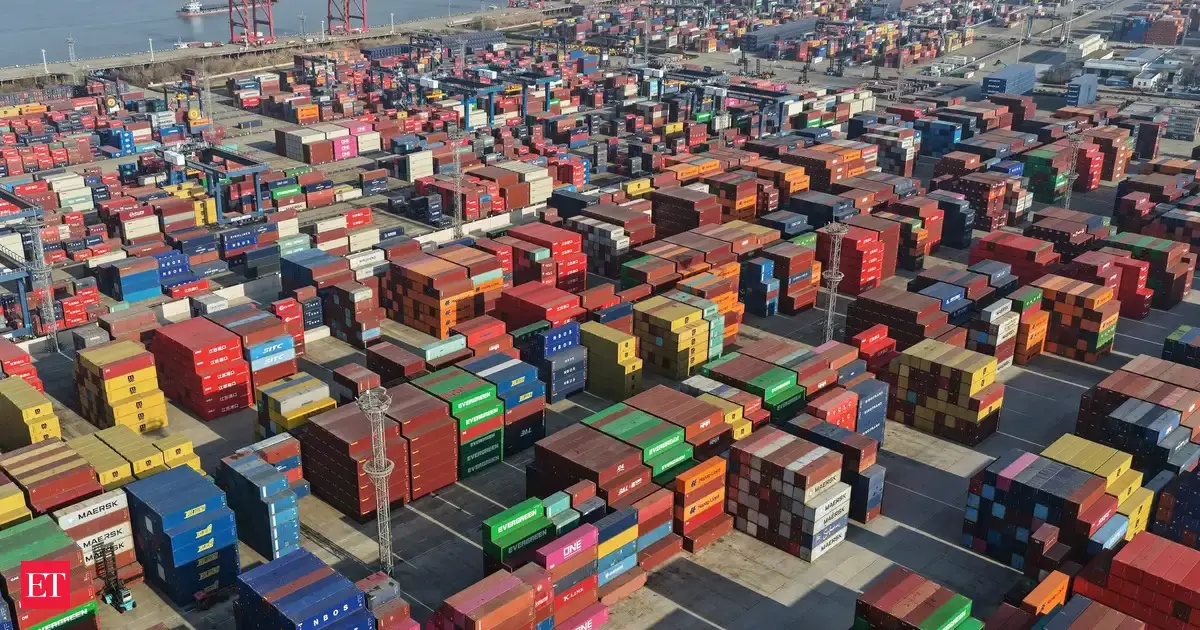
The Commerce Ministry has formulated new guidelines for Indian missions abroad to significantly boost exports and diversify market reach. This strategic move aims to navigate global economic uncertainties by empowering commercial representatives to manage trade barriers and conduct market research. The initiative is crucial for India to achieve its ambitious target of USD 2 trillion in exports by 2030, making it a key topic for economic policy questions in competitive exams.
Revision structure
Monthly events and exam calendar context
Static GK and one-liner notes
Quiz and mock-test revision path
Key points
Exam-ready takeaways
The primary objective is to boost India's exports by diversifying markets globally.
Commercial representatives will be responsible for managing trade barriers and conducting market research.
The guidelines aim to leverage Free Trade Agreements (FTAs) and increase their utilization.
India has set an ambitious target of achieving USD 2 trillion in exports by the year 2030.
Detailed analysis
Full exam-oriented breakdown
The Indian Commerce Ministry's formulation of specific guidelines for its missions abroad marks a significant strategic pivot in India's export promotion strategy. This move is not merely an administrative directive; it represents a comprehensive effort to leverage India's diplomatic network for economic advancement, particularly in the face of ongoing global economic uncertainties and geopolitical shifts. The ambitious target of achieving USD 2 trillion in exports by 2030 underscores the urgency and scale of this initiative. **Background Context: India's Export Journey and Global Dynamics** Historically, India's trade policy has evolved significantly since the economic reforms of 1991. From an inward-looking, import-substitution model, India transitioned towards a more open, export-oriented economy. However, despite significant growth, India's share in global trade remains below its potential. The global economic landscape has become increasingly complex, characterized by protectionist tendencies, supply chain disruptions exacerbated by events like the COVID-19 pandemic and geopolitical conflicts, and fluctuating commodity prices. In this scenario, a proactive and diversified export strategy is not just desirable but essential for sustaining economic growth, generating employment, and improving India's balance of payments position. The previous Foreign Trade Policy (FTP 2015-2020), and the current FTP 2023, have consistently emphasized export promotion, but these new guidelines aim to operationalize and intensify those efforts by directly engaging India's diplomatic corps. **The New Guidelines: A Proactive Approach to Export Promotion** The core of these new guidelines empowers Indian missions abroad, particularly their commercial representatives, to act as frontline economic agents. Their responsibilities include conducting granular market research to identify new export opportunities and potential growth sectors, actively managing and mitigating trade barriers (tariff and non-tariff) faced by Indian exporters, and crucially, increasing the utilization of existing Free Trade Agreements (FTAs). Many FTAs, despite being signed, often see suboptimal utilization rates due to lack of awareness or procedural complexities. By focusing on market diversification, India aims to reduce its reliance on a few key markets and products, thereby building resilience against external shocks. This approach moves beyond traditional diplomatic roles, embedding economic diplomacy as a central pillar of India's foreign policy. **Key Stakeholders and Their Roles** Several key stakeholders are central to the success of this initiative. The **Commerce Ministry** is the nodal agency, responsible for formulating the overall trade policy and these specific guidelines, providing strategic direction and resources. **Indian Missions Abroad**, comprising Ambassadors, High Commissioners, and specifically designated Commercial Representatives, are the implementers on the ground. They are tasked with intelligence gathering, facilitating business connections, resolving trade disputes, and advocating for Indian products and services. The **Ministry of External Affairs (MEA)** plays a crucial coordinating role, integrating economic diplomacy with broader foreign policy objectives. Indian **exporters and industry associations** are the ultimate beneficiaries and active participants, whose feedback and engagement are vital for the missions to identify relevant opportunities and challenges. Other ministries like the **Ministry of Finance** (for trade finance and incentives) and **various sectoral ministries** (e.g., Agriculture, Textiles) also play supporting roles. **Significance for India: Economic, Strategic, and Social Impact** This initiative holds immense significance for India. Economically, a robust export sector is a proven engine for **GDP growth**, contributing to higher national income and increased foreign exchange reserves. It directly supports the **'Make in India'** and **'Atmanirbhar Bharat'** initiatives by providing global markets for domestically manufactured goods, thereby encouraging domestic production and value addition. Export growth also leads to significant **job creation**, particularly in labor-intensive sectors and MSMEs. Strategically, successful export diversification enhances India's **global economic footprint** and strengthens its position in international supply chains, reducing vulnerability to geopolitical pressures. Socially, increased economic activity and employment opportunities contribute to poverty reduction and improved living standards. **Constitutional and Legal Framework** The power to regulate foreign trade in India primarily rests with the Union Government, as enshrined in the **Seventh Schedule of the Indian Constitution**. Specifically, **Entry 41 of the Union List** (List I) empowers the Parliament to legislate on "Trade and commerce with foreign countries; import and export across customs frontiers; quarantine." This constitutional provision forms the bedrock for the **Foreign Trade (Development and Regulation) Act, 1992**, which provides the statutory framework for the government to formulate and implement its foreign trade policy. The Commerce Ministry's guidelines are operational directives issued under the ambit of this Act and the prevailing Foreign Trade Policy (currently FTP 2023), aiming to achieve the policy objectives through the government's diplomatic machinery. **Future Implications and Challenges** If successfully implemented, these guidelines could lead to a significant **diversification of India's export basket** – both in terms of destination markets and product categories. It could also drastically improve the **utilization rate of India's FTAs**, unlocking new market access. However, challenges persist. These include global protectionist trends, geopolitical volatility impacting trade routes, and the need for continuous capacity building within the missions to adapt to evolving market demands. Domestically, addressing supply-side constraints, improving logistics infrastructure, and ensuring competitive pricing for Indian goods will be crucial. The initiative also demands robust monitoring and feedback mechanisms to ensure that the missions' efforts are aligned with the needs of Indian exporters and contribute effectively to the USD 2 trillion target by 2030, marking a new era of proactive economic diplomacy for India.
How to study
Turn news into exam marks
Revise monthly events by exam family instead of reading random updates.
Pair one-liners with mock tests so mistakes become the next revision list.
Keep state job pages, calendar pages and GK packs connected in one path.