

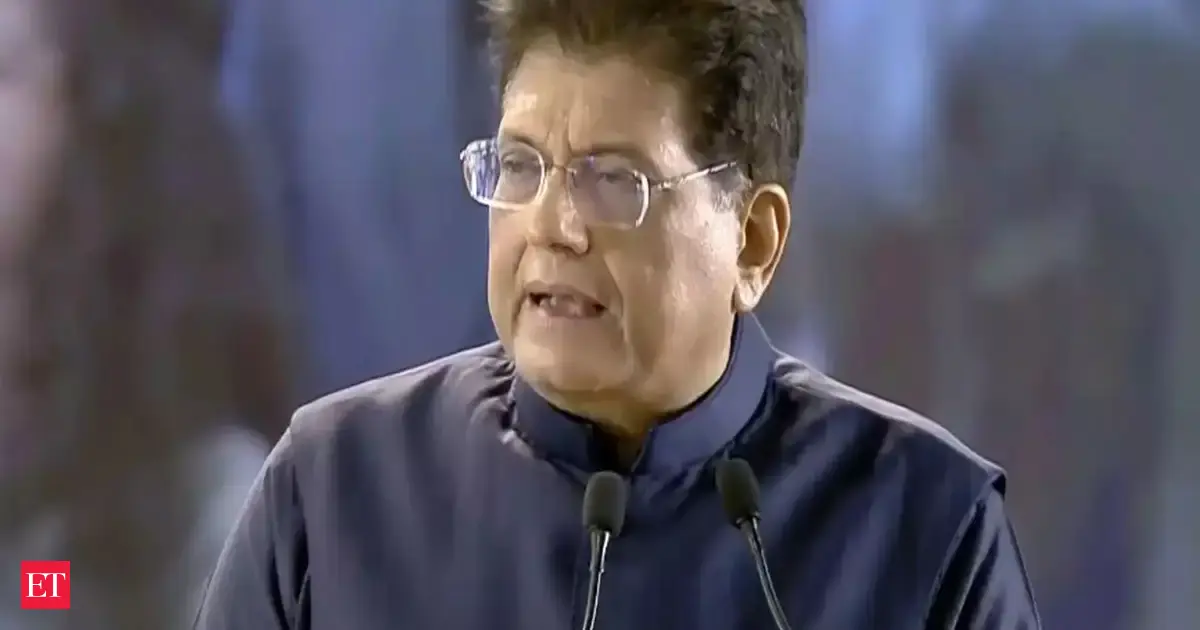
India's Commerce Minister Piyush Goyal referred to the upcoming Free Trade Agreement (FTA) with the European Union (EU) as the "mother of all deals."
GK and monthly revision
Mother of all deals: Piyush Goyal on upcoming FTA with European Union
India's Commerce Minister Piyush Goyal termed the proposed Free Trade Agreement with the European Union as the "mother of all deals," emphasizing its potential to significantly boost India's exports and foster mutual economic benefits. This major trade pact is crucial for competitive exams, highlighting India's foreign trade policy and economic diplomacy, especially concerning sensitive areas like the Carbon Border Adjustment Mechanism and agricultural sectors.
Revision structure
Monthly events and exam calendar context
Static GK and one-liner notes
Quiz and mock-test revision path
Key points
Exam-ready takeaways
The proposed FTA aims for a mutually beneficial pact to significantly boost India's exports.
Sensitive issues such as the Carbon Border Adjustment Mechanism (CBAM) are being addressed in the negotiations.
The dairy sector is another sensitive issue being discussed to ensure national interests are protected.
The FTA is expected to enhance economic ties between India and the 27-member European Union bloc.
Detailed analysis
Full exam-oriented breakdown
India's Commerce Minister Piyush Goyal's characterization of the proposed Free Trade Agreement (FTA) with the European Union (EU) as the "mother of all deals" underscores the immense strategic and economic significance of this pact for India. This ambitious agreement, currently under negotiation, is poised to reshape India's trade landscape, boost its export potential, and deepen its engagement with one of the world's largest economic blocs. **Background Context and Historical Trajectory:** India and the EU have a long-standing relationship, elevated to a 'Strategic Partnership' in 2004. Trade and economic cooperation have always been central to this partnership. The idea of a comprehensive trade agreement isn't new; negotiations for a Broad-based Trade and Investment Agreement (BTIA) began way back in 2007. However, these talks stalled in 2013 due to significant differences over issues such as market access for services, intellectual property rights, data security, and tariffs on sensitive products like automobiles and alcoholic beverages. After nearly a decade of hiatus, a renewed impetus driven by shifting global geopolitical and economic realities led to the resumption of negotiations in June 2022. The COVID-19 pandemic highlighted the need for resilient supply chains and diversification, while geopolitical tensions encouraged like-minded democracies to strengthen economic ties. Both India and the EU recognized the mutual benefits of reducing trade barriers and fostering closer economic integration. **What's Happening and Key Stakeholders:** Currently, India and the EU are engaged in negotiations for three separate but interlinked agreements: a Free Trade Agreement (FTA), an Investment Protection Agreement (IPA), and an Agreement on Geographical Indications (GI). This comprehensive approach aims to cover goods, services, investment, and IPR. The key stakeholders involved are primarily the Indian government (Ministry of Commerce & Industry, various other ministries like Agriculture, Finance) and the European Commission (the EU's executive arm, which negotiates on behalf of its 27 member states). Beyond government bodies, industries on both sides are crucial stakeholders. Indian sectors like textiles, pharmaceuticals, IT services, and certain agricultural products stand to gain significant market access. Conversely, European industries in machinery, automobiles, chemicals, and high-tech goods eye the vast Indian market. Domestic groups, such as Indian dairy farmers, represent a sensitive sector whose interests must be protected, as highlighted by Minister Goyal. Consumers on both sides also stand to benefit from a wider array of goods and services at potentially lower prices. **Significance for India:** This FTA holds profound significance for India across multiple dimensions. Economically, the EU is India's second-largest trading partner, and a successful FTA could unlock immense export potential. India aims to achieve $1 trillion in merchandise exports by 2030, and the EU market would be pivotal in realizing this ambition. Reduced tariffs and non-tariff barriers would make Indian products more competitive, boosting sectors like textiles, leather, engineering goods, and pharmaceuticals. It could also attract greater Foreign Direct Investment (FDI) into India, fostering job creation and technological upgrades, aligning with the 'Make in India' and 'Atmanirbhar Bharat' initiatives. Strategically, strengthening ties with the EU diversifies India's trade basket, reducing over-reliance on any single market and enhancing its geopolitical leverage. It also signals India's commitment to multilateralism and rules-based trade. However, the negotiations are not without challenges. Sensitive issues like the EU's Carbon Border Adjustment Mechanism (CBAM) are a major point of discussion. CBAM, set to be implemented from 2026, will impose a carbon price on imports of certain carbon-intensive goods (like steel, aluminum, cement, fertilizers, and electricity) into the EU, based on their carbon emissions. This could significantly impact Indian exports in these sectors if domestic industries are not adequately prepared or if a mutually acceptable solution isn't found. Similarly, market access for dairy products and other agricultural goods remains contentious, given the potential impact on millions of Indian farmers. Safeguarding national interests in these areas is paramount. **Constitutional and Policy References:** The power to enter into and implement international treaties and agreements in India largely rests with the Executive, but Parliament plays a crucial role. **Article 253 of the Indian Constitution** grants Parliament the exclusive power to make any law for implementing any treaty, agreement, or convention with any other country or any decision made at any international conference, association, or other body. This constitutional provision provides the legal basis for ratifying and enacting domestic laws to give effect to international agreements like an FTA. Furthermore, this FTA aligns with India's broader **Foreign Trade Policy (FTP)**, which seeks to integrate India into global value chains, promote exports, and enhance India's competitiveness in the international market. The policy frameworks of 'Make in India' and 'Atmanirbhar Bharat' also support such agreements, as they aim to boost domestic manufacturing and make India a global manufacturing hub, requiring access to international markets and technologies. **Future Implications:** If successfully concluded, the India-EU FTA would represent a landmark achievement, potentially adding billions to India's GDP and fostering a new era of economic partnership. It could set a benchmark for future FTAs India negotiates with other major economies. However, the path ahead requires careful navigation, balancing the aspirations for growth with the protection of domestic industries and livelihoods. The success of the FTA will depend on finding common ground on contentious issues and ensuring a truly 'mutually beneficial' outcome, as envisioned by Minister Goyal. It could propel India further onto the global stage as a reliable and significant trading partner, contributing to a more diversified and resilient global economy.
How to study
Turn news into exam marks
Revise monthly events by exam family instead of reading random updates.
Pair one-liners with mock tests so mistakes become the next revision list.
Keep state job pages, calendar pages and GK packs connected in one path.