

Starlink, a satellite internet service, is owned and operated by SpaceX.
GK and monthly revision
Elon Musk's Starlink faces high-profile security test in Iran crackdown
SpaceX, through its Starlink satellite internet service, has made its services free for users in Iran. This action places Elon Musk's company at the forefront of a geopolitical hot spot, aiming to provide internet access amidst the ongoing crackdown and potential censorship in Iran. This development is significant for competitive exams covering international relations, science & technology, and the role of private entities in global affairs.
Revision structure
Monthly events and exam calendar context
Static GK and one-liner notes
Quiz and mock-test revision path
Key points
Exam-ready takeaways
SpaceX, founded by Elon Musk, recently made Starlink's service free for users in Iran.
This move places Starlink at the center of a geopolitical hot spot due to the ongoing crackdown in Iran.
The initiative aims to provide internet access, potentially bypassing government censorship in Iran.
Starlink's intervention highlights the increasing role of private tech companies in international human rights and freedom of information issues.
Detailed analysis
Full exam-oriented breakdown
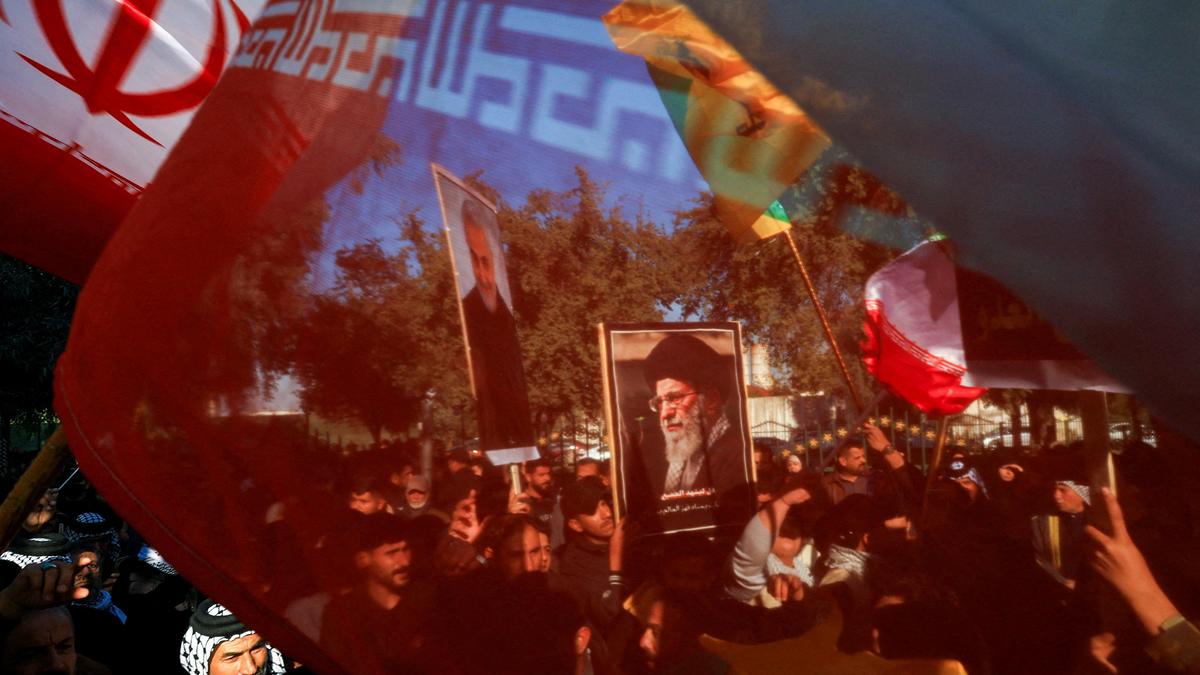
Elon Musk's Starlink, a satellite internet constellation operated by SpaceX, has recently positioned itself at the nexus of a significant geopolitical and human rights crisis by offering free internet services to users in Iran. This move is not merely a technological offering but a profound statement on internet freedom, digital sovereignty, and the evolving role of private tech entities in international affairs. The background to this intervention lies in the widespread protests that erupted across Iran following the death of 22-year-old Mahsa Amini in September 2022, after she was detained by the morality police. These protests quickly escalated into a nationwide movement against the Iranian government, demanding greater freedoms and accountability. In response, the Iranian authorities implemented severe internet restrictions and shutdowns, aiming to quell dissent, prevent the organization of protests, and control the flow of information both within and out of the country. This tactic of internet censorship is a common tool used by authoritarian regimes to suppress opposition and maintain control, effectively isolating their populations from external support and information. What happened is that Elon Musk announced via Twitter that Starlink would make its services available to Iranians, circumventing the government's internet blockade. Starlink operates a constellation of thousands of low-Earth orbit (LEO) satellites that provide high-speed, low-latency broadband internet. Unlike traditional internet infrastructure that relies on ground-based cables and towers, Starlink's service bypasses national telecommunication networks, making it extremely difficult for a government to block or censor. The U.S. Treasury Department even issued a general license to facilitate the export of internet-related services and equipment to Iran, including satellite internet terminals, in response to the crackdown, implicitly supporting such initiatives. Key stakeholders in this unfolding drama include, primarily, **SpaceX/Starlink and Elon Musk**. Their motivation appears to be a mix of humanitarian concern for freedom of information and a strategic move to demonstrate Starlink's capabilities and expand its global footprint, even in challenging environments. **The Iranian government** is a major stakeholder, viewing Starlink's intervention as an infringement on its national sovereignty and a direct challenge to its authority and control over its populace. They are likely to employ various countermeasures, from jamming signals to intercepting ground terminals. **Iranian citizens**, particularly those participating in or supporting the protests, are crucial beneficiaries, as Starlink offers a lifeline for communication, organization, and access to uncensored information. Finally, the **international community**, including human rights organizations and democratic governments, largely supports the initiative as a step towards upholding human rights and freedom of expression. For India, this development carries significant implications across several domains. Firstly, it raises questions about **digital sovereignty and internet governance**. India, like many nations, asserts control over its digital infrastructure and data within its borders. The Starlink model challenges this notion by providing an external, unregulated internet pipeline. This could set a precedent for future interventions in other countries facing similar internet shutdowns, potentially impacting India's own internal security strategies if such services were to be used to bypass Indian regulations during times of crisis. Secondly, it highlights the **dual-use nature of advanced technology** and the increasing influence of private tech companies in geopolitical landscapes. India's robust space program and growing private space sector mean it must carefully consider the regulatory frameworks for such technologies. Thirdly, it underscores the importance of **freedom of speech and access to information**, fundamental rights enshrined in **Article 19(1)(a) of the Indian Constitution**. While Article 19(2) allows for reasonable restrictions, the Supreme Court, in cases like *Anuradha Bhasin vs. Union of India (2020)*, has affirmed that internet access is a fundamental right and that internet shutdowns must adhere to strict proportionality and legal scrutiny. Starlink's action globally reinforces the debate around this right, which India has also grappled with during various internet shutdowns in regions like Jammu & Kashmir. Historically, internet shutdowns have been employed globally, from Myanmar to Ethiopia, and even within India during periods of civil unrest or communal tensions, often under provisions of the **Indian Telegraph Act, 1885** and the **Code of Criminal Procedure, 1973**. Starlink's emergence offers a technological counter-narrative to state-imposed censorship. The future implications are vast. This episode could accelerate the development of more resilient, decentralized internet solutions, challenging traditional state control over information. It also forces governments worldwide to re-evaluate their regulatory frameworks for satellite communication and foreign tech providers. The tension between national sovereignty and the universal right to information will intensify. For India, it might necessitate clearer policies on satellite internet services, potentially influencing its **Digital India** initiative's focus on inclusive connectivity while safeguarding national interests. It also sets a precedent for how private entities might engage in humanitarian or political interventions, blurring lines between corporate interests and global governance. The success or failure of Starlink in Iran will undoubtedly shape future technological interventions in similar global hotspots.
How to study
Turn news into exam marks
Revise monthly events by exam family instead of reading random updates.
Pair one-liners with mock tests so mistakes become the next revision list.
Keep state job pages, calendar pages and GK packs connected in one path.