

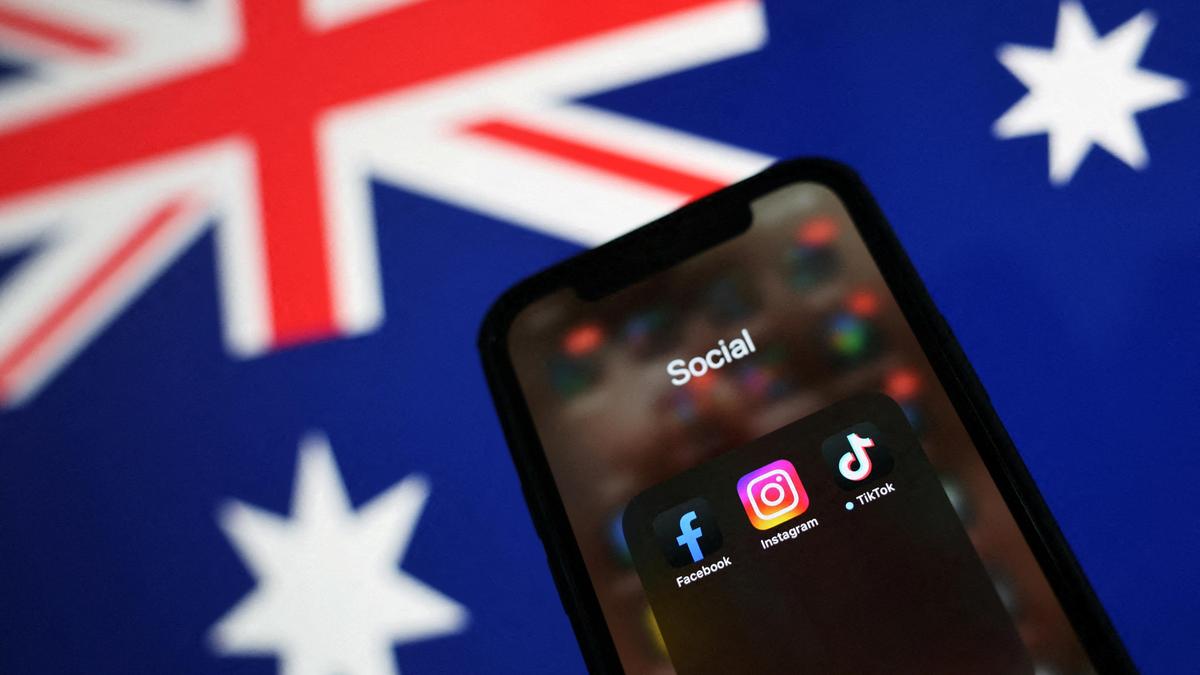
Australia implemented a 'world-first social media ban' for individuals under 16 years of age.
GK and monthly revision
Social media sites block 4.7 million underage accounts in Australia
Tech giants have blocked 4.7 million accounts in Australia following the nation's world-first social media ban for individuals under 16 years of age. This significant move highlights Australia's pioneering efforts in digital regulation and child online safety. For competitive exams, this demonstrates a global trend in government oversight of social media and its impact on minors, relevant for questions on governance, international policy, and social issues.
Revision structure
Monthly events and exam calendar context
Static GK and one-liner notes
Quiz and mock-test revision path
Key points
Exam-ready takeaways
Following this ban, tech giants blocked a total of 4.7 million underage accounts in Australia.
The specific age threshold for the social media ban in Australia is under 16 years old.
This Australian initiative sets a global precedent for national regulation of social media access for minors.
The blocking action was carried out by 'tech giants' in compliance with the new Australian legislation.
Detailed analysis
Full exam-oriented breakdown
The decision by tech giants to block 4.7 million underage accounts in Australia, following the nation's world-first social media ban for individuals under 16 years of age, marks a significant moment in the global discourse on child online safety and digital regulation. This move by Australia is not merely a domestic policy shift; it sets a powerful international precedent, forcing a re-evaluation of how societies protect their youngest citizens in an increasingly digital world. **Background Context and What Happened:** For years, parents, educators, and mental health professionals worldwide have raised alarms about the detrimental effects of social media on children and adolescents. Concerns range from cyberbullying, exposure to inappropriate content, and privacy violations to the more insidious impacts on mental health, body image, sleep patterns, and academic performance. Studies have increasingly linked excessive social media use to anxiety, depression, and low self-esteem among youth. Governments globally have been grappling with how to regulate big tech and ensure child online safety without stifling innovation or infringing on free speech. Australia, through its proactive stance, has opted for a direct intervention: a legal mandate prohibiting individuals under 16 from having social media accounts. This legislative action compelled major social media platforms to identify and remove millions of accounts belonging to underage users, demonstrating a tangible commitment to safeguarding children's digital well-being. **Key Stakeholders Involved:** Several key players are central to this development. First, the **Australian Government and Parliament** are the primary drivers, initiating and enacting the legislation. Their motivation stems from public health concerns and a desire to protect minors. Second, **Tech Giants** such as Meta (Facebook, Instagram), TikTok, YouTube, and others are crucial implementers. While they often self-regulate, this ban forced their hand, requiring them to invest in robust age verification technologies and content moderation systems. Their compliance is essential for the ban's effectiveness. Third, **Children and their Parents** are directly affected. While children lose direct access, parents gain a legal framework to support their efforts in managing their children's online lives. Child advocacy groups and mental health organizations also play a vital role, often lobbying for such protective measures. **Why This Matters for India:** India, with its vast young population and burgeoning internet penetration, faces similar, if not more complex, challenges regarding child online safety. Australia's action serves as a crucial policy precedent for India. Discussions around age verification, parental consent, and the responsibility of social media platforms are already underway in India. The recently enacted **Digital Personal Data Protection Act (DPDP Act), 2023**, explicitly addresses the processing of children's data, defining a 'child' as an individual below 18 years of age. It mandates verifiable parental consent for processing children's personal data and prohibits tracking, behavioral monitoring, or targeted advertising to children. While the DPDP Act doesn't impose an outright ban like Australia's, it signifies India's commitment to protecting minors online. Australia's move could embolden Indian policymakers to consider stricter age gates or even similar bans, especially given the socio-cultural context and the increasing incidence of cyberbullying and online exploitation. Economically, such regulations could impact how tech companies operate and innovate within the Indian market, potentially requiring significant investment in compliance infrastructure. **Historical Context and Future Implications:** The push for stricter digital regulation is part of a broader global trend. The European Union's **General Data Protection Regulation (GDPR)**, enacted in 2018, set a global benchmark for data privacy, including specific provisions for children's data. Various US states have also explored similar legislation. Australia's ban is a significant escalation in this regulatory landscape, shifting from data protection to outright access restriction. The future implications are profound. This could lead to a 'race to the top' among nations to implement more stringent child protection measures online, potentially fragmenting the global internet. Tech companies will face immense pressure to develop foolproof age verification technologies – a significant technical and privacy challenge. The debate will also intensify around balancing children's right to access information and participate in the digital world against the imperative to protect them from harm. For India, this means continued evolution of its digital policies, potentially drawing upon the experiences and challenges faced by Australia and other nations. Constitutional provisions like **Article 21 (Right to Life and Personal Liberty)**, which includes the right to a safe environment and digital well-being, and **Article 39(f)** under the Directive Principles of State Policy, which mandates the state to ensure opportunities for children to develop in a healthy manner and protect them from exploitation, provide the foundational legal framework for such policy considerations in India. The **Information Technology Act, 2000**, and its subsequent amendments, also provide the legal backbone for addressing cybercrimes and online safety in India. This Australian action will undoubtedly fuel further discussions on intermediary liability and the role of platforms in ensuring a safe online environment for children globally.
How to study
Turn news into exam marks
Revise monthly events by exam family instead of reading random updates.
Pair one-liners with mock tests so mistakes become the next revision list.
Keep state job pages, calendar pages and GK packs connected in one path.