

India's FY27 Union Budget, often referred to as Budget 2026, will prioritize strategic sectors.
GK and monthly revision
India’s Budget 2026 to support new and strategic ambitions
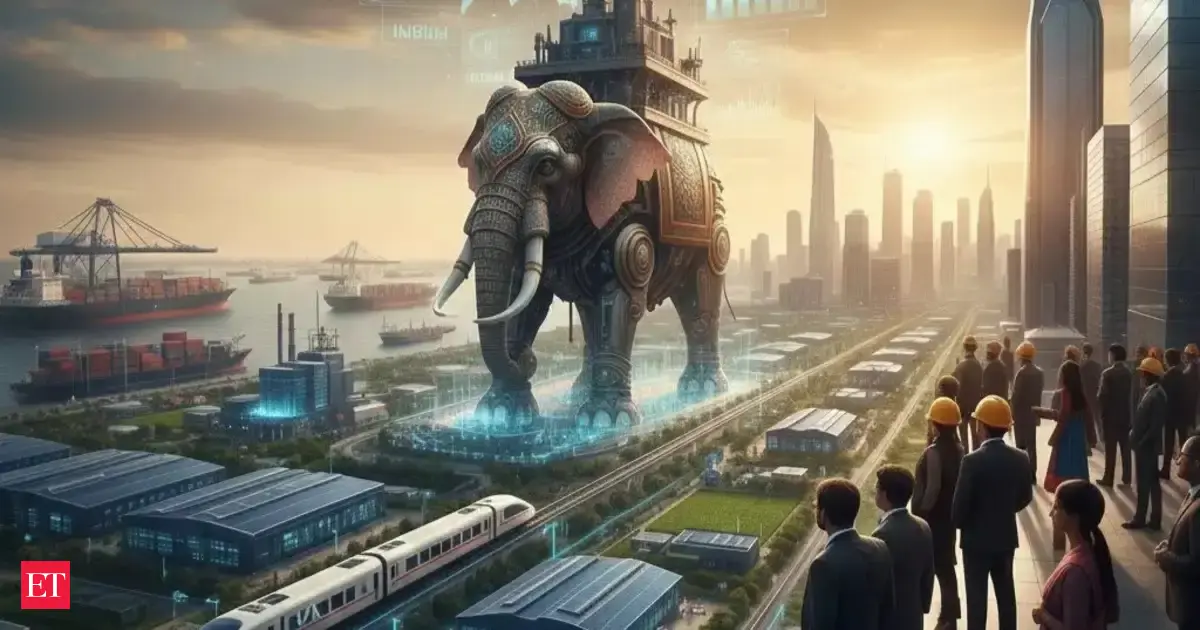
India's upcoming FY27 Union Budget, referred to as Budget 2026, is poised to significantly boost strategic sectors such as defence, semiconductors, and renewables, while also expanding 'new economy' roles. The budget will emphasize higher capital expenditure on infrastructure and implement supply-side reforms to attract greater investment. Its focus on deregulation, support for domestic priority sectors, human capital development, and fiscal deficit management outlines a comprehensive strategy for economic growth and governance, making it crucial for understanding future policy directions in competitive exams.
Revision structure
Monthly events and exam calendar context
Static GK and one-liner notes
Quiz and mock-test revision path
Key points
Exam-ready takeaways
Key strategic sectors identified for focus include defence, semiconductors, and renewables.
The budget is expected to feature higher capital expenditure on infrastructure.
It will focus on supply-side reforms aimed at attracting investment.
Governance issues will be addressed through deregulation and support for domestic priority sectors.
Detailed analysis
Full exam-oriented breakdown
India's Union Budget for FY27, often referred to as Budget 2026 given its presentation in early 2026, is poised to be a pivotal document outlining the nation's strategic economic trajectory. This budget is more than just an annual financial statement; it reflects India's ambition to transform into a developed economy by 2047, emphasizing self-reliance, technological advancement, and sustainable growth. The announced prioritization of strategic sectors like defence, semiconductors, and renewables, coupled with a continued push for capital expenditure and supply-side reforms, signals a clear shift towards an investment-led, innovation-driven growth model. The background context for this strategic budget lies in several interconnected factors. Globally, supply chain disruptions, geopolitical shifts, and the imperative of climate action have underscored the need for resilient domestic capabilities. Internally, India has been pursuing a path of robust economic recovery post-pandemic, characterized by a significant government-led capital expenditure push over the last few budgets. This strategy aimed to crowd in private investment, create jobs, and build foundational infrastructure. Furthermore, India’s demographic dividend, coupled with its aspiration to become a global manufacturing hub and a significant player in the 'new economy' sectors, necessitates targeted policy support. The 'Atmanirbhar Bharat Abhiyan' (Self-Reliant India Campaign), launched in 2020, provides a foundational philosophy, especially for sectors like defence and manufacturing, emphasizing domestic production and reduced import dependence. What is expected from Budget 2026 is a reinforcement of these themes. The focus on defence is a direct extension of 'Atmanirbhar Bharat', aiming to bolster indigenous manufacturing, reduce arms imports, and enhance national security capabilities. This aligns with the 'Make in India' initiative, encouraging domestic R&D and production in critical defence technologies. The emphasis on semiconductors is crucial given their foundational role in almost every modern technology, from consumer electronics to strategic defence systems. The global chip shortage in recent years highlighted vulnerabilities, prompting India to launch significant Production Linked Incentive (PLI) schemes to attract investment in semiconductor manufacturing and design. Similarly, renewables are vital for India's energy security and its ambitious climate change commitments, including achieving Net-Zero emissions by 2070 and meeting 50% of its energy requirements from renewable sources by 2030, as pledged at COP26. Expanding 'new economy' roles implies support for emerging technologies like AI, machine learning, green hydrogen, and advanced manufacturing, fostering innovation and creating high-skill jobs. Key stakeholders in this budgetary exercise include the Ministry of Finance, which spearheads the preparation and presentation of the Union Budget under **Article 112** of the Constitution (Annual Financial Statement). NITI Aayog provides critical long-term policy vision and strategic inputs. The Reserve Bank of India (RBI) plays a crucial role in managing monetary policy, which needs to be carefully coordinated with fiscal policy to ensure macroeconomic stability. The private sector is a primary beneficiary and implementer, as higher capital expenditure and supply-side reforms are designed to stimulate private investment and industrial growth. International investors are also key, as the budget's reforms aim to attract Foreign Direct Investment (FDI) into these strategic sectors. Ultimately, the citizens of India are the largest stakeholders, benefiting from job creation, improved infrastructure, enhanced national security, and a cleaner environment. This budget matters immensely for India's future. Economically, it aims to sustain high growth rates, create millions of jobs, and make India a globally competitive manufacturing and service hub. Politically, a stronger economy and self-reliance in strategic sectors enhance India's geopolitical standing. Socially, investments in human capital and 'new economy' roles promise better opportunities and a higher standard of living. Historically, India has often grappled with balancing fiscal prudence with developmental needs. The commitment to managing the fiscal deficit, while simultaneously boosting capital expenditure, reflects a mature approach to economic governance, guided by principles enshrined in the **Fiscal Responsibility and Budget Management (FRBM) Act, 2003**, which mandates fiscal discipline. The future implications are profound. If successfully implemented, Budget 2026 could accelerate India's journey towards becoming a $5 trillion economy and a major global power. It could cement India's position as a hub for advanced manufacturing, green technology, and digital innovation. However, challenges remain, including effective implementation of policies, attracting sufficient private investment, managing inflationary pressures, and ensuring equitable distribution of growth benefits. The focus on deregulation and support for domestic priority sectors aims to streamline processes and create a conducive business environment, further linking to broader themes of good governance and ease of doing business. This comprehensive approach, integrating economic growth with strategic national interests and environmental sustainability, sets the stage for a transformative decade for India.
How to study
Turn news into exam marks
Revise monthly events by exam family instead of reading random updates.
Pair one-liners with mock tests so mistakes become the next revision list.
Keep state job pages, calendar pages and GK packs connected in one path.