

The crackdown on demonstrations occurred in Iran.
GK and monthly revision
Iran protests: Trump claims killing ‘has stopped’ even as Tehran signals executions ahead
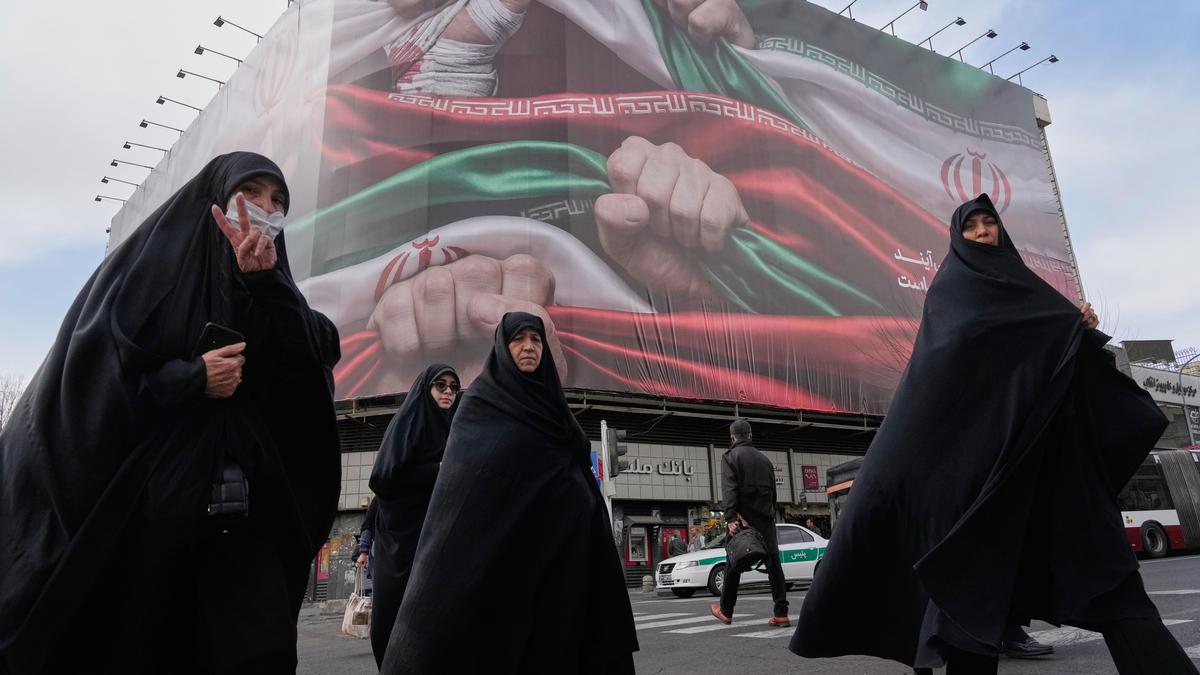
Iran's security forces have reportedly killed at least 2,586 individuals during a crackdown on demonstrations, as reported by the U.S.-based Human Rights Activists News Agency. This situation is further complicated by former U.S. President Donald Trump's claims that the killings have ceased, even as Tehran signals impending executions. This event highlights severe human rights concerns and significant geopolitical tensions, making it crucial for understanding international relations and current affairs in competitive exams.
Revision structure
Monthly events and exam calendar context
Static GK and one-liner notes
Quiz and mock-test revision path
Key points
Exam-ready takeaways
At least 2,586 individuals were reportedly killed by Iranian security forces.
The death toll was reported by the U.S.-based Human Rights Activists News Agency.
Former U.S. President Donald Trump claimed that the killing 'has stopped'.
Tehran has signaled that executions related to the protests are ahead.
Detailed analysis
Full exam-oriented breakdown
The protests sweeping across Iran since September 2022, triggered by the death of 22-year-old Mahsa Amini in the custody of the country's morality police, represent one of the most significant challenges to the Islamic Republic's authority in decades. Amini was arrested for allegedly violating Iran's strict dress code for women, particularly the mandatory hijab. Her death sparked widespread outrage, evolving from initial protests against the morality police and mandatory hijab into a broader movement demanding fundamental rights, freedom, and even an end to the current regime. **Background and What Happened:** The Islamic Republic of Iran, established after the 1979 revolution, has long enforced strict social and religious laws, including mandatory veiling for women. While dissent has periodically surfaced, such as the 2009 Green Movement and the 2017-18 and 2019 fuel price protests, the current wave is distinct in its scale, duration, and the prominent role of women and youth. The slogan "Woman, Life, Freedom" encapsulates the movement's core demands. The Iranian government's response has been severe, with security forces, including the Revolutionary Guard and the Basij militia, employing lethal force, mass arrests, and internet shutdowns to quell the demonstrations. The U.S.-based Human Rights Activists News Agency (HRA News Agency) reported a staggering death toll of at least 2,586 individuals, including minors, while thousands have been arrested. Amidst this crackdown, former U.S. President Donald Trump's claim that the killings 'has stopped' stands in stark contrast to reports from human rights organizations and the Iranian judiciary's signals of impending executions for those involved in the protests, indicating a continued, severe state response. **Key Stakeholders Involved:** At the heart of the conflict are the **Iranian protesters**, a diverse group predominantly comprising women, students, and youth, demanding greater freedoms and systemic change. They are challenging the authority of the **Iranian Government**, led by Supreme Leader Ali Khamenei and President Ebrahim Raisi, which views the protests as foreign-instigated riots threatening national security and Islamic values. The **Iranian security forces** (Revolutionary Guard, Basij, police) are the primary enforcers of the state's crackdown. **Human rights organizations** like HRA News Agency and Amnesty International play a crucial role in documenting abuses and advocating for victims, often facing significant risks. The **international community**, including the United States, European Union, and United Nations, has largely condemned the crackdown, imposing sanctions on Iranian officials and entities. However, their collective action has been limited, reflecting complex geopolitical considerations. **Significance for India:** This situation holds significant implications for India. **Energy Security** is paramount; Iran is a major oil and gas producer, and instability there can disrupt global energy markets, directly impacting India's import bill and economic stability. **Geopolitical Balancing** is another critical aspect. India maintains historical and strategic ties with Iran, exemplified by the development of the Chabahar Port, which is vital for India's connectivity to Afghanistan and Central Asia, bypassing Pakistan. However, India also has strong relations with the U.S. and Gulf nations, which are often at odds with Iran. Navigating this delicate balance requires astute diplomacy. India generally adheres to a policy of non-interference in the internal affairs of sovereign nations, but its commitment to human rights, as enshrined in its own constitutional framework (e.g., Preamble's emphasis on justice, liberty, equality; Article 21 guaranteeing right to life and personal liberty), means it cannot entirely ignore such widespread abuses. Regional instability in West Asia, a region crucial for India's diaspora (over 8 million Indians reside there) and trade routes, could also have adverse economic and security repercussions. **Historical Context and Future Implications:** Iran has a history of popular uprisings, but the current wave, often described as a 'revolution,' demonstrates an unprecedented level of defiance and a direct challenge to the clerical establishment. The regime's brutal response mirrors past crackdowns, but the sustained nature of the protests and the global attention they have garnered distinguish them. Looking ahead, the situation could lead to several outcomes: continued suppression and consolidation of regime power, potentially at the cost of increased international isolation; a gradual erosion of regime authority leading to reforms; or, in a more extreme scenario, further escalation and prolonged instability. The future of the Joint Comprehensive Plan of Action (JCPOA), or Iran nuclear deal, also hangs in the balance, as renewed international focus on Iran's human rights record could complicate any efforts to revive it. **Related Constitutional Articles, Acts, or Policies:** While this event pertains to Iran, it touches upon universal principles that resonate with India's constitutional values and foreign policy. India's **Preamble** emphasizes justice, liberty, and equality, while **Article 21** (Right to Life and Personal Liberty) and **Article 14** (Equality Before Law) highlight the fundamental human rights that protesters in Iran are seeking. From a foreign policy perspective, **Article 51** of the Indian Constitution directs the state to promote international peace and security, foster respect for international law and treaty obligations, and encourage settlement of international disputes by arbitration. India's adherence to the principles of **Panchsheel** (peaceful coexistence) and its traditional non-aligned stance guide its approach to such international crises, advocating for peaceful resolution while upholding human rights principles in multilateral forums. The government's actions are also guided by its **Foreign Policy Doctrine**, which seeks to protect national interests, including energy security and diaspora welfare, while balancing global power dynamics.
How to study
Turn news into exam marks
Revise monthly events by exam family instead of reading random updates.
Pair one-liners with mock tests so mistakes become the next revision list.
Keep state job pages, calendar pages and GK packs connected in one path.