
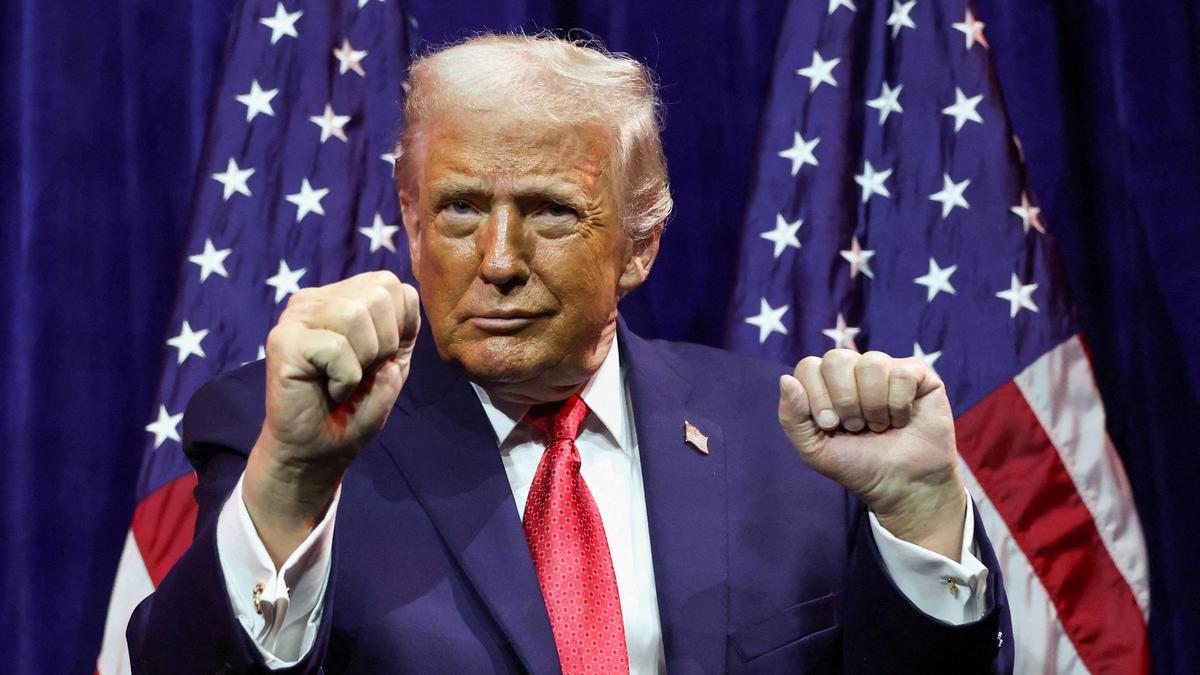
Former US President Donald Trump proposed a cap on credit card interest rates.
GK and monthly revision
Trump pushes 1-year, 10% cap on credit card interest rates, banks balk
Former US President Donald Trump has proposed a significant policy to cap credit card interest rates at 10% for one year, aiming to provide consumer relief. This proposal faces strong opposition from powerful entities like Wall Street and credit card companies, who have contributed heavily to his 2024 campaign. For competitive exams, this highlights the interplay between political agendas, economic policy, and financial sector regulation, crucial for current affairs and economics sections.
Revision structure
Monthly events and exam calendar context
Static GK and one-liner notes
Quiz and mock-test revision path
Key points
Exam-ready takeaways
The proposed cap on credit card interest rates is 10%.
The duration of the proposed interest rate cap is 1 year.
The proposal faces strong opposition from Wall Street and credit card companies.
The policy is part of Donald Trump's 2024 campaign and second-term agenda.
Detailed analysis
Full exam-oriented breakdown
Former US President Donald Trump's proposal to cap credit card interest rates at 10% for one year has ignited a significant debate, underscoring the perennial tension between consumer protection and free-market financial principles. This policy, part of his 2024 campaign agenda, aims to alleviate the burden of high-interest debt on American consumers but faces strong opposition from Wall Street and credit card companies, powerful entities that have historically contributed to political campaigns. The background context for this proposal is rooted in the escalating consumer debt crisis in the United States. Credit card interest rates have been on an upward trend, exacerbated by the Federal Reserve's aggressive interest rate hikes to combat inflation. Average credit card Annual Percentage Rates (APRs) often hover around 20-30%, with some reaching even higher for subprime borrowers. This leads to substantial financial strain for millions of households, making it difficult to pay down balances and often trapping individuals in a cycle of debt. The proposition, therefore, taps into a widespread public sentiment for relief from what many perceive as predatory lending practices. Key stakeholders in this debate include Donald Trump, who positions himself as a champion of the common consumer against powerful financial interests, leveraging populist appeal. Consumers, particularly those struggling with high-interest debt, stand to be the primary beneficiaries, potentially saving significant amounts in interest payments. However, the most vocal opposition comes from Wall Street and credit card companies. These institutions argue that such a cap would severely impact their profitability, force them to reduce credit availability, especially for riskier borrowers, and potentially lead to a contraction in the credit market. They contend that interest rates reflect the risk associated with lending and the cost of capital, and an artificial cap would distort market mechanisms. Their substantial financial contributions to political campaigns highlight their vested interest in maintaining the current regulatory environment. While this is a US-centric policy proposal, its implications resonate globally and are particularly relevant for India in several ways. India's financial sector, like any other, grapples with the balance between promoting credit access and ensuring consumer protection. Although India does not face an identical proposal, the underlying issues of consumer debt, high-interest rates, and the need for regulatory oversight are pertinent. The Reserve Bank of India (RBI) plays a crucial role in regulating the Indian banking and financial system. Under the Reserve Bank of India Act, 1934, and the Banking Regulation Act, 1949, the RBI is empowered to issue directives to banks regarding lending practices, including interest rates. While Indian banks generally have the freedom to determine their interest rates based on market forces and internal cost structures, the RBI issues guidelines to ensure transparency, fairness, and prevention of usurious practices. For instance, the RBI has mandated a Fair Practices Code for lenders and has intervened in areas like microfinance to cap interest rates to protect vulnerable borrowers. A debate like Trump's could prompt a renewed focus on the effectiveness of existing consumer protection mechanisms in India's credit card and personal loan segments, especially given the rising penetration of credit cards and digital lending platforms. Historically, interest rate caps, often known as usury laws, have existed in various forms across different civilizations and legal systems to prevent excessive interest charges. In the US, the 2009 Credit CARD Act introduced significant reforms to credit card practices, though it did not impose a direct interest rate cap like the one proposed by Trump. This historical context underscores the recurring societal concern about financial exploitation. For India, the Consumer Protection Act, 2019, provides a robust framework for addressing unfair trade practices and consumer grievances across all sectors, including financial services. Consumers can seek redressal against unfair lending practices or misleading information from financial institutions. The future implications of such a cap, if implemented, are multifaceted. Economically, it could lead to a significant reduction in bank revenues and potentially tighten credit availability, especially for those with lower credit scores who are deemed higher risk. This could inadvertently push some borrowers towards unregulated, even more predatory, lending sources. Politically, it represents a potent campaign issue, highlighting the populist appeal of challenging corporate power. For India, observing the outcome of such a policy in the US would provide valuable insights into the potential economic and social consequences, informing its own regulatory approaches to consumer credit and financial inclusion. It reinforces the broader theme of governance in balancing economic growth with social equity and the role of the state in regulating markets to protect its citizens. In essence, Trump's proposal is a stark reminder of the global challenges in balancing financial innovation and market efficiency with the imperative of consumer protection and social justice. It prompts a critical examination of regulatory frameworks, market dynamics, and the ethical responsibilities of financial institutions worldwide.
How to study
Turn news into exam marks
Revise monthly events by exam family instead of reading random updates.
Pair one-liners with mock tests so mistakes become the next revision list.
Keep state job pages, calendar pages and GK packs connected in one path.