

A U.S.-based rights group reported that the death toll in Iran protests has crossed 500.
GK and monthly revision
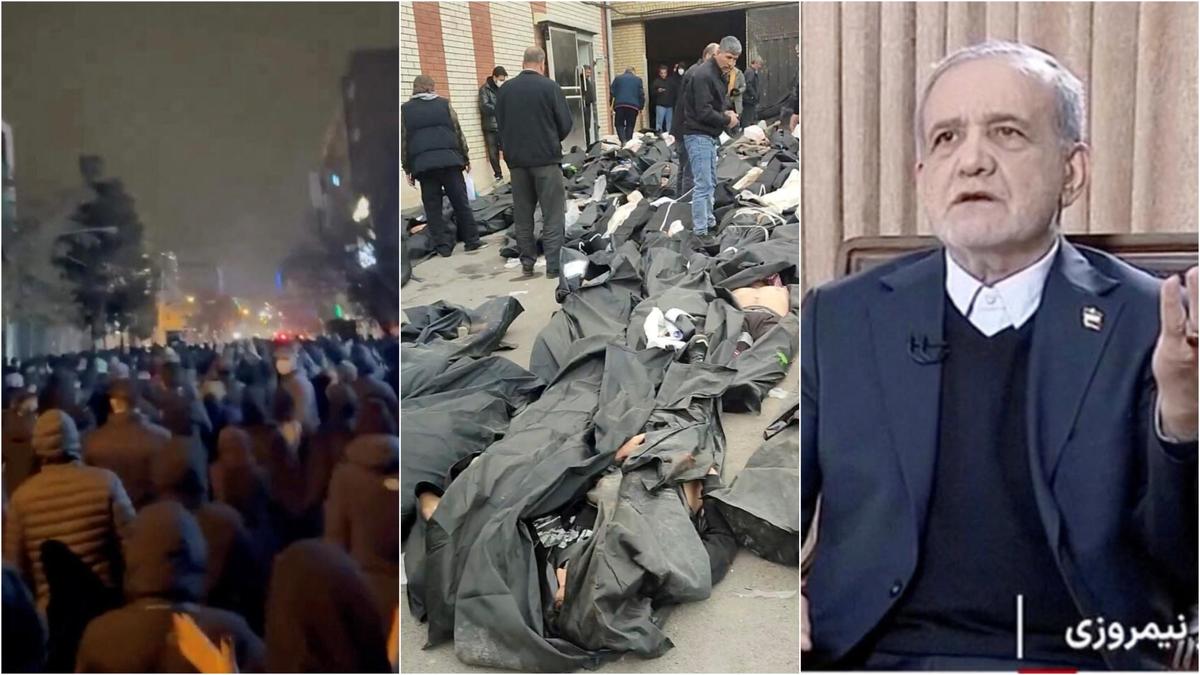
Iran protest deaths cross 500, says rights group; authorities call for counter-rally to ‘condemn U.S., Israel actions’
A U.S.-based rights group reported that over 500 people, including 490 protesters and 48 security personnel, have died in ongoing protests across Iran. This highlights significant internal unrest and human rights concerns. Meanwhile, Iranian authorities called for counter-rallies to condemn alleged U.S. and Israeli actions, escalating geopolitical tensions. This event is crucial for understanding international relations, human rights issues, and regional stability for competitive exams.
Revision structure
Monthly events and exam calendar context
Static GK and one-liner notes
Quiz and mock-test revision path
Key points
Exam-ready takeaways
The same group stated that 490 protesters have been killed during the unrest in Iran.
Additionally, 48 security personnel have reportedly died in the Iran protests, according to the U.S.-based group.
Iranian authorities called for counter-rallies to condemn the actions of the United States and Israel.
Iran issued a warning to the U.S. against 'miscalculation' and threatened retaliation.
Detailed analysis
Full exam-oriented breakdown
The recent reports of over 500 deaths in ongoing protests across Iran, including 490 protesters and 48 security personnel, paint a grim picture of internal unrest and a severe human rights crisis. This situation, coupled with Iran's strong warnings to the U.S. and calls for counter-rallies to condemn alleged U.S. and Israeli actions, signifies a critical juncture in West Asian geopolitics with far-reaching implications. **Background Context and What Happened:** The current wave of protests, unprecedented in their scale and intensity, erupted in mid-September 2022 following the death of 22-year-old Mahsa Amini. Amini was detained by Iran's 'morality police' (Guidance Patrol) for allegedly violating the country's strict dress code, specifically regarding the mandatory hijab. Her death in custody, which authorities attributed to a heart attack but witnesses and her family dispute, ignited widespread outrage. The protests initially focused on women's rights and the compulsory hijab but quickly evolved into a broader anti-government movement, challenging the very legitimacy of the Islamic Republic's clerical establishment. Demonstrators, primarily women and youth, have taken to the streets in hundreds of cities and towns, chanting slogans against the Supreme Leader and demanding fundamental changes. The government has responded with a brutal crackdown, deploying security forces, restricting internet access, and arresting thousands. The reported death toll by rights groups underscores the severity of the state's response. **Key Stakeholders Involved:** At the heart of this crisis are the **Iranian protesters**, a diverse group predominantly comprising women, students, and younger generations, who are demanding greater freedoms, economic opportunities, and an end to theocratic rule. The **Iranian government** and its **security apparatus** (including the Islamic Revolutionary Guard Corps, Basij militia, and police) are the primary targets of the protests and are responsible for the crackdown. Internationally, **human rights organizations** (like the U.S.-based group mentioned in the article) play a crucial role in documenting abuses and advocating for victims. The **United States** and **Israel** are also significant stakeholders, viewed by the Iranian government as instigators of the unrest. Their long-standing adversarial relationship with Iran, particularly over its nuclear program and regional influence, adds a complex geopolitical layer to the domestic crisis. **Historical Context:** Iran has a history of significant protests against its government since the 1979 Islamic Revolution. Notable instances include the 2009 Green Movement, which challenged the presidential election results; the 2017-18 protests over economic grievances; and the 2019 protests triggered by fuel price hikes, which were also met with deadly force. What distinguishes the current wave is its sustained nature, widespread participation across socio-economic strata, and the direct challenge to the regime's core ideological tenets, particularly the mandatory hijab. **Why This Matters for India:** For India, the situation in Iran carries significant geopolitical, economic, and strategic implications. Iran is a critical partner in India's 'Connect Central Asia' policy, primarily through the **Chabahar Port**. This port provides India with a strategic alternative trade route to Afghanistan and Central Asia, bypassing Pakistan, and is crucial for regional connectivity and economic development. Instability in Iran could jeopardize the progress and future of this vital project. Furthermore, Iran has historically been a key supplier of **crude oil** to India. While sanctions have complicated this relationship, a prolonged crisis could impact global oil prices, directly affecting India's energy security and import bill. India also maintains a delicate diplomatic balance in West Asia, fostering ties with both Iran and its regional rivals like Saudi Arabia and Israel. The escalating tensions between Iran and the U.S./Israel place India in a difficult position, requiring careful navigation to protect its strategic interests without alienating key partners. India, as a signatory to various international human rights conventions, observes such situations with concern, even while maintaining its policy of non-interference in the internal affairs of other nations, consistent with principles of sovereignty. **Future Implications:** The future implications are profound. Domestically, the protests could either force concessions from the Iranian government or lead to further entrenchment and repression. The regime's ability to quell the unrest without addressing its root causes will determine Iran's internal stability. Regionally, continued instability could embolden non-state actors, further destabilize the Middle East, and potentially impact the fragile negotiations around the **Iran Nuclear Deal (JCPOA)**. A more isolated and confrontational Iran could intensify its nuclear program or engage in more aggressive regional behavior, escalating tensions with the U.S. and Israel. For India, the long-term implications include potential disruptions to energy supplies, challenges to its regional connectivity projects, and a more complex strategic environment in West Asia, demanding agile and astute foreign policy responses. **Related Constitutional Articles, Acts, or Policies (Indian Context):** While Iran's internal crisis doesn't directly invoke specific articles of the Indian Constitution, India's foreign policy approach to such events is guided by its constitutional principles. **Article 51** of the Directive Principles of State Policy mandates the state to promote international peace and security, maintain just and honorable relations between nations, foster respect for international law and treaty obligations, and encourage settlement of international disputes by arbitration. This article underpins India's diplomatic efforts to de-escalate tensions and promote stability in regions like West Asia. Additionally, India's commitment to human rights, enshrined in the Preamble (justice, liberty, equality, fraternity) and Fundamental Rights (Articles 14-21), informs its stance on global human rights issues, even if direct intervention in another sovereign nation's affairs is avoided. India's foreign policy also adheres to the principles of non-alignment and strategic autonomy, which allows it to engage with various stakeholders without being drawn into bloc politics, crucial for navigating complex situations involving Iran, the U.S., and Israel.
How to study
Turn news into exam marks
Revise monthly events by exam family instead of reading random updates.
Pair one-liners with mock tests so mistakes become the next revision list.
Keep state job pages, calendar pages and GK packs connected in one path.