

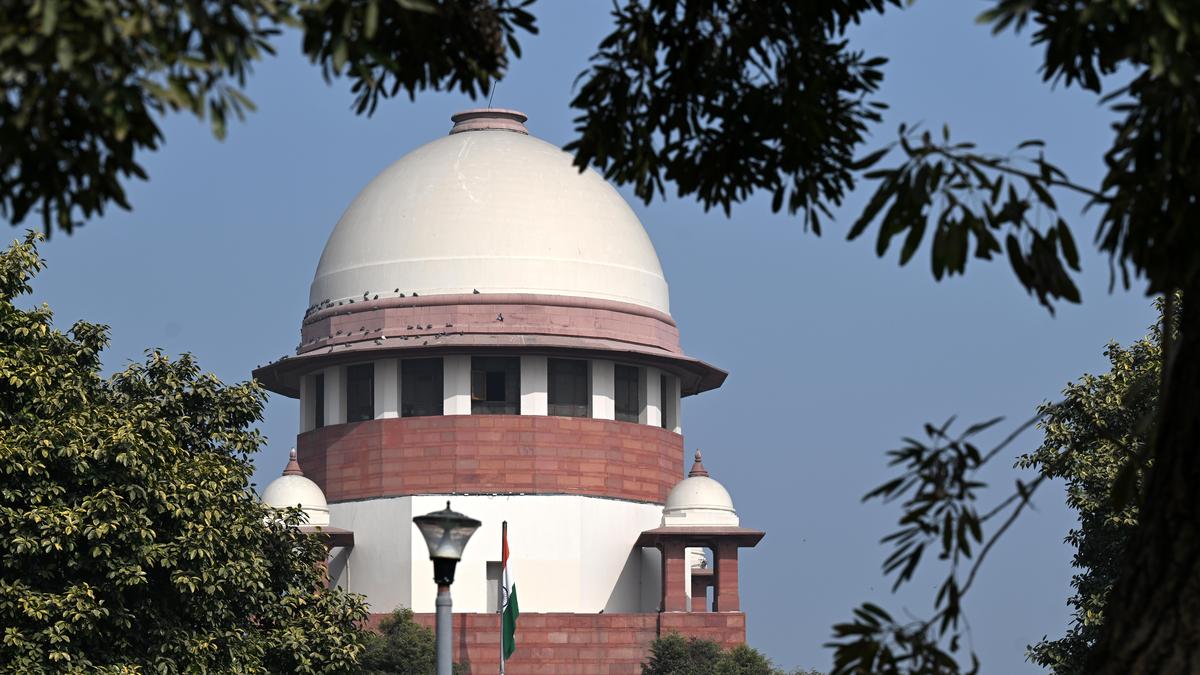
The Supreme Court mandated higher ethical standards for lawyers seeking to contest Bar Council elections.
GK and monthly revision
Standards of ethical values higher for lawyers seeking to contest bar polls: Supreme Court
The Supreme Court recently ruled that lawyers aspiring to contest Bar Council elections must uphold higher ethical standards compared to general practitioners. This significant pronouncement emerged from a plea filed by prominent Telangana High Court advocate Rapolu Bhaskar, challenging specific disqualification provisions within the State Bar Council. This ruling is crucial for competitive exams as it highlights judicial interpretation of professional ethics and governance within statutory legal bodies.
Revision structure
Monthly events and exam calendar context
Static GK and one-liner notes
Quiz and mock-test revision path
Key points
Exam-ready takeaways
The ruling was given while hearing a plea filed by advocate Rapolu Bhaskar.
Rapolu Bhaskar is a prominent advocate associated with the Telangana High Court.
His plea specifically challenged provisions related to the disqualification of an advocate in the State Bar Council.
The judgment emphasizes the importance of integrity and ethical conduct for members of statutory bodies governing the legal profession.
Detailed analysis
Full exam-oriented breakdown
The Supreme Court's recent pronouncement regarding higher ethical standards for lawyers aspiring to contest Bar Council elections marks a pivotal moment in the governance of India's legal profession. This ruling, emerging from a plea filed by prominent Telangana High Court advocate Rapolu Bhaskar, challenging specific disqualification provisions, underscores the judiciary's commitment to upholding integrity within statutory legal bodies. **Background Context and What Happened:** To truly grasp the significance of this ruling, one must understand the framework of legal professional regulation in India. The legal profession in India is primarily governed by the Advocates Act, 1961. This Act established the Bar Council of India at the national level and State Bar Councils at the state level. These bodies are statutory entities responsible for enrolling advocates, laying down standards of professional conduct and etiquette, and exercising disciplinary jurisdiction over advocates. The Bar Councils are self-regulatory bodies, meaning their members, who are advocates themselves, are elected by their peers. Rapolu Bhaskar, a Telangana High Court advocate, challenged certain provisions related to disqualification from contesting State Bar Council elections. The Supreme Court, while hearing this plea, ruled that lawyers seeking to contest these elections must adhere to a higher standard of ethical values compared to general practitioners. The rationale is clear: those who aspire to govern and regulate the profession must themselves be beyond reproach, embodying the highest ideals of integrity and probity. **Key Stakeholders Involved:** Several key stakeholders are directly impacted by or involved in this ruling. Firstly, the **Supreme Court of India** stands as the ultimate interpreter of the law, its judgment setting a precedent for all lower courts and regulatory bodies. Secondly, **Bar Councils (both State Bar Councils and the Bar Council of India)** are central, as they are the statutory bodies whose election processes and ethical standards are directly addressed. This ruling empowers them to enforce stricter conduct. Thirdly, **lawyers and advocates** themselves are primary stakeholders; those who wish to contest elections now face a more stringent ethical litmus test, while all advocates are reminded of the overarching importance of professional ethics. **Rapolu Bhaskar**, as the petitioner, brought the issue to the fore. Ultimately, the **public** is an indirect but crucial beneficiary, as a well-regulated, ethical legal profession is fundamental to the delivery of justice and maintenance of the rule of law. **Significance for India:** This ruling carries immense significance for India's legal and governance landscape. Politically, it strengthens the self-regulatory mechanism of the legal profession by ensuring that its leaders are individuals of impeccable character, thereby enhancing the credibility of the Bar Councils. Socially, it reinforces public trust in the legal system. When the governing bodies of lawyers maintain high ethical standards, it instills greater confidence among citizens seeking justice. Economically, while not directly impactful, an ethical legal system contributes to a stable business environment by ensuring fair legal redressal and contract enforcement. More broadly, it underscores the principle of good governance, emphasizing that leadership positions, especially in institutions critical to democracy, demand exemplary conduct. This aligns with India's constitutional ethos of upholding justice, liberty, equality, and fraternity. **Historical Context and Future Implications:** The regulation of the legal profession in India has evolved significantly. Prior to the Advocates Act, 1961, various High Courts had their own rules, and the Bar Councils Act, 1926, was a step towards unified regulation. The 1961 Act consolidated these efforts, creating a comprehensive framework. The Supreme Court's current ruling is an affirmation and strengthening of the spirit of this Act, particularly concerning professional ethics. In terms of future implications, this judgment is likely to lead to a more rigorous scrutiny of candidates in future Bar Council elections. State Bar Councils may be prompted to review and potentially amend their disqualification provisions to align with the Supreme Court's elevated ethical benchmarks. This could foster a culture of greater accountability and transparency within the legal fraternity, potentially reducing instances of professional misconduct and enhancing the overall standing of the profession. It sets a precedent that public office, even within a self-regulatory professional body, demands a higher degree of moral rectitude. **Related Constitutional Articles, Acts, or Policies:** The primary legislation relevant here is the **Advocates Act, 1961**. This Act provides for the constitution of Bar Councils, enrollment of advocates, and their professional conduct. Sections related to the powers and functions of Bar Councils (e.g., Section 7 for the Bar Council of India, Section 9 for State Bar Councils) and provisions for professional misconduct (e.g., Section 35) are particularly pertinent. While not directly a constitutional article on professional ethics, **Article 19(1)(g)**, which grants citizens the right to practice any profession, trade, or business, is relevant, as this right is subject to reasonable restrictions in the public interest, including those related to professional qualifications and conduct. The Supreme Court's power to interpret laws and set precedents is derived from its constitutional mandate, particularly under **Article 141**, which states that the law declared by the Supreme Court shall be binding on all courts within the territory of India.
How to study
Turn news into exam marks
Revise monthly events by exam family instead of reading random updates.
Pair one-liners with mock tests so mistakes become the next revision list.
Keep state job pages, calendar pages and GK packs connected in one path.