

India countered statements made by US Commerce Secretary Howard Lutnick regarding stalled trade discussions.
GK and monthly revision
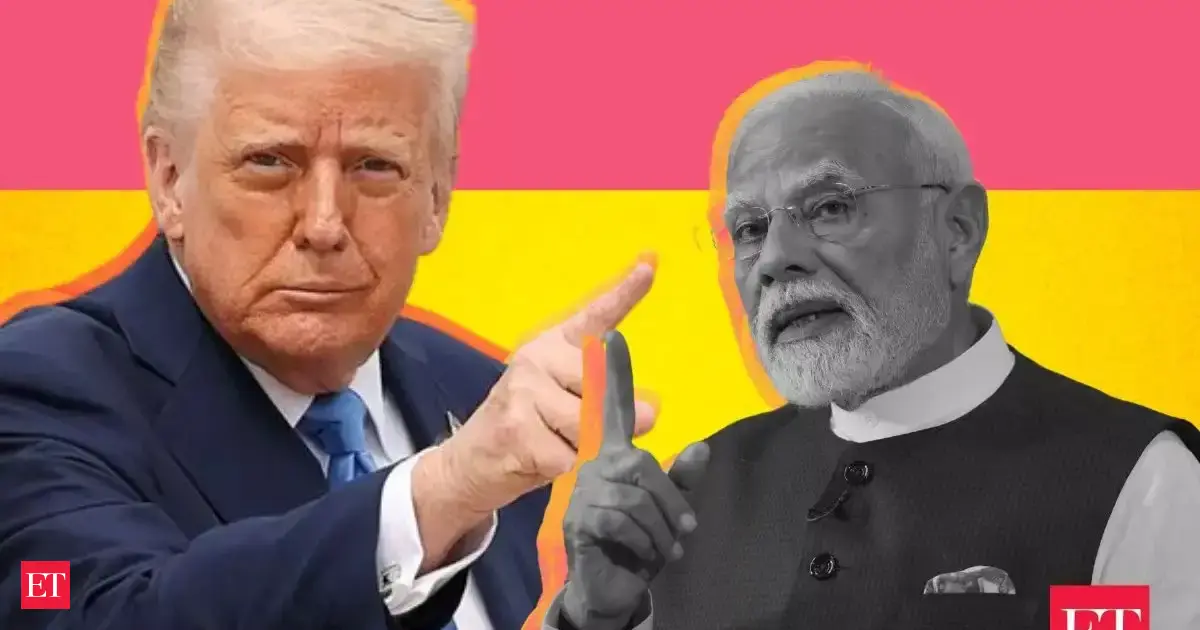
‘PM Modi and Trump have spoken eight times in 2025’: India rejects Lutnick’s claim that stalled trade talks were due to lack of outreach
India firmly rejected US Commerce Secretary Howard Lutnick's claim that stalled trade talks were due to a lack of outreach, asserting that Prime Minister Modi and President Trump had communicated eight times in 2025. This highlights India's emphasis on active diplomatic engagement and counters narratives suggesting communication gaps. The issue underscores the complexities of international trade negotiations and is crucial for understanding India-US bilateral relations in competitive exams.
Revision structure
Monthly events and exam calendar context
Static GK and one-liner notes
Quiz and mock-test revision path
Key points
Exam-ready takeaways
Lutnick's claims suggested that a lack of outreach was responsible for the stalled trade talks.
Indian officials affirmed that Prime Minister Modi and President Trump have spoken eight times in 2025.
The Ministry of External Affairs underscored the ongoing high-level interactions between the two leaders.
The news highlights the diplomatic efforts to manage perceptions and progress in India-US bilateral trade relations.
Detailed analysis
Full exam-oriented breakdown
The recent exchange between India and the United States regarding stalled trade talks highlights the intricate dance of international diplomacy and economic negotiations. India's swift rebuttal to US Commerce Secretary Howard Lutnick's assertion about a lack of outreach underscores its commitment to active engagement and its strategic approach to bilateral relations. **Background Context:** India and the US share a multifaceted strategic partnership, encompassing defense, technology, counter-terrorism, and economic cooperation. Trade, however, has often been a point of contention, marked by disagreements over tariffs, market access, and intellectual property rights. Both nations have expressed a desire to elevate their trade relationship, potentially through a comprehensive Free Trade Agreement (FTA) or a limited trade deal addressing specific irritants. Previous attempts to iron out these differences have faced hurdles, with issues like India's tariffs on Harley-Davidson motorcycles and the US withdrawal of Generalized System of Preferences (GSP) benefits for India in June 2019 being prominent examples. Despite these challenges, the overall trajectory has been towards deeper engagement, driven by shared democratic values and converging geopolitical interests, particularly in the Indo-Pacific region. **What Happened:** US Commerce Secretary Howard Lutnick reportedly suggested that trade discussions between India and the US had stalled due to insufficient outreach from the Indian side. This claim was firmly and publicly refuted by India. Indian officials, supported by the Ministry of External Affairs (MEA), asserted that Prime Minister Modi and President Trump had maintained regular and high-level communication, speaking eight times in 2025. This direct counter-narrative aimed to clarify the diplomatic efforts underway and to reject any perception of disengagement or lack of initiative from India's leadership. **Key Stakeholders Involved:** * **India:** The Prime Minister's Office (PMO) and the Ministry of External Affairs (MEA) are central to formulating and executing India's foreign policy and diplomatic outreach. The Ministry of Commerce and Industry plays a crucial role in trade negotiations. Indian industry bodies and exporters are also significant stakeholders, directly impacted by trade policies and agreements. * **United States:** The US President and the US Commerce Secretary, along with the US Trade Representative (USTR), are key figures in shaping and executing US trade policy. American businesses and industry associations seeking market access or resolution of trade barriers in India are also important stakeholders. * **International Bodies:** While not directly mentioned, organizations like the World Trade Organization (WTO) provide the overarching framework for global trade, and their principles often influence bilateral negotiations. **Why This Matters for India:** This episode is significant for several reasons. Economically, the US is one of India's largest trading partners, with bilateral trade crossing $120 billion in goods and services in 2022-23. A robust trade relationship is vital for India's economic growth, job creation, and integration into global supply chains. Politically and diplomatically, maintaining an image of proactive engagement is crucial. India aims to project itself as a responsible global player and a reliable strategic partner. Countering claims of stalled communication reinforces India's diplomatic effectiveness and commitment to resolving bilateral issues through dialogue. The ongoing high-level interactions are essential for advancing discussions on critical areas like defense cooperation, technology transfer, and climate change, beyond just trade. **Historical Context:** India-US relations have evolved significantly since the Cold War era. From a period of estrangement, they have transformed into a 'Global Strategic Partnership' in the 21st century. Economic ties have grown substantially, but trade imbalances and protectionist tendencies have periodically created friction. The pursuit of a comprehensive trade deal has been a consistent theme over various administrations in both countries, highlighting the long-term strategic importance attached to this relationship. **Future Implications:** The exchange indicates that while trade negotiations can be complex and fraught with public commentary, high-level diplomatic channels remain active. Future implications include continued efforts by both nations to bridge differences and potentially finalize a limited trade package or a more comprehensive FTA. Sustained engagement at the leadership level will be critical to navigate trade irritants, build trust, and deepen overall strategic cooperation. This also signals India's resolve to actively manage its international image and directly address narratives that might undermine its diplomatic efforts. The outcome of these trade discussions will impact various sectors of the Indian economy, from agriculture and textiles to pharmaceuticals and IT services, and will further shape India's position in the global economic order. **Related Constitutional Articles, Acts, or Policies:** The power to enter into international treaties and agreements primarily rests with the Executive branch under **Article 73** of the Indian Constitution. Furthermore, **Article 253** empowers Parliament to make any law for implementing any treaty, agreement, or convention with any other country or any decision made at any international conference, association, or other body. India's **Foreign Trade Policy**, periodically updated by the Ministry of Commerce and Industry, outlines the government's strategy for international trade, including tariff structures, export promotion schemes, and import regulations, all of which are subject to negotiation in bilateral trade talks. The 'Make in India' initiative also influences India's trade posture, prioritizing domestic manufacturing and sometimes leading to higher tariffs on imported goods.
How to study
Turn news into exam marks
Revise monthly events by exam family instead of reading random updates.
Pair one-liners with mock tests so mistakes become the next revision list.
Keep state job pages, calendar pages and GK packs connected in one path.