

The Budget Session 2026 is scheduled to commence on January 28, 2026.
GK and monthly revision
Budget Session 2026 to start from January 28, confirms Kiren Rijiju; Budget presentation likely on Feb 1
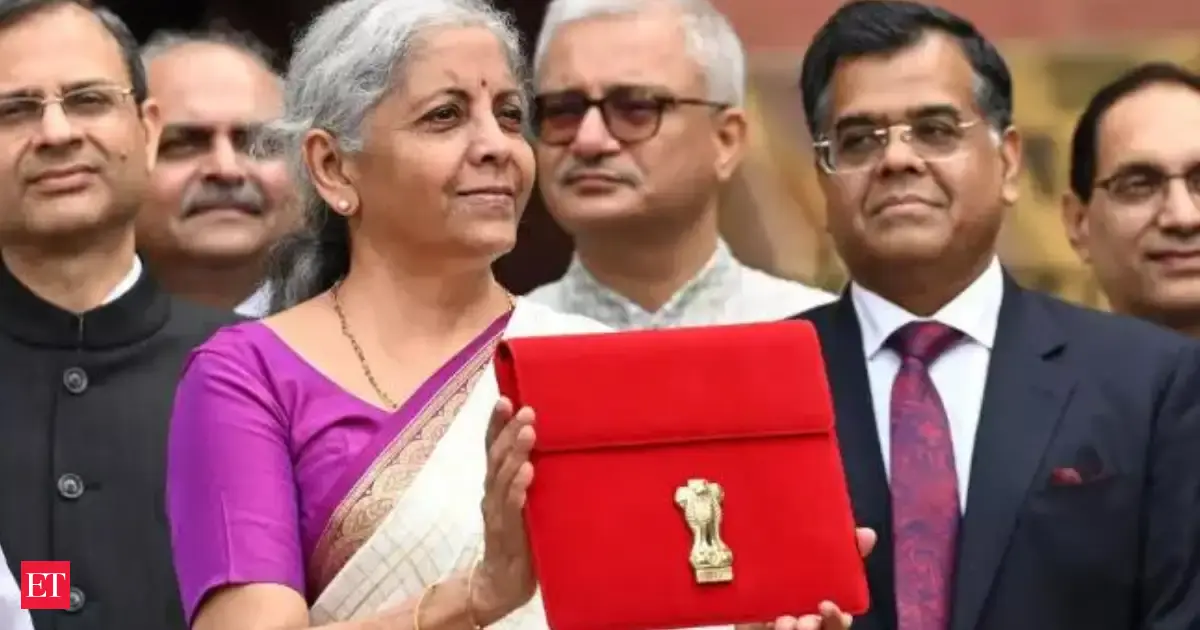
The Budget Session 2026 is confirmed to begin on January 28, 2026, and conclude on April 2, 2026, with the Union Budget likely presented on February 1. President Droupadi Murmu approved the summoning of Parliament, a key constitutional function. This information is crucial for competitive exams, covering parliamentary procedures, the annual budget process, and the President's role in India's governance and economic policy.
Revision structure
Monthly events and exam calendar context
Static GK and one-liner notes
Quiz and mock-test revision path
Key points
Exam-ready takeaways
The session is slated to continue until April 2, 2026, with a recess period.
The Union Budget for 2026 is likely to be presented on February 1, 2026.
President Droupadi Murmu has approved the summoning of Parliament for this session.
The dates for the Budget Session 2026 were confirmed by Minister Kiren Rijiju.
Detailed analysis
Full exam-oriented breakdown
The announcement regarding the commencement of the Budget Session 2026 on January 28, 2026, and the likely presentation of the Union Budget on February 1, 2026, is a crucial piece of information that underscores the annual rhythm of India's parliamentary democracy and economic governance. This seemingly routine update, confirmed by Minister Kiren Rijiju and approved by President Droupadi Murmu, holds immense significance for understanding the intricate workings of the Indian state, its financial health, and its policy direction. **Background Context and What Happened:** Every year, the Indian Parliament convenes for three main sessions: the Budget Session, the Monsoon Session, and the Winter Session. The Budget Session is typically the longest and most significant, as it is primarily dedicated to the government's financial business, including the presentation, discussion, and passing of the Union Budget. The Budget, formally known as the Annual Financial Statement (as per Article 112 of the Constitution), is the government's comprehensive financial plan for the upcoming fiscal year (April 1 to March 31). It details estimated receipts and expenditures, taxation proposals, and policy initiatives across various sectors. In this instance, the Budget Session 2026 is slated to begin on January 28, 2026, and conclude on April 2, 2026. A key highlight is the likely presentation of the Union Budget on February 1, 2026. This date for budget presentation was shifted in 2017 from the traditional last working day of February to February 1st, allowing more time for parliamentary scrutiny and for ministries to implement budget provisions from the start of the new fiscal year. The session will also include a recess period, typically used by Departmental Standing Committees to examine the Demands for Grants of various ministries, before reconvening on March 9. The President of India, under Article 85(1) of the Constitution, has the power to summon each House of Parliament to meet at such time and place as she thinks fit. President Droupadi Murmu's approval is a constitutional formality that sets the parliamentary process in motion. **Key Stakeholders Involved:** Several key players are central to the Budget Session. The **President of India** (Droupadi Murmu) plays a constitutional role in summoning Parliament. The **Ministry of Parliamentary Affairs** (headed by Kiren Rijiju) manages the legislative agenda and ensures the smooth functioning of Parliament. The **Ministry of Finance**, led by the Union Finance Minister, is responsible for preparing and presenting the Union Budget. **Parliament**, comprising the Lok Sabha (House of the People) and the Rajya Sabha (Council of States), is the ultimate deliberative body. The Lok Sabha, in particular, has a predominant role in financial matters, as money bills can only be introduced here. **Parliamentary Committees**, especially the Departmental Standing Committees, scrutinize the demands for grants, ensuring detailed examination beyond the general debate on the floor of the Houses. Finally, **citizens and taxpayers** are the ultimate stakeholders, as the budget directly impacts their lives through taxation, subsidies, and public services. **Significance for India:** This annual exercise is profoundly significant for India. **Economically**, the Union Budget sets the nation's financial trajectory. It outlines the government's fiscal policy, including revenue generation strategies (taxes) and expenditure priorities (social welfare, infrastructure, defence, education, health). It influences market sentiment, investment decisions, and overall economic growth. **Politically**, the Budget Session is a critical period for government accountability. The opposition gets an opportunity to scrutinize government policies, question expenditure, and propose amendments, fostering robust parliamentary debate. It reflects the government's priorities and its vision for the country. **Socially**, the budget impacts various segments of society through allocations for welfare schemes, employment generation programs, and subsidies, directly affecting the living standards and opportunities for millions of Indians. Overall, it is a testament to India's commitment to democratic governance and transparent financial management. **Historical Context and Future Implications:** The tradition of presenting an annual budget has its roots in British parliamentary practices. Post-independence, India adopted a similar system, evolving over decades. A notable change, as mentioned, was the shift of the budget presentation date to February 1st from 2017, aiming to ensure that financial proposals are approved and implemented before the new fiscal year begins. The Railway Budget, once presented separately, was merged with the Union Budget in 2017, streamlining the financial process. The Budget Session 2026 will be crucial in setting the tone for India's economic performance in the fiscal year 2026-27. It will reveal the government's strategy to address prevailing economic challenges, boost growth, manage inflation, and drive social development. Depending on the political landscape, it could also hint at the government's long-term vision or specific policy shifts. **Related Constitutional Articles, Acts, or Policies:** Understanding the Budget Session requires familiarity with several constitutional provisions. **Article 112** defines the 'Annual Financial Statement' (Budget). **Article 85** empowers the President to summon Parliament. **Article 113** outlines the procedure in Parliament regarding estimates, primarily demands for grants. **Article 114** deals with Appropriation Bills, which are necessary to withdraw money from the Consolidated Fund of India for government expenditure. **Article 265** mandates that no tax shall be levied or collected except by authority of law. **Article 266** establishes the Consolidated Fund of India and the Public Account of India, while **Article 267** deals with the Contingency Fund of India. Beyond the Constitution, the **Fiscal Responsibility and Budget Management (FRBM) Act, 2003**, provides a statutory framework for fiscal discipline, guiding the government's budget-making process towards sustainable fiscal targets.
How to study
Turn news into exam marks
Revise monthly events by exam family instead of reading random updates.
Pair one-liners with mock tests so mistakes become the next revision list.
Keep state job pages, calendar pages and GK packs connected in one path.