

The BSE All Derivative Stocks Index was launched by BSE Index Services.
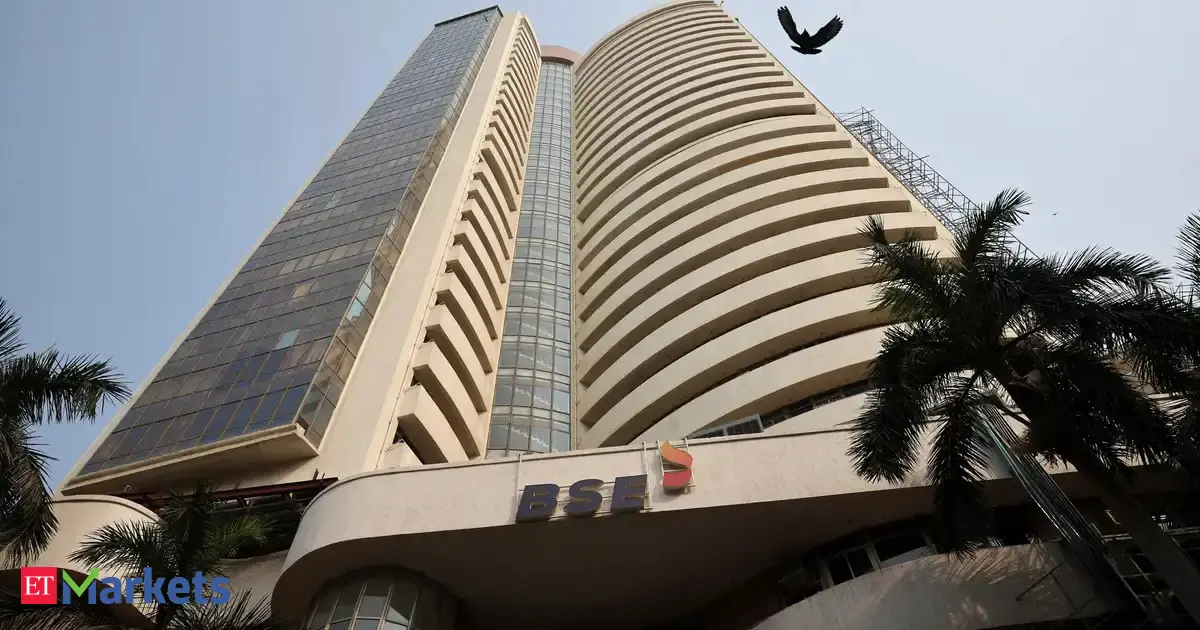
GK and monthly revision
BSE launches All Derivative Stocks Index to track F&O-linked BSE 500 stocks
BSE Index Services launched the BSE All Derivative Stocks Index to track derivative-eligible stocks from the BSE 500. This new index utilizes market-cap and momentum weighting, signifying the increasing depth of India's equity derivatives market. It provides a new benchmark for both passive and active investment products, crucial for understanding financial market developments for competitive exams.
Revision structure
Monthly events and exam calendar context
Static GK and one-liner notes
Quiz and mock-test revision path
Key points
Exam-ready takeaways
The new index is designed to track derivative-eligible stocks from the BSE 500.
It employs a weighting methodology based on both market-capitalization and momentum.
The index aims to reflect the growing depth of India's equity derivatives market.
It serves as a new benchmark for passive and active investment products nationwide.
Detailed analysis
Full exam-oriented breakdown
The launch of the BSE All Derivative Stocks Index by BSE Index Services marks a significant development in India's financial markets, particularly in the rapidly expanding equity derivatives segment. To truly understand its importance, we must delve into the background, the mechanics, and its broader implications for India's economy and investment landscape. **Background Context: The Evolution of India's Capital Markets** India's capital market has undergone a remarkable transformation since economic liberalization began in the early 1990s. Initially dominated by the cash segment for equity trading, the market gradually matured, paving the way for more sophisticated financial instruments. The introduction of equity derivatives – futures and options (F&O) – in the early 2000s by regulatory bodies like SEBI (Securities and Exchange Board of India) was a watershed moment. This move was aimed at providing investors with tools for hedging, speculation, and arbitrage, thereby enhancing market efficiency and depth. The National Stock Exchange (NSE) initially took the lead in the derivatives segment, but the Bombay Stock Exchange (BSE) has consistently worked to strengthen its offerings, including its index services. As the derivatives market grew in volume and sophistication, there arose a need for specialized indices that accurately reflect the performance and characteristics of stocks actively traded in the F&O segment. This demand for more nuanced benchmarks forms the bedrock for the creation of the BSE All Derivative Stocks Index. **What Happened: The Launch of a Specialized Index** BSE Index Services officially launched the "BSE All Derivative Stocks Index." This new index is not just another broad market index; it's specifically designed to track the performance of stocks from the broader BSE 500 index that are eligible for trading in the equity derivatives (futures and options) segment. What makes it particularly interesting is its weighting methodology: it employs a combination of market-capitalization and momentum. Market capitalization weighting gives more influence to larger companies, while momentum weighting rewards stocks that have shown strong recent price performance. This hybrid approach aims to capture both the stability of large-cap stocks and the dynamism of trending stocks within the derivatives universe. The goal is to provide a precise benchmark for investors and fund managers interested in the derivative-eligible space. **Key Stakeholders Involved** Several key players are central to this development: * **BSE (Bombay Stock Exchange):** As one of India's oldest and largest stock exchanges, BSE provides the platform for trading and, through its Index Services arm, develops and maintains market indices. Its role is crucial in providing innovative financial products and benchmarks. * **SEBI (Securities and Exchange Board of India):** As the primary regulator of the Indian securities market, SEBI's oversight ensures market integrity, investor protection, and orderly development. While BSE launched the index, the underlying derivative market and its participants operate under SEBI's stringent regulations, derived from the **SEBI Act, 1992**, and the **Securities Contracts (Regulation) Act, 1956 (SCRA)**. SCRA, in particular, defines and regulates contracts in securities, including derivatives. * **Investors (Retail and Institutional):** This includes individual traders, mutual funds, hedge funds, and foreign portfolio investors (FPIs). They are the ultimate beneficiaries, gaining new tools for investment, hedging, and portfolio management. * **Asset Management Companies (AMCs) and Fund Managers:** These entities can use the new index as a benchmark for creating passive investment products like Exchange Traded Funds (ETFs) or index funds, or for actively managing portfolios that seek to outperform this specific segment. **Significance for India and Future Implications** This launch holds significant ramifications for India's financial landscape: * **Deepening of Financial Markets:** It signifies the increasing depth and sophistication of India's equity derivatives market. A specialized index allows for a more granular understanding and investment in this crucial segment, fostering greater participation and liquidity. * **Enhanced Investment Products:** The index serves as a robust benchmark, facilitating the creation of new passive and active investment products. Fund managers can now design products like ETFs that specifically track the performance of derivative-eligible stocks, offering investors diversified exposure and potentially higher returns, given the momentum component. * **Improved Price Discovery and Risk Management:** A more representative index can lead to better price discovery for derivative-eligible stocks. Derivatives themselves are vital tools for risk management, allowing market participants to hedge against price fluctuations in their underlying equity holdings. * **Global Competitiveness:** By offering specialized indices and robust derivative markets, India strengthens its position as an attractive destination for global capital. It aligns India's financial infrastructure with that of more developed economies, encouraging FPIs. * **Regulatory Framework:** The continuous evolution of such financial instruments necessitates a dynamic regulatory environment. SEBI's role under the **SEBI Act, 1992**, which empowers it to regulate the securities market, becomes even more critical in ensuring fair practices, preventing market manipulation, and protecting investors in a complex derivatives ecosystem. The **Companies Act, 2013**, also provides the overarching legal framework for the companies whose stocks are part of such indices. In the future, we can expect to see more innovative financial products linked to this index. It could lead to increased trading volumes in the F&O segment, potentially attracting a wider range of investors. However, with increased complexity comes the need for heightened financial literacy and robust regulatory oversight to manage systemic risks. This development underscores India's commitment to building a resilient, diverse, and globally competitive financial market, crucial for sustaining its economic growth trajectory.
How to study
Turn news into exam marks
Revise monthly events by exam family instead of reading random updates.
Pair one-liners with mock tests so mistakes become the next revision list.
Keep state job pages, calendar pages and GK packs connected in one path.