

Jharkhand will make its debut at the World Economic Forum (WEF).
GK and monthly revision
Jharkhand to debut at World Economic Forum to be held in Davos
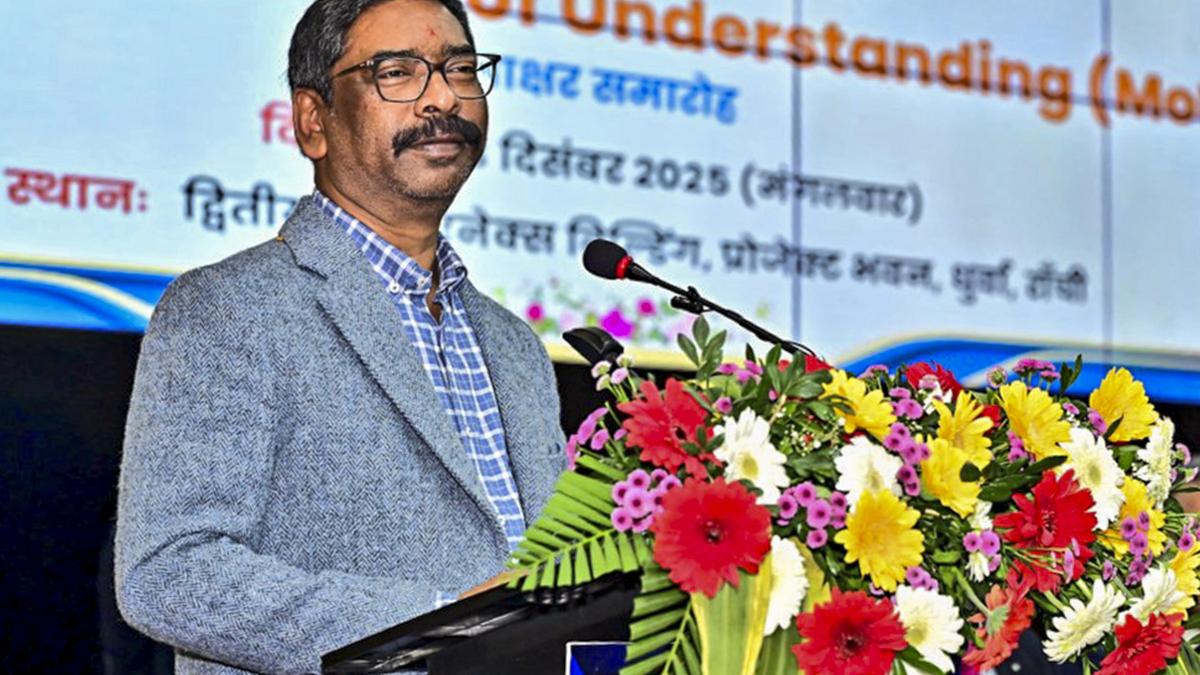
Jharkhand is set to make its debut at the World Economic Forum (WEF) in Davos, Switzerland, from January 18 to 26. Chief Minister Hemant Soren will lead an 11-member delegation, aiming to attract investments and showcase the state. This visit is significant as it coincides with the 25th anniversary of Jharkhand's statehood, making it a key event for state-specific and general awareness exams.
Revision structure
Monthly events and exam calendar context
Static GK and one-liner notes
Quiz and mock-test revision path
Key points
Exam-ready takeaways
The World Economic Forum (WEF) event will be held in Davos.
Jharkhand's Chief Minister Hemant Soren will lead the state's delegation.
The 11-member delegation will attend the WEF from January 18 to 26.
The visit coincides with the 25th anniversary of Jharkhand's statehood.
Detailed analysis
Full exam-oriented breakdown
Jharkhand's inaugural participation at the World Economic Forum (WEF) in Davos, Switzerland, led by Chief Minister Hemant Soren, marks a pivotal moment for the mineral-rich state. Scheduled from January 18 to 26, 2024, this debut coincides significantly with the 25th anniversary of Jharkhand's statehood, underscoring a quarter-century journey from its formation to actively seeking global economic engagement. This move is not merely symbolic; it represents a strategic effort to attract foreign direct investment (FDI), foster industrial growth, and showcase the state's potential on an international platform. The World Economic Forum, an international non-governmental and lobbying organization based in Cologny, Geneva Canton, Switzerland, is renowned for bringing together political, business, cultural, and other leaders of society to shape global, regional, and industry agendas. Its annual meeting in Davos is a high-profile event where nations and states compete to present their investment opportunities and engage with global corporations and thought leaders. For a state like Jharkhand, which has historically struggled with leveraging its vast natural resources for inclusive development, this platform offers an unparalleled opportunity to rebrand itself as an attractive investment destination. Jharkhand was carved out of the southern districts of Bihar on November 15, 2000, becoming the 28th state of India. Its formation was driven by the aspiration for a distinct identity and accelerated development for its tribal population and resource-rich regions. The state boasts significant reserves of coal, iron ore, copper, mica, bauxite, and uranium, making it a powerhouse in terms of mineral wealth. However, despite this abundance, Jharkhand has faced persistent challenges related to poverty, unemployment, Naxalism, and inadequate infrastructure. This paradox of resource richness amidst underdevelopment has been a defining feature of its 25-year journey. The Davos visit, therefore, is a concerted effort to break this cycle by inviting global capital and technology. The 11-member delegation, led by Chief Minister Hemant Soren, aims to highlight Jharkhand's investor-friendly policies, its strategic location, and its potential across various sectors beyond mining, including manufacturing, renewable energy, tourism, and IT. Key stakeholders involved include the Jharkhand State Government, represented by its Chief Minister and senior officials, who are the primary proponents of this initiative. The World Economic Forum itself acts as the facilitator, providing the platform for engagement. Global corporations and investors are the critical target audience, whose investment decisions will determine the success of this outreach. Indirectly, the Government of India is also a stakeholder, as increased FDI in any Indian state contributes to the national economic growth and enhances India's overall attractiveness as an investment hub. This initiative holds immense significance for India. It exemplifies the growing trend of 'competitive federalism' and 'cooperative federalism,' where states actively compete to attract investment and contribute to the national economic growth agenda. While the Union government sets broad FDI policies, states play a crucial role in creating a conducive investment climate through their specific industrial policies, ease of doing business reforms, and infrastructure development. Jharkhand's participation at WEF reflects a mature federal structure where states are empowered to directly engage with global markets, thereby decentralizing and diversifying India's economic outreach. This also aligns with national policies like 'Make in India' and 'Atmanirbhar Bharat,' encouraging states to become self-reliant and contribute to domestic manufacturing and job creation. From a constitutional perspective, the formation of Jharkhand itself is rooted in Article 3 of the Indian Constitution, which empowers Parliament to form new states. The economic development initiatives fall largely under the purview of the State List (List II) and Concurrent List (List III) of the Seventh Schedule, particularly concerning industries, economic and social planning, and infrastructure. The state's industrial policy, like the Jharkhand Industrial and Investment Promotion Policy (JIIPP) 2021, is designed to offer incentives and a streamlined regulatory environment, reflecting the state's legislative and executive powers to foster economic growth. The future implications of Jharkhand's WEF debut are significant. If successful in securing substantial investments, it could lead to job creation, technological upgrades, skill development for the local populace, and improved infrastructure. This, in turn, could address socio-economic disparities, reduce Naxal influence by providing alternative livelihoods, and accelerate the state's human development indicators. It also sets a precedent for other resource-rich but developing states in India to proactively seek global partnerships. However, the true measure of success will lie in the effective implementation of signed MoUs, ensuring that investments translate into tangible benefits for the people of Jharkhand, and navigating the challenges of land acquisition, environmental clearances, and maintaining law and order. This debut is a statement of intent, signaling Jharkhand's ambition to move beyond its historical narrative and carve out a new economic future on the global stage.
How to study
Turn news into exam marks
Revise monthly events by exam family instead of reading random updates.
Pair one-liners with mock tests so mistakes become the next revision list.
Keep state job pages, calendar pages and GK packs connected in one path.