

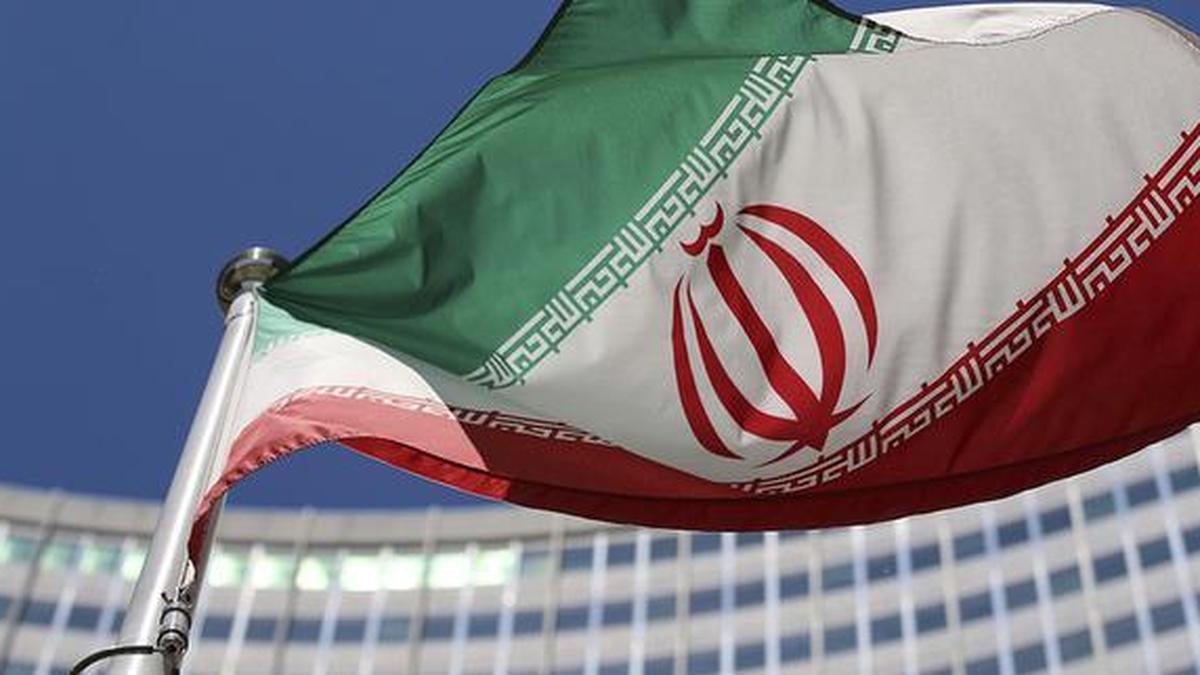
Iran executed a man identified as Ali Ardestani on charges of espionage.
GK and monthly revision
Iran executes a man convicted of spying for Israel’s Mossad
Iran executed Ali Ardestani, convicted of spying for Israel's Mossad, marking a significant event in the ongoing clandestine conflict between the two nations. He allegedly received financial rewards via cryptocurrencies for relaying sensitive information. This incident highlights heightened geopolitical tensions and the use of digital currencies in espionage, making it relevant for understanding international relations in competitive exams.
Revision structure
Monthly events and exam calendar context
Static GK and one-liner notes
Quiz and mock-test revision path
Key points
Exam-ready takeaways
Ali Ardestani was convicted of spying for Israel's intelligence agency, Mossad.
He allegedly relayed sensitive information to Mossad officers.
Financial rewards for his espionage activities were received in the form of cryptocurrencies.
The execution and details were reported by Iran's official news agency, IRNA.
Detailed analysis
Full exam-oriented breakdown
The execution of Ali Ardestani in Iran, convicted of spying for Israel's Mossad, marks a significant moment in the deeply entrenched and clandestine conflict between Iran and Israel. This incident is not an isolated event but rather a stark manifestation of a decades-long 'shadow war' characterized by espionage, sabotage, cyberattacks, and proxy conflicts across the Middle East. Understanding this event requires delving into the historical animosity, the geopolitical stakes, and the evolving methods of modern intelligence operations. The **background context** of this rivalry traces back to the 1979 Islamic Revolution in Iran, which fundamentally altered Iran's foreign policy from being an ally of Israel under the Shah to becoming its staunch adversary. The new Iranian regime adopted an anti-Zionist stance, viewing Israel as an illegitimate state and a primary instrument of Western influence in the region. Israel, in turn, views Iran's nuclear program, its ballistic missile capabilities, and its support for regional proxy groups (like Hezbollah in Lebanon and various militias in Iraq and Syria) as existential threats. This mutual distrust has fueled a continuous, often covert, struggle for regional dominance and security. **What happened** specifically was that Iran's official IRNA news agency reported the execution of Ali Ardestani, who was accused of relaying sensitive information to Mossad officers. A notable detail was the alleged payment method: cryptocurrencies. This highlights a modern dimension to espionage, where digital currencies offer a degree of anonymity, making transactions harder to trace than traditional banking channels. The swift execution underscores Iran's firm stance against perceived threats to its national security and its readiness to employ capital punishment in such cases, often drawing criticism from international human rights organizations regarding due process. **Key stakeholders** involved include the **Iranian government and its intelligence apparatus**, which views such actions as a necessary defense against foreign interference and espionage, especially concerning its nuclear and military programs. The **Israeli intelligence agency, Mossad**, is a crucial stakeholder, known for its extensive global operations aimed at protecting Israeli interests, often focusing on Iran's capabilities. **Ali Ardestani**, the individual executed, represents the human cost of these geopolitical struggles, caught between conflicting loyalties or motivations. Beyond these, the **international community**, including the United Nations and various human rights bodies, often raises concerns about the use of the death penalty and the transparency of judicial processes in Iran. **Why this matters for India** is multi-faceted. India maintains significant economic and strategic interests in the Middle East, a region highly susceptible to the ripple effects of Iran-Israel tensions. Escalations can disrupt global oil supplies, impacting India's energy security as a major oil importer. Furthermore, India has a substantial diaspora in the Gulf region whose safety and well-being could be jeopardized by increased instability. India also pursues a policy of strategic autonomy, maintaining good relations with both Iran and Israel, two nations with whom it shares diverse bilateral ties (e.g., energy, Chabahar Port with Iran; defense, technology, agriculture with Israel). This balancing act becomes increasingly challenging amidst heightened regional tensions. From a national security perspective, the use of cryptocurrencies in espionage serves as a crucial lesson for India's own intelligence and counter-intelligence agencies, highlighting the evolving nature of illicit financial flows and the challenges in tracking them. India's own foreign policy, guided by principles enshrined in **Article 51 of the Constitution** (promotion of international peace and security, maintenance of just and honorable relations between nations, fostering respect for international law), necessitates careful navigation of such complex geopolitical landscapes to safeguard its national interests. **Historically**, the Iran-Israel rivalry has seen numerous covert operations. Israel is widely believed to have been behind assassinations of Iranian nuclear scientists and cyberattacks like Stuxnet, aimed at disrupting Iran's nuclear program. Iran, in turn, has been accused of supporting groups that target Israeli interests. This execution fits into a broader pattern of retaliation and deterrence in this undeclared war. Looking at **future implications**, this incident could signal an intensification of the shadow war. Iran may respond with increased vigilance, further crackdowns on dissent, and potentially its own covert operations. Israel might view this as a setback but is unlikely to deter its intelligence efforts. The use of cryptocurrencies in espionage is likely to proliferate, posing new challenges for national security agencies worldwide. For India, the ongoing volatility in the Middle East underscores the need for robust diplomatic engagement, diversification of energy sources, and strengthening its own intelligence capabilities to adapt to evolving threats and maintain regional stability.
How to study
Turn news into exam marks
Revise monthly events by exam family instead of reading random updates.
Pair one-liners with mock tests so mistakes become the next revision list.
Keep state job pages, calendar pages and GK packs connected in one path.