

MCX silver futures jumped Rs 9,900 per kg on Monday.
GK and monthly revision
Silver spikes Rs 9,900, gold rises over Rs 2K as US takes control in Venezuela
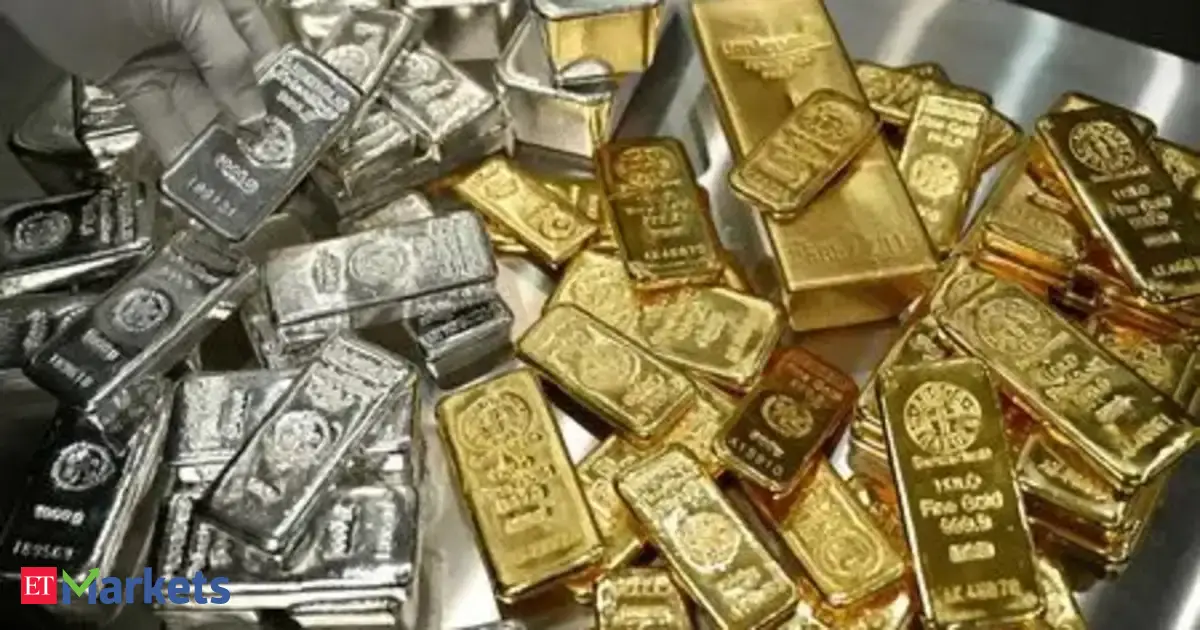
Global gold and silver prices surged significantly on Monday, with MCX silver futures jumping Rs 9,900 per kg and gold rising over Rs 2,000 per 10 grams. This surge was primarily driven by the US taking control in Venezuela, prompting investors to seek safe-haven assets amidst escalating geopolitical tensions. The event highlights the impact of international political developments on commodity markets and global economics, crucial for understanding current affairs in competitive exams.
Revision structure
Monthly events and exam calendar context
Static GK and one-liner notes
Quiz and mock-test revision path
Key points
Exam-ready takeaways
Gold prices rose over Rs 2,000 per 10 grams.
The primary trigger for the price surge was the US taking control in Venezuela.
The price increase is attributed to a global rush towards safe-haven assets.
Other reinforcing factors include tight physical supply and expectations of U.S. rate cuts.
Detailed analysis
Full exam-oriented breakdown
The recent surge in gold and silver prices, with MCX silver futures jumping by Rs 9,900 per kg and gold rising over Rs 2,000 per 10 grams, serves as a stark reminder of how deeply interconnected global politics and economics are. The primary catalyst for this significant rally was the news that the US had taken "control" in Venezuela, triggering a global flight towards safe-haven assets. This event, while seemingly distant, has profound implications for India's economy and its citizens. To truly grasp the situation, we must first understand the background context in Venezuela. For over a decade, Venezuela has been grappling with a severe political and economic crisis. Following the death of Hugo Chávez in 2013, his handpicked successor, Nicolás Maduro, inherited a country rich in oil but plagued by deep structural issues. Mismanagement, corruption, and a steep decline in global oil prices (Venezuela's primary export) plunged the nation into hyperinflation, food shortages, and a humanitarian crisis of unprecedented scale. Millions of Venezuelans have fled the country, creating one of the largest displacement crises in recent history. The political legitimacy of Maduro's government has been widely questioned internationally, especially after the 2018 presidential elections, which many considered fraudulent. In response, opposition leader Juan Guaidó, the head of the National Assembly, declared himself interim president in January 2019, invoking constitutional provisions (Article 233) allowing him to do so in the event of a presidential vacancy. This move garnered immediate recognition from the United States and several other Western and Latin American countries. The phrase "US taking control in Venezuela" as mentioned in the article, refers not to a military intervention but to a series of escalating economic and diplomatic pressures exerted by the United States. This includes imposing stringent sanctions on Venezuela's state-owned oil company, PDVSA, freezing Venezuelan government assets in US banks, and recognizing Juan Guaidó as the legitimate interim president. The US policy aims to isolate the Maduro regime financially and politically, thereby forcing a transition to a democratic government. These actions create immense uncertainty and instability in global markets, leading investors to seek refuge in assets traditionally considered safe during turmoil. Key stakeholders in this complex scenario include: the **Nicolás Maduro regime**, which continues to hold power with the support of the military and allies like Russia and China; the **Venezuelan opposition** led by Juan Guaidó, striving for democratic transition; the **United States government**, particularly the State Department and Treasury, which formulates and implements sanctions; **global investors and financial institutions**, who react to geopolitical shifts; and ultimately, the **Venezuelan people**, who bear the brunt of the crisis. Furthermore, countries like **Russia and China** are significant stakeholders, as they have provided financial and political support to Maduro, often in exchange for oil deals and strategic influence, thereby complicating international efforts. This situation matters significantly for India. Firstly, India is one of the world's largest consumers of gold, driven by cultural, traditional, and investment demand. A sharp rise in gold and silver prices directly impacts Indian households, affecting savings, jewellery purchases, and potentially contributing to inflation. Secondly, and perhaps more critically, Venezuela possesses the world's largest proven oil reserves. While US sanctions have curtailed Venezuela's oil exports to many countries, any major disruption or escalation in the Venezuelan crisis can impact global crude oil prices. India is heavily dependent on crude oil imports, importing over 80% of its requirements. A surge in international oil prices directly inflates India's import bill, exacerbates the current account deficit (CAD), weakens the Rupee, and fuels domestic inflation. This puts immense pressure on the Reserve Bank of India (RBI) to manage monetary policy and on the government to control fiscal spending. The **Foreign Exchange Management Act (FEMA), 1999**, governs foreign exchange transactions, which are significantly impacted by these global commodity price fluctuations, while the **Customs Act, 1962**, dictates import duties on precious metals like gold and silver, which the government may adjust in response to price volatility. The historical context reinforces why gold and silver are considered safe-haven assets. Throughout history, during periods of war, economic downturns, or political instability, investors have flocked to precious metals as a store of value. Unlike fiat currencies or stocks, which can be susceptible to inflation or corporate performance, gold and silver are tangible assets with intrinsic value, perceived to retain purchasing power even when other assets falter. This phenomenon has been observed countless times, from the Great Depression to the 2008 financial crisis. The future implications are multifaceted. For Venezuela, the crisis is far from over, with continued uncertainty about its political future and the well-being of its citizens. For the global economy, such geopolitical flashpoints signal ongoing volatility in commodity markets, potentially leading to higher inflation and slower growth. For India, the challenge lies in enhancing its energy security by diversifying import sources and investing in renewable energy. The government and RBI must remain vigilant, ready to implement policies to mitigate the impact of external shocks on inflation and the current account. This event underscores the need for robust economic management and strategic foreign policy, linking directly to broader themes of **international relations, economic interdependence, and national security**. While no specific constitutional articles directly address gold prices or foreign political crises, the Indian Constitution lays the framework for economic governance. **Article 112**, which mandates the Annual Financial Statement (Budget), is crucial as commodity price fluctuations necessitate adjustments in government revenue and expenditure projections. The Union Budget, for instance, frequently revises import duties on gold based on prevailing economic conditions. Moreover, the RBI's role in maintaining price stability and managing foreign exchange reserves, implicitly derived from its statutory powers, becomes paramount in such situations, influencing decisions related to interest rates and liquidity, which indirectly relate to the broader economic welfare outlined in the Directive Principles of State Policy (e.g., **Article 38** on social order and welfare).
How to study
Turn news into exam marks
Revise monthly events by exam family instead of reading random updates.
Pair one-liners with mock tests so mistakes become the next revision list.
Keep state job pages, calendar pages and GK packs connected in one path.