

The National Green Tribunal (NGT) issued a directive to the Centre and Uttar Pradesh government.
GK and monthly revision
NGT directs to issue notice to Centre, U.P. govt. on ‘violations’ near Taj Mahal
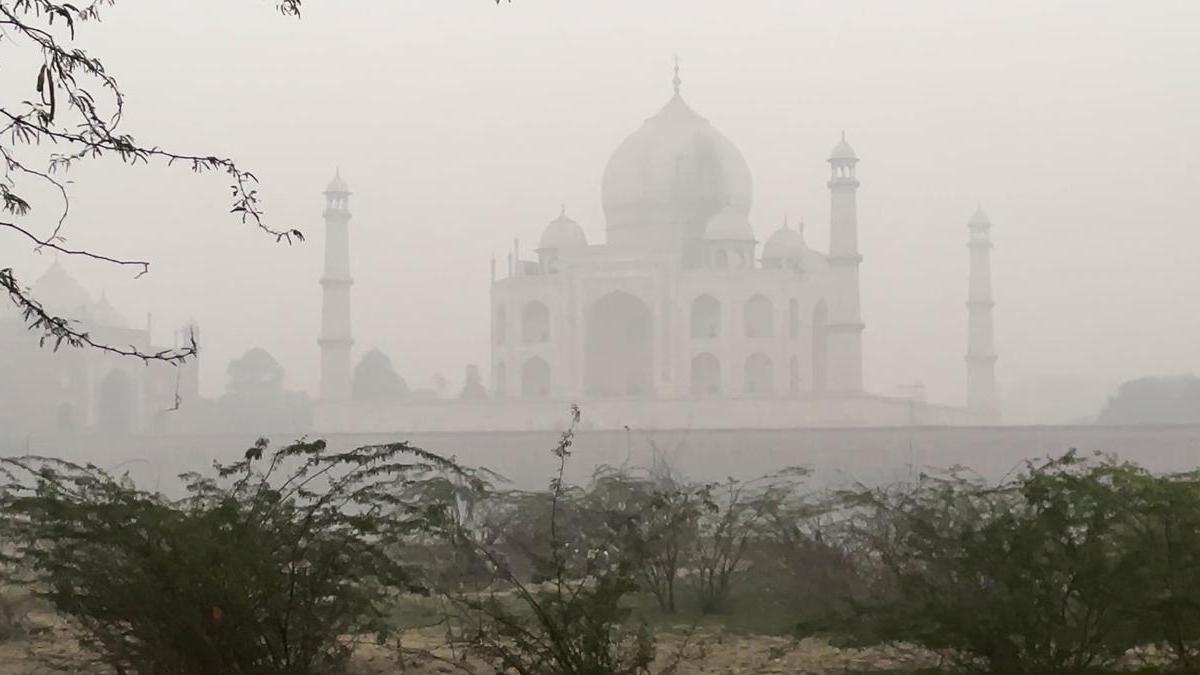
The National Green Tribunal (NGT) has directed notices to the Centre and Uttar Pradesh government regarding alleged environmental violations, specifically tree felling, near the Taj Mahal. This action highlights the stringent environmental protection norms for the UNESCO World Heritage Site, as per Supreme Court directives. It's significant for understanding judicial oversight in heritage conservation and environmental governance.
Revision structure
Monthly events and exam calendar context
Static GK and one-liner notes
Quiz and mock-test revision path
Key points
Exam-ready takeaways
The directive concerns alleged 'violations' occurring near the Taj Mahal, a UNESCO World Heritage Site.
A specific violation highlighted in the applicant's submission is the unauthorized felling of trees.
The Supreme Court mandates prior permission for any tree felling within a 5 km aerial distance from the Taj Mahal.
This Supreme Court requirement for tree felling applies irrespective of the number of trees involved.
Detailed analysis
Full exam-oriented breakdown
The National Green Tribunal's (NGT) recent directive to the Centre and Uttar Pradesh government concerning alleged environmental violations near the Taj Mahal brings to the forefront India's ongoing struggle to balance development with heritage and environmental conservation. This incident, specifically regarding unauthorized tree felling, is not an isolated event but rather a continuation of a decades-long legal battle to protect one of the world's most iconic monuments. **Background Context and Historical Interventions:** The Taj Mahal, a UNESCO World Heritage Site since 1983, is a testament to Mughal architecture and a significant symbol of India's rich cultural heritage. Located in Agra, Uttar Pradesh, it attracts millions of tourists annually. However, its proximity to industrial areas and a growing urban population has subjected it to severe environmental degradation, particularly from air pollution and unregulated construction. This environmental threat first gained significant judicial attention in the landmark M.C. Mehta v. Union of India case, initiated in 1984. Environmental activist M.C. Mehta filed a Public Interest Litigation (PIL) in the Supreme Court, highlighting the damaging effects of industrial emissions (especially from foundries, chemical industries, and oil refineries) on the Taj Mahal's pristine white marble, causing it to yellow and corrode. This case led to the Supreme Court's pivotal 1996 judgment, which established the 'Taj Trapezium Zone' (TTZ), a defined area of approximately 10,400 sq km around the Taj Mahal, including parts of Agra, Firozabad, Mathura, and Bharatpur. Within this zone, stringent environmental regulations were imposed, including the shifting or closure of polluting industries, a ban on coal and coke usage, and mandatory use of natural gas or cleaner fuels. The Supreme Court also mandated the formation of the TTZ Authority to oversee these measures. **The Current Violation and NGT's Role:** The present NGT directive stems from an applicant's complaint alleging unauthorized tree felling within a 5 km aerial distance from the Taj Mahal. The crucial aspect highlighted is a standing Supreme Court order that explicitly requires prior permission from the apex court for *any* tree felling within this 5 km radius, irrespective of the number of trees involved. This underscores the extraordinary level of protection afforded to the monument. The NGT, established under the National Green Tribunal Act, 2010, is a specialized body tasked with expeditious disposal of cases relating to environmental protection and conservation of forests and other natural resources. Its role here is to investigate the alleged violation, ensure compliance with existing Supreme Court directives, and hold responsible parties accountable. **Key Stakeholders Involved:** * **National Green Tribunal (NGT):** As the quasi-judicial body, it initiated the action, directing notices and seeking responses. It acts as an environmental watchdog. * **Supreme Court of India:** Although not directly involved in this NGT hearing, its past judgments and standing orders (like the 5 km tree-felling rule) form the legal bedrock for the NGT's action. It remains the ultimate arbiter in major environmental and heritage disputes. * **Central Government (Ministry of Environment, Forest and Climate Change):** Responsible for national environmental policy, forest conservation, and safeguarding heritage sites. It must respond to the NGT's notice and ensure compliance. * **Uttar Pradesh Government (Forest Department, Agra Development Authority, Pollution Control Board):** The primary implementing agency on the ground. It is responsible for enforcing environmental regulations, granting permissions for land use, and preventing illegal activities. Its departments are directly implicated in the alleged violation. * **Applicant/Petitioner:** Environmental activists or concerned citizens play a vital role in bringing such violations to the attention of judicial bodies, acting as catalysts for environmental protection. * **Local Communities and Developers:** Their activities often directly impact the environment. Unregulated development and resource extraction (like tree felling) are often driven by economic motives, creating a conflict with conservation efforts. **Significance for India and Future Implications:** This incident is highly significant for India. Firstly, it reiterates the country's commitment to **heritage conservation** and the protection of its global cultural assets. The Taj Mahal is a major draw for international tourism, contributing significantly to India's soft power and economy. Any damage to it would have severe repercussions on India's global image. Secondly, it highlights the strength of **environmental governance and judicial activism** in India. The NGT and Supreme Court have consistently demonstrated their willingness to intervene decisively to protect the environment, even against developmental pressures. This sets an important precedent for the protection of other sensitive ecological zones and heritage sites across the country. Thirdly, it underscores the ongoing challenge of **sustainable development**, where economic growth must be harmonized with environmental and cultural preservation. Future implications include potentially stricter monitoring mechanisms, increased use of technology (like satellite imagery) for surveillance in sensitive zones, and a heightened focus on ensuring that state governments are proactive in their environmental responsibilities rather than reactive to judicial directives. It reinforces the idea that environmental laws are not merely advisory but legally binding, with serious consequences for non-compliance. **Related Constitutional Articles, Acts, and Policies:** Several legal frameworks underpin this issue: * **Article 48A of the Constitution (Directive Principles of State Policy):** "The State shall endeavour to protect and improve the environment and to safeguard the forests and wild life of the country." This provides the guiding principle for environmental protection. * **Article 51A(g) (Fundamental Duties):** "It shall be the duty of every citizen of India... to protect and improve the natural environment including forests, lakes, rivers and wild life, and to have compassion for living creatures." This places a responsibility on citizens. * **Environment (Protection) Act, 1986:** A comprehensive legislation providing for the protection and improvement of the environment, giving the central government powers to take all necessary measures. * **Forest (Conservation) Act, 1980:** Regulates the diversion of forest land for non-forest purposes, requiring central government approval for such activities. * **National Green Tribunal Act, 2010:** Established the NGT to provide effective and expeditious remedies for environmental protection. * **Ancient Monuments and Archaeological Sites and Remains Act, 1958:** Provides for the preservation of ancient and historical monuments and archaeological sites. The Archaeological Survey of India (ASI) operates under this Act. * **UNESCO World Heritage Convention, 1972:** India is a signatory, obligating the nation to identify, protect, conserve, present, and transmit to future generations the cultural and natural heritage of outstanding universal value.
How to study
Turn news into exam marks
Revise monthly events by exam family instead of reading random updates.
Pair one-liners with mock tests so mistakes become the next revision list.
Keep state job pages, calendar pages and GK packs connected in one path.