

India's core industries are set to be redefined by 2026, aligning with the national vision of 'Viksit Bharat'.
GK and monthly revision
What will shape India’s core industries in 2026: The themes redefining growth
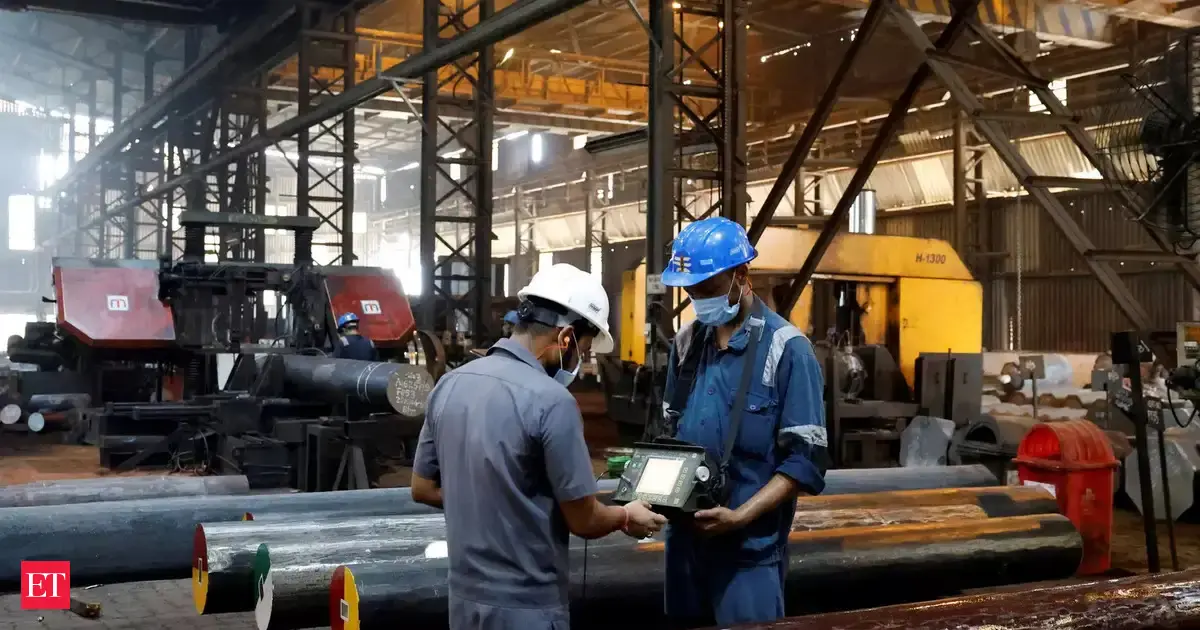
India's core industries are undergoing a significant transformation, driven by technology-led reinvention, sustainability, and talent development, as the nation targets 'Viksit Bharat' by 2026. This shift involves integrating AI, smart systems, and digitalization across sectors like manufacturing, energy, healthcare, and finance. The focus on low-carbon operations and workforce upskilling is crucial for future economic growth and competitiveness, making these themes vital for understanding India's economic trajectory.
Revision structure
Monthly events and exam calendar context
Static GK and one-liner notes
Quiz and mock-test revision path
Key points
Exam-ready takeaways
Three primary drivers shaping growth are identified as technology-led reinvention, sustainability, and talent transformation.
Key technological advancements include AI, smart systems, and digitalization, impacting sectors like manufacturing, energy, healthcare, and finance.
A significant focus for companies is on adopting low-carbon operations to ensure sustainable industrial growth.
Workforce upskilling is highlighted as a critical component for talent transformation within the evolving industrial landscape.
Detailed analysis
Full exam-oriented breakdown
India's journey towards becoming a 'Viksit Bharat' (Developed India) by 2047 hinges significantly on the transformation of its core industries. The year 2026 is emerging as a critical inflection point, where three intertwined themes—technology-led reinvention, sustainability, and talent transformation—are poised to redefine growth across key sectors. This shift is not merely an economic adjustment but a strategic recalibration for India to secure its place in the global order. Historically, India's core industries, comprising eight crucial sectors (coal, crude oil, natural gas, refinery products, fertilizers, steel, cement, and electricity), have been the backbone of its economic development since independence. The Five-Year Plans, starting in 1951, prioritized heavy industry and infrastructure, laying the foundation for a self-reliant economy. However, with globalization and technological advancements, the need for these industries to modernize became imperative. Initiatives like 'Make in India' (launched 2014) and 'Digital India' (launched 2015) were early signals of this strategic pivot, aiming to boost domestic manufacturing and digital infrastructure, respectively. The 'Viksit Bharat @2047' vision, articulated more recently, sets an ambitious goal for India to become a developed nation, requiring substantial growth and modernization across all economic pillars, with core industries at the forefront. At the heart of this transformation is **technology-led reinvention**. The integration of Artificial Intelligence (AI), smart systems, and digitalization is no longer a futuristic concept but a present-day imperative. In manufacturing, this translates to Industry 4.0 principles, involving automation, IoT (Internet of Things), and data analytics to optimize production, enhance efficiency, and reduce waste. The energy sector is witnessing the rise of smart grids, AI-driven demand forecasting, and digital monitoring for renewable energy sources. Healthcare is being revolutionized by AI in diagnostics, telemedicine, and personalized medicine, while finance is embracing FinTech, blockchain, and AI for improved services and security. This technological infusion is critical for enhancing productivity and global competitiveness. **Sustainability** forms the second crucial pillar. As a signatory to the Paris Agreement and committed to achieving Net Zero emissions by 2070, India's industrial growth must align with environmental responsibility. The focus on low-carbon operations involves transitioning to renewable energy sources, improving energy efficiency, adopting circular economy principles, and investing in green technologies like green hydrogen (National Green Hydrogen Mission, approved 2023). This not only addresses climate change concerns but also offers new avenues for innovation and economic growth, aligning with India's 'Panchamrit' commitments made at COP26. Finally, **talent transformation** is indispensable. The rapid technological shifts and emphasis on sustainability demand a workforce equipped with new skills. Upskilling and reskilling programs are vital to prepare the existing labor force for roles in AI, data science, renewable energy management, and advanced manufacturing. The 'Skill India Mission' (launched 2015) and provisions within the National Education Policy (NEP) 2020, which emphasize vocational training and future-ready skills, are crucial government initiatives addressing this need. Without a skilled workforce, the adoption of advanced technologies and sustainable practices will remain a challenge. Key stakeholders in this transformation include the **Government of India** (through ministries like Commerce & Industry, Power, MSME, Skill Development, NITI Aayog), which formulates policies, provides incentives (e.g., Production Linked Incentive - PLI schemes), and invests in infrastructure. The **private sector**, comprising large corporations, MSMEs, and startups, is the primary executor of these changes, driving innovation and investment. **Academic institutions and research bodies** play a vital role in R&D and skill development. International partners and investors also contribute technology, capital, and best practices. This transformation matters profoundly for India. Economically, it promises enhanced productivity, global competitiveness, diversified exports, and the creation of high-value jobs. Socially, it can lead to improved quality of life through better services (healthcare, energy), reduced environmental pollution, and more inclusive growth through digital literacy and skill development. Strategically, it bolsters India's 'Atmanirbhar Bharat' (self-reliant India) vision, reduces import dependency, and strengthens its position as a responsible global power, particularly in climate action. The constitutional provisions, particularly the Directive Principles of State Policy (DPSP), underpin this pursuit. Article 38 mandates the state to secure a social order for the promotion of welfare of the people, while Article 39 directs the state to ensure that the ownership and control of the material resources of the community are so distributed as best to subserve the common good. Article 43 emphasizes securing a living wage and decent conditions of work, directly relating to talent transformation. Furthermore, Article 48A, inserted by the 42nd Amendment in 1976, directs the state to protect and improve the environment, aligning with the sustainability agenda. Looking ahead, the successful implementation of these themes will determine if India can truly achieve 'Viksit Bharat' by 2047. Future implications include India emerging as a global manufacturing hub, a leader in green technologies, and a significant player in the digital economy. However, challenges such as bridging the digital divide, ensuring equitable access to skill development, securing adequate funding for green transitions, and navigating geopolitical complexities will require sustained policy focus and collaborative efforts from all stakeholders. This ongoing transformation represents India's commitment to inclusive, sustainable, and technologically advanced growth.
How to study
Turn news into exam marks
Revise monthly events by exam family instead of reading random updates.
Pair one-liners with mock tests so mistakes become the next revision list.
Keep state job pages, calendar pages and GK packs connected in one path.