

The 'Viksit Bharat Shiksha Adhishthan Bill' is being championed by the Education Ministry.
GK and monthly revision
Government to help teachers use AI; will ease open schooling framework
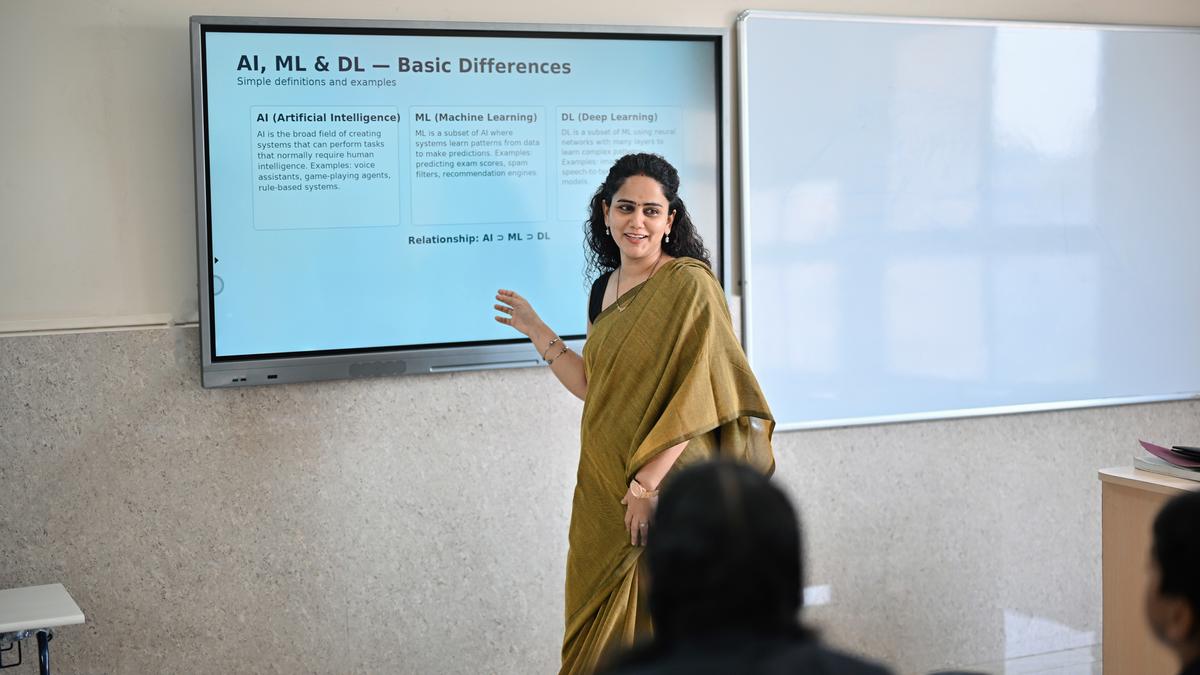
The Education Ministry is championing the 'Viksit Bharat Shiksha Adhishthan Bill', aiming for its passage during the Budget Session. This pivotal legislation seeks to integrate Artificial Intelligence (AI) into teaching methodologies and streamline the open schooling framework. It will enable non-school institutions, like ITIs, to offer open schooling programs under NIOS, significantly modernizing and expanding educational access. This initiative is crucial for competitive exams, highlighting government policy on education reform and digital integration.
Revision structure
Monthly events and exam calendar context
Static GK and one-liner notes
Quiz and mock-test revision path
Key points
Exam-ready takeaways
The Bill is expected to be introduced or passed during the upcoming Budget Session.
A primary objective of the Bill is to help teachers effectively utilize Artificial Intelligence (AI) in their teaching.
The legislation aims to ease and expand the existing open schooling framework in India.
It will create pathways for non-school institutes, such as Industrial Training Institutes (ITIs), to offer open schooling programmes under the National Institute of Open Schooling (NIOS).
Detailed analysis
Full exam-oriented breakdown
The proposed 'Viksit Bharat Shiksha Adhishthan Bill', championed by the Ministry of Education, represents a significant stride towards modernizing India's educational landscape. This legislation, expected to be introduced or passed during the Budget Session, aims to address critical challenges in the sector by integrating Artificial Intelligence (AI) into teaching methodologies and expanding the reach of open schooling. It aligns perfectly with the broader vision of 'Viksit Bharat @ 2047', emphasizing skill development, digital literacy, and equitable access to quality education. **Background Context and Historical Trajectory:** India's education system, while vast, has historically grappled with issues of access, quality, and relevance, particularly concerning vocational skills. The National Education Policy (NEP) 2020 laid a comprehensive roadmap for transforming education, emphasizing flexibility, multidisciplinary learning, and skill development from foundational stages. The NEP 2020 explicitly advocates for leveraging technology for educational purposes, including AI, and for expanding open and distance learning opportunities to cater to diverse learners. Open schooling itself has a rich history in India, with the National Institute of Open Schooling (NIOS) being established in 1989 (initially as the National Open School) to provide flexible learning pathways, particularly for those who could not attend conventional schools. This Bill builds upon these foundational principles, aiming to further democratize and contemporize education. **Key Provisions and Stakeholders:** The 'Viksit Bharat Shiksha Adhishthan Bill' focuses on two primary objectives. Firstly, it seeks to empower teachers with AI tools and training, enabling them to enhance their teaching methods, personalize learning experiences, and manage administrative tasks more efficiently. This directly impacts **teachers**, who are at the forefront of education delivery, and ultimately **students**, who will benefit from more engaging and effective instruction. Secondly, the Bill aims to ease the open schooling framework, specifically by allowing non-school institutions like Industrial Training Institutes (ITIs) to offer open schooling programs under NIOS. This is a crucial expansion, making **ITIs** key new stakeholders in the open schooling ecosystem. **NIOS** itself will see its mandate and reach significantly broadened, becoming a central facilitator for these new pathways. The **Ministry of Education** is the driving force behind this legislative effort, demonstrating the government's commitment to educational reform. **Significance for India:** This legislation holds immense significance for India's socio-economic development. By integrating AI into teaching, it addresses the urgent need for digital literacy and future-ready skills, preparing the younger generation for the demands of the 21st-century job market. This aligns with the 'Digital India' initiative, promoting technological adoption across sectors. The expansion of open schooling through ITIs is particularly transformative. It will bridge the gap between vocational training and formal education, allowing individuals to acquire both academic qualifications and practical skills simultaneously. This dual approach can significantly boost employment opportunities, especially for those in rural or underserved areas, contributing directly to the 'Skill India Mission'. It will also enhance educational equity by providing flexible, accessible, and affordable learning options, aligning with the constitutional directive for universal education. A more skilled and educated workforce is vital for India's economic growth and global competitiveness, propelling the nation towards its 'Viksit Bharat' goal. **Constitutional and Policy Linkages:** The Bill resonates deeply with several constitutional provisions and national policies. **Article 21A** of the Indian Constitution enshrines the Right to Education as a fundamental right for children between 6 and 14 years. While open schooling primarily caters to older learners, the spirit of universal access to education underpins this initiative. **Article 45** and **Article 46** (Directive Principles of State Policy) direct the state to provide early childhood care and education and promote the educational and economic interests of weaker sections, respectively. The expansion of open schooling, particularly for vocational training, directly contributes to fulfilling these directives by reaching marginalized groups. The entire initiative is a practical implementation of the **National Education Policy (NEP) 2020**, which envisions a holistic, flexible, and equitable education system. Furthermore, it complements the objectives of the **Right to Education (RTE) Act, 2009**, by striving to ensure that no individual is left behind due to lack of access or traditional schooling barriers. It also aligns with the broader **National Skill Development Mission** and the push for a digitally empowered society under **Digital India**. **Future Implications:** The passage and effective implementation of this Bill could lead to a paradigm shift in Indian education. We can anticipate increased enrollment in open schooling and vocational programs, potentially leading to a more skilled and employable youth demographic. The role of AI in education is likely to grow, fostering personalized learning paths and innovative pedagogical approaches. However, challenges such as ensuring adequate infrastructure, providing comprehensive teacher training in AI, maintaining quality standards across diverse institutions, and ensuring digital equity will be crucial for its success. This initiative is a vital step towards creating an adaptable, resilient, and future-ready education system that can truly empower every Indian citizen to contribute to the nation's progress and achieve the 'Viksit Bharat' vision by 2047.
How to study
Turn news into exam marks
Revise monthly events by exam family instead of reading random updates.
Pair one-liners with mock tests so mistakes become the next revision list.
Keep state job pages, calendar pages and GK packs connected in one path.