

India and Pakistan exchanged lists of nuclear installations and facilities.
GK and monthly revision
India, Pakistan exchange lists of nuclear installations, prisoners
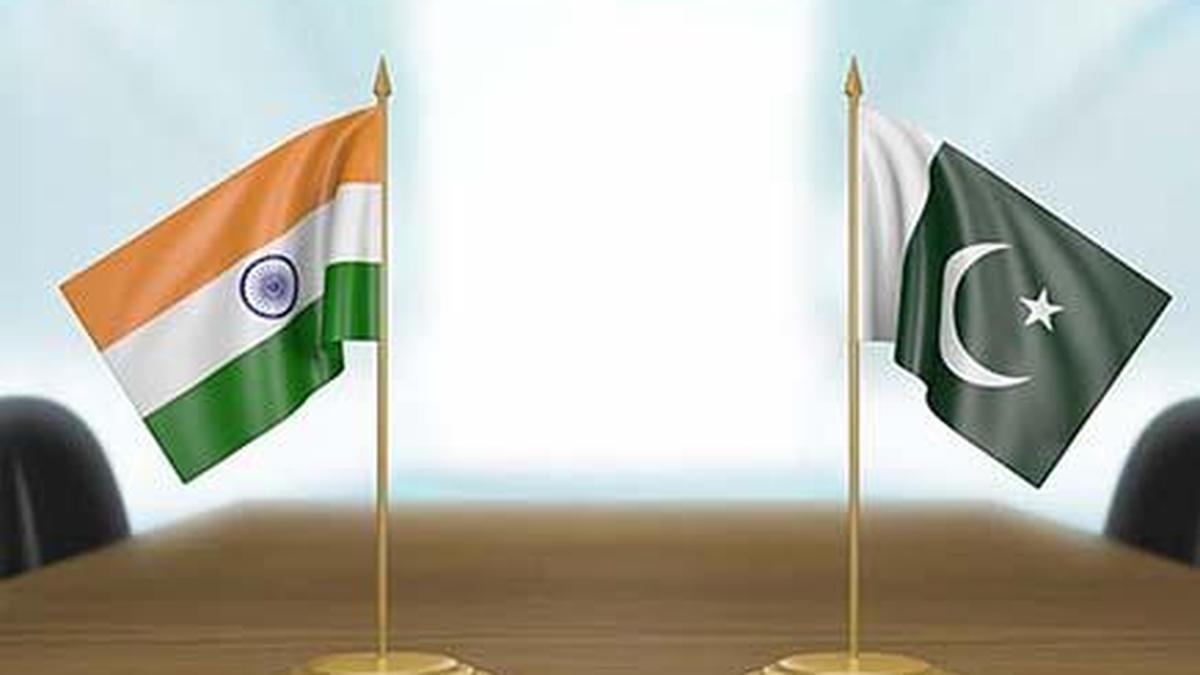
India and Pakistan exchanged lists of nuclear installations and civilian prisoners/fishermen, a routine annual practice. This exchange, particularly of nuclear facilities, occurs under the 'Agreement on the Prohibition of Attack against Nuclear Installations and Facilities'. It signifies a crucial confidence-building measure between the two nuclear-armed nations, aimed at reducing strategic mistrust and preventing escalations. For exams, understanding this bilateral agreement and its purpose is vital.
Revision structure
Monthly events and exam calendar context
Static GK and one-liner notes
Quiz and mock-test revision path
Key points
Exam-ready takeaways
Lists of civilian prisoners and fishermen held by both countries were also exchanged.
The nuclear list exchange is mandated by the 'Agreement on the Prohibition of Attack against Nuclear Installations and Facilities'.
The Ministry of External Affairs (MEA) confirmed the list exchange.
This agreement is a key bilateral confidence-building measure between India and Pakistan.
Detailed analysis
Full exam-oriented breakdown
The annual exchange of lists of nuclear installations and civilian prisoners between India and Pakistan, though a routine affair, carries profound strategic and humanitarian significance for both nuclear-armed neighbours. This practice, often overlooked amidst the broader narrative of strained bilateral relations, serves as a crucial confidence-building measure (CBM) and a vital channel for humanitarian diplomacy. The genesis of the 'Agreement on the Prohibition of Attack against Nuclear Installations and Facilities' dates back to December 31, 1988, when it was signed by then Prime Minister Rajiv Gandhi and his Pakistani counterpart Benazir Bhutto. This landmark agreement was a direct response to the escalating tensions and near-conflict situations between the two countries, particularly after military exercises like 'Brasstacks' in 1987 raised fears of pre-emptive strikes on strategic assets. Ratified in January 1991, the agreement mandates that both nations inform each other of their nuclear installations and facilities on the first day of every calendar year. The first such exchange occurred on January 1, 1992. This agreement aims to prevent either side from launching a surprise attack on the other's nuclear facilities, thereby reducing the risk of a nuclear catastrophe and fostering a modicum of strategic stability in a highly volatile region. Beyond nuclear facilities, India and Pakistan also exchange lists of civilian prisoners and fishermen held in each other's custody. This exchange is a humanitarian gesture, typically occurring twice a year – on January 1st and July 1st. It is governed by the 'Agreement on Consular Access' signed in May 2008, which formalizes the process for granting consular access to prisoners and facilitating their repatriation. This aspect highlights the human dimension of the complex relationship, offering hope for families separated by geopolitical boundaries. Key stakeholders involved in this process are primarily the Ministry of External Affairs (MEA) of India and its Pakistani counterpart, which act as the nodal agencies for these exchanges. Internally, defence establishments, intelligence agencies, and national security councils are involved in compiling and verifying the nuclear installation lists, while the Ministry of Home Affairs and state governments contribute to the prisoner lists. For India, this practice underscores its commitment to responsible nuclear stewardship and adherence to international treaty obligations, even with a historically adversarial neighbour. The international community, including the United Nations and various nuclear non-proliferation advocacy groups, views these CBMs positively as they contribute to regional stability and reduce the chances of miscalculation. For India, this annual ritual matters significantly on multiple fronts. Firstly, it is a testament to the enduring power of diplomacy and the necessity of maintaining channels of communication, even when comprehensive bilateral dialogue is stalled. It acts as a critical de-escalation mechanism, especially crucial given both countries' 'No First Use' (NFU) policy (though Pakistan's NFU is not as clearly defined or publicly articulated as India's) and their respective credible minimum deterrence postures. By ensuring transparency regarding nuclear sites, the agreement reduces strategic mistrust and prevents situations that could trigger a dangerous arms race or accidental conflict. Secondly, the humanitarian aspect of prisoner exchange aligns with India's constitutional ethos, particularly Article 51 of the Directive Principles of State Policy, which calls for promoting international peace and security, fostering respect for international law, and encouraging settlement of international disputes by arbitration. The welfare of Indian citizens, including fishermen who often inadvertently cross maritime boundaries, is a key concern, and these exchanges provide a pathway for their return. Looking ahead, while the core agreement has held steadfast for over three decades, its future implications are tied to the broader trajectory of India-Pakistan relations. The continued adherence to this CBM, despite numerous crises like the Kargil War (1999), the Mumbai attacks (2008), and the Pulwama attack (2019), demonstrates a shared, albeit minimal, understanding of mutual strategic vulnerability. It offers a glimmer of hope that, even in times of heightened tension, certain functional mechanisms can persist. However, the effectiveness of such agreements is always tested by political will and the prevailing security environment. Future progress might involve expanding the scope of CBMs, perhaps to include more robust communication protocols during crises or greater transparency in conventional military deployments, though such advancements appear distant given the current geopolitical climate. Nevertheless, this annual exchange remains a foundational pillar for preventing accidental nuclear escalation and a consistent avenue for humanitarian relief in a complex bilateral relationship.
How to study
Turn news into exam marks
Revise monthly events by exam family instead of reading random updates.
Pair one-liners with mock tests so mistakes become the next revision list.
Keep state job pages, calendar pages and GK packs connected in one path.