

Around 42,000 chemist shops in Tamil Nadu (T.N.) will display QR codes.
GK and monthly revision
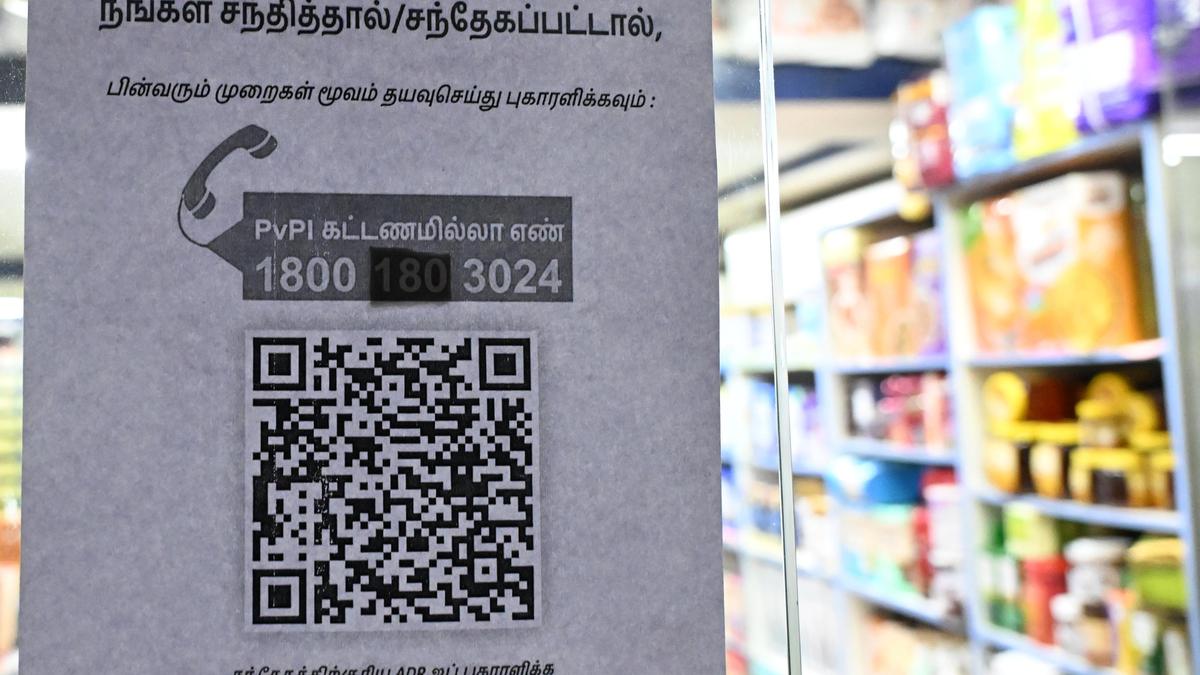
Pharmacies to display QR code for reporting adverse drug events
Around 42,000 chemist shops in Tamil Nadu will display QR codes within 10 days, as per instructions from the Central Drugs Standard Control Organisation (CDSCO). This initiative enables reporting of adverse drug events, significantly enhancing pharmacovigilance and drug safety across the state. It's crucial for competitive exams as it highlights regulatory body functions and public health measures.
Revision structure
Monthly events and exam calendar context
Static GK and one-liner notes
Quiz and mock-test revision path
Key points
Exam-ready takeaways
The QR codes are specifically for reporting adverse drug events (ADEs).
The directive for this implementation comes from the Central Drugs Standard Control Organisation (CDSCO).
The initiative is set to be rolled out in T.N. within 10 days.
This measure aims to strengthen pharmacovigilance and enhance drug safety mechanisms.
Detailed analysis
Full exam-oriented breakdown
The recent directive for approximately 42,000 chemist shops in Tamil Nadu to display QR codes for reporting adverse drug events (ADEs), as mandated by the Central Drugs Standard Control Organisation (CDSCO), marks a significant stride in India's pharmacovigilance efforts. This initiative, to be implemented within 10 days, is not merely a technological upgrade but a fundamental enhancement of public health infrastructure, aiming to make drug safety a collective responsibility. **The Genesis of Vigilance: Background Context** Adverse Drug Events (ADEs) are injuries resulting from medical intervention related to a drug, which can range from mild side effects to severe, life-threatening reactions. Globally, ADEs pose a significant public health burden, leading to hospitalizations, prolonged illnesses, and even fatalities. In India, with its vast and diverse population, varying healthcare access, and a burgeoning pharmaceutical industry, monitoring drug safety is paramount. The concept of pharmacovigilance—the science and activities relating to the detection, assessment, understanding, and prevention of adverse effects or any other drug-related problems—gained formal traction in India with the launch of the Pharmacovigilance Programme of India (PvPI) in 2010. Operated by the Indian Pharmacopoeia Commission (IPC) as the National Coordination Centre, PvPI aims to create a national database of ADEs to facilitate evidence-based policy decisions, ensuring safer drug use for the Indian population. However, reporting mechanisms have historically been fragmented, often relying on healthcare professionals, which sometimes misses patient-reported experiences. **The Mandate and The Mechanism: What Happened** The CDSCO, India's principal regulatory body for pharmaceuticals and medical devices, has directed all pharmacies in Tamil Nadu to prominently display QR codes. These QR codes, when scanned by patients or their caregivers, will likely link to a digital platform or mobile application where they can easily report any adverse reactions experienced after taking medication. This direct reporting mechanism bypasses the traditional reliance on healthcare providers as the sole conduit for reporting, empowering individual consumers to contribute directly to drug safety monitoring. Tamil Nadu, with its robust healthcare network and high pharmaceutical consumption, serves as an ideal state for piloting such an initiative, potentially paving the way for a nationwide rollout. **Architects of Safety: Key Stakeholders** Several key stakeholders are central to this initiative. The **Central Drugs Standard Control Organisation (CDSCO)**, under the Ministry of Health and Family Welfare, is the primary regulatory authority, responsible for setting standards, approving new drugs, and ensuring drug quality and safety across the country. The **Indian Pharmacopoeia Commission (IPC)**, as the National Coordination Centre for PvPI, will be crucial in collecting, analyzing, and disseminating the data generated from these reports. **State Drug Control Authorities**, like those in Tamil Nadu, are responsible for implementing these directives at the ground level and overseeing pharmacy compliance. **Pharmacists and chemist shops** are on the front lines, acting as facilitators by displaying the QR codes and potentially assisting patients with reporting. Most importantly, **patients and the general public** are the ultimate beneficiaries and active participants, whose direct reports will form the backbone of this enhanced pharmacovigilance system. Finally, **drug manufacturers** also have a vested interest, as improved data can help them identify safety concerns with their products and take corrective actions. **A Healthier Nation: Significance for India** This initiative holds immense significance for India. Firstly, it democratizes pharmacovigilance, moving beyond institutional reporting to include patient experiences, which are often overlooked. This can lead to a more comprehensive and accurate picture of ADEs. Secondly, it strengthens public health by enabling rapid identification of drug safety signals, potentially preventing widespread harm. For instance, if a particular drug batch or generic formulation consistently causes adverse effects, this system can flag it quickly, allowing for timely regulatory intervention. Thirdly, it aligns with the 'Digital India' vision, leveraging technology for better governance and public service delivery. The data collected will be invaluable for evidence-based policymaking, guiding drug approvals, post-marketing surveillance, and public health campaigns. This also boosts patient confidence in the healthcare system, knowing their safety is actively being monitored. **A Legacy of Regulation: Historical Context** India's drug regulatory framework is primarily governed by the **Drugs and Cosmetics Act, 1940**, and the **Drugs and Cosmetics Rules, 1945**. These legislations were established to regulate the import, manufacture, distribution, and sale of drugs and cosmetics, ensuring their quality, safety, and efficacy. Over the decades, amendments have been made to strengthen these provisions, responding to evolving medical science and public health needs. The establishment of CDSCO and subsequently the PvPI were crucial steps in formalizing and centralizing drug safety monitoring, moving from a reactive approach to a more proactive and systematic one. The current QR code initiative builds upon this foundation, integrating modern technology into an established regulatory framework. **Framing the Future: Future Implications** The successful implementation of this QR code system in Tamil Nadu could serve as a blueprint for a nationwide rollout, significantly enhancing India's pharmacovigilance capabilities. This would lead to a richer, more diverse dataset of ADEs, improving the ability of regulatory bodies to detect rare or delayed adverse reactions. It could also foster greater transparency and accountability within the pharmaceutical sector. Challenges might include ensuring digital literacy among all segments of the population, maintaining data privacy, and integrating this data seamlessly with existing health information systems. However, the potential for a more robust, patient-centric drug safety system far outweighs these hurdles, promising a healthier future for India. **The Legal Framework: Constitutional & Policy Underpinnings** While the QR code initiative directly stems from the **Drugs and Cosmetics Act, 1940, and Rules, 1945**, its broader constitutional backing can be found in **Article 21 of the Indian Constitution**, which guarantees the 'Right to Life and Personal Liberty'. The Supreme Court has interpreted this right to include the right to health and medical care, making it incumbent upon the state to ensure access to safe and effective medicines. Furthermore, **Article 47** under the Directive Principles of State Policy (DPSP) mandates that the State shall regard the raising of the level of nutrition and the standard of living of its people and the improvement of public health as among its primary duties. This initiative directly contributes to fulfilling these constitutional mandates by safeguarding public health through enhanced drug safety. Policies like the **National Health Policy** also emphasize comprehensive healthcare and patient safety, which this measure directly supports.
How to study
Turn news into exam marks
Revise monthly events by exam family instead of reading random updates.
Pair one-liners with mock tests so mistakes become the next revision list.
Keep state job pages, calendar pages and GK packs connected in one path.