

The National Human Rights Commission (NHRC) issued notices regarding the killing of a student.
GK and monthly revision
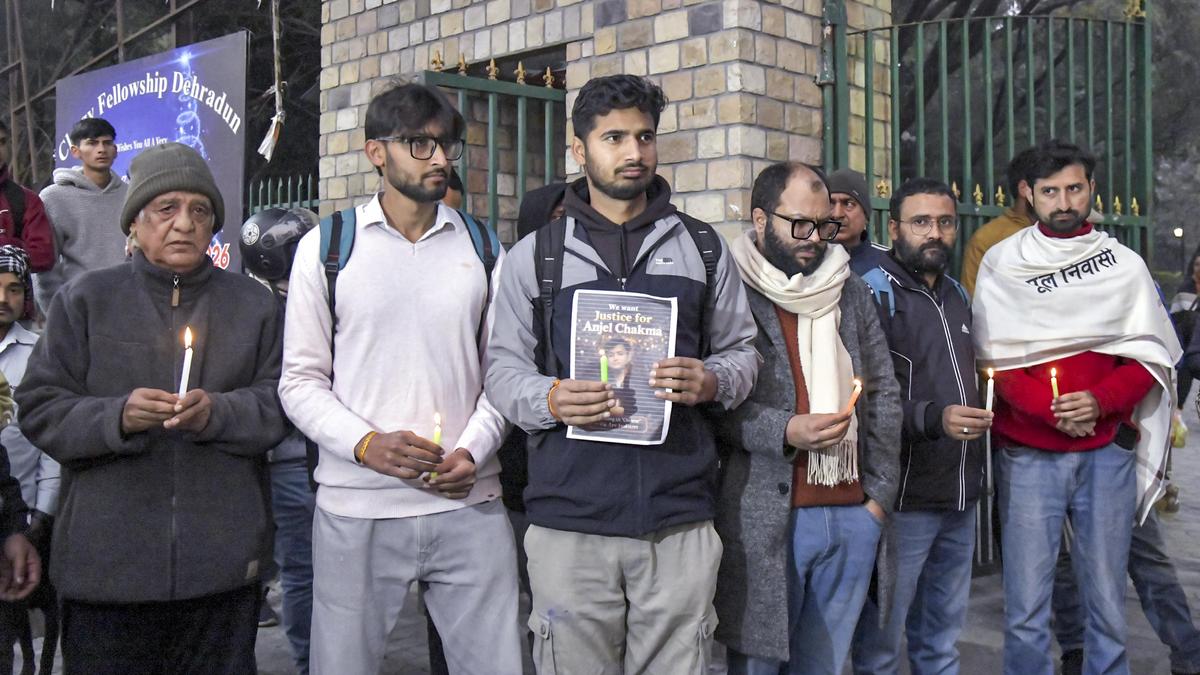
Tripura student killing: NHRC issues notice to Dehradun DM, SSP
The National Human Rights Commission (NHRC) has issued notices to the District Magistrate and Senior Superintendent of Police of Dehradun following the killing of a student from Tripura. This incident has reignited concerns about 'hate crimes' targeting individuals from India's northeastern states. Political leaders have called for concerted efforts to address and eradicate such discriminatory crimes, highlighting the need for enhanced protection and social integration for people from the region, which is crucial for internal security and human rights discourse.
Revision structure
Monthly events and exam calendar context
Static GK and one-liner notes
Quiz and mock-test revision path
Key points
Exam-ready takeaways
Notices were specifically sent to the District Magistrate (DM) and Senior Superintendent of Police (SSP) of Dehradun.
The victim was identified as a student originating from Tripura.
The incident has brought renewed attention to 'hate crimes' targeting people from India's northeastern states.
Leaders across political lines have urged comprehensive efforts to end such hate crimes.
Detailed analysis
Full exam-oriented breakdown
The tragic killing of a student from Tripura in Dehradun, and the subsequent intervention by the National Human Rights Commission (NHRC), casts a stark spotlight on a persistent and deeply troubling issue in India: the prevalence of 'hate crimes' and discrimination against people from the Northeastern states. This incident is not an isolated one but rather a symptom of deeper societal biases that challenge the very fabric of national unity and human rights. **Background Context and Historical Roots:** India's Northeastern region, comprising eight states, is a mosaic of diverse ethnicities, languages, and cultures, often distinct from the Indo-Gangetic plains. Historically, people from this region have faced discrimination, racial profiling, and xenophobia in other parts of the country due to their distinct physical features, cultural practices, and sometimes language barriers. This 'othering' has led to a sense of alienation and vulnerability. There have been numerous documented incidents over the years, from targeted attacks and harassment to subtle forms of discrimination in housing, employment, and social interactions. A prominent example includes the mass exodus of Northeastern residents from cities like Bangalore in 2012 following rumors and threats, highlighting their precarious sense of safety and belonging. Such incidents underscore a failure in integrating these communities fully into the national mainstream, despite constitutional guarantees of equality and freedom to reside anywhere in India. **What Happened:** The immediate trigger for this discussion is the killing of a student from Tripura in Dehradun. While the specifics of the crime are under investigation, the widespread concern, particularly among political leaders across party lines, points to the perception that this was a 'hate crime'. The National Human Rights Commission (NHRC) took cognizance of the matter, issuing notices to the District Magistrate (DM) and Senior Superintendent of Police (SSP) of Dehradun. This action by the NHRC signifies the gravity of the incident and its potential implications for human rights and law enforcement accountability. **Key Stakeholders Involved:** Several crucial stakeholders are involved in this ongoing issue. The **National Human Rights Commission (NHRC)**, established under the Protection of Human Rights Act, 1993, acts as India's watchdog for human rights. Its role is to investigate human rights violations, recommend remedial measures, and promote human rights education. By issuing notices, the NHRC asserts its authority to ensure accountability from the state administration. The **victim's family and the broader Northeastern community** are primary stakeholders, seeking justice, protection, and an end to discriminatory practices. The **local administration (DM and SSP)** in Dehradun bears the immediate responsibility for maintaining law and order, conducting a fair investigation, and ensuring the safety of all residents. **Political leaders** play a vital role in shaping public discourse, advocating for policy changes, and ensuring legislative action to combat discrimination. **Civil society organizations and NGOs** also contribute significantly by raising awareness, providing legal aid, and working towards social integration. **Significance for India and Constitutional Provisions:** This incident holds profound significance for India's national unity, internal security, and human rights commitments. Such hate crimes undermine the constitutional vision of a united and inclusive India. They violate fundamental rights enshrined in the Constitution: **Article 14** guarantees equality before the law; **Article 15** prohibits discrimination on grounds of religion, race, caste, sex, or place of birth; and **Article 21** protects life and personal liberty. Furthermore, **Articles 19(1)(d) and (e)** guarantee the right of all citizens to move freely throughout the territory of India and to reside and settle in any part of the territory of India. When citizens from one part of the country face threats and discrimination in another, it directly challenges these constitutional ideals and can lead to alienation, mistrust, and even impact internal security by creating pockets of disaffection. **Future Implications:** The continued occurrence of such incidents necessitates a multi-pronged approach. There is an urgent need for stronger anti-discrimination laws that specifically address hate crimes based on race, ethnicity, and origin, going beyond existing provisions in the Indian Penal Code. Enhanced police training and sensitivity programs are crucial to ensure that law enforcement agencies are equipped to handle such cases with cultural understanding and impartiality. Public awareness campaigns promoting diversity and inclusion are essential to combat stereotypes and foster empathy. The government's 'Act East Policy', aimed at enhancing India's economic and strategic ties with Southeast Asian nations, also implicitly calls for better integration and respect for its own Northeastern citizens, as their marginalization contradicts the spirit of regional cooperation and national development. Addressing these issues effectively is paramount for ensuring that all citizens, irrespective of their origin, feel safe, respected, and truly belong to the Indian nation.
How to study
Turn news into exam marks
Revise monthly events by exam family instead of reading random updates.
Pair one-liners with mock tests so mistakes become the next revision list.
Keep state job pages, calendar pages and GK packs connected in one path.