

Congress leader Jairam Ramesh criticized the "double-engine sarkar" (BJP governments at the Centre and in Rajasthan).
GK and monthly revision
Real estate development opened up by Rajasthan's double-engine govt to hurt Aravallis more: Congress
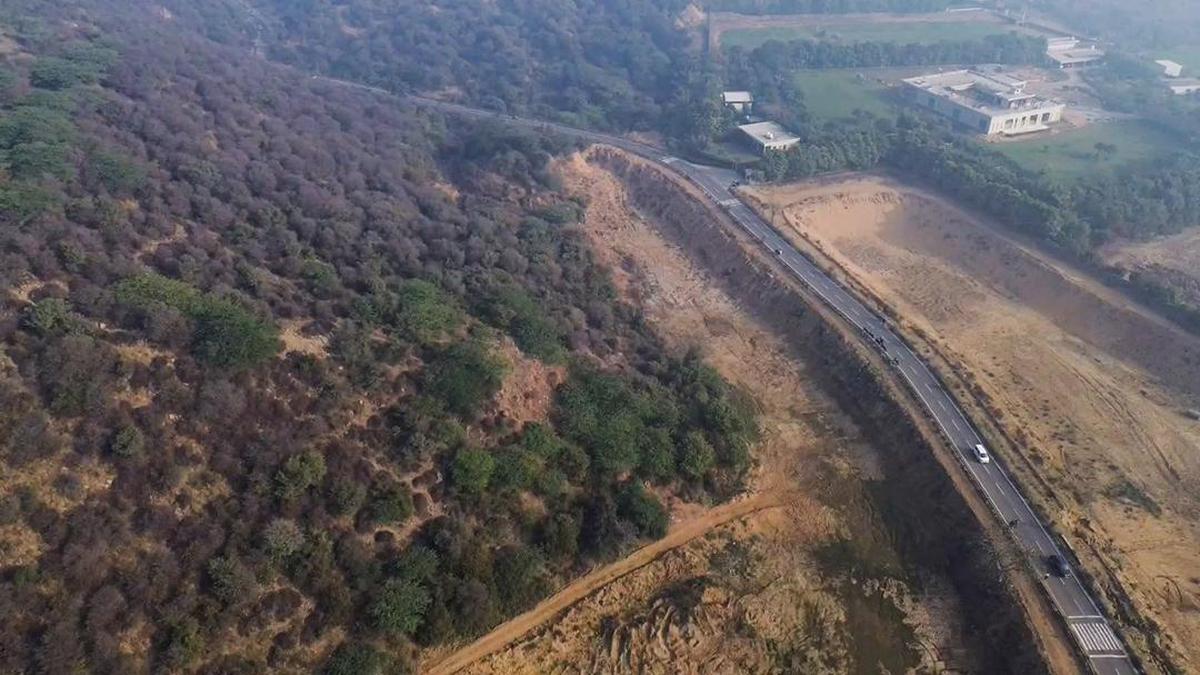
Congress leader Jairam Ramesh alleged that the "double-engine sarkar" (Centre and Rajasthan BJP governments) is promoting real estate development and mining in the Aravalli hills. This move, he stated, goes against the recommendations of the Forest Survey of India, threatening the ecologically sensitive region. This issue is significant for competitive exams as it involves environmental policy, inter-state governance, and the protection of critical geographical features like the Aravallis.
Revision structure
Monthly events and exam calendar context
Static GK and one-liner notes
Quiz and mock-test revision path
Key points
Exam-ready takeaways
The criticism focuses on opening up real estate development and mining activities in the Aravalli hills.
These development activities are alleged to be against the recommendations made by the Forest Survey of India (FSI).
The Aravalli range is an ecologically sensitive and crucial geographical feature in Western India.
The Aravalli hills span across four states: Rajasthan, Haryana, Delhi, and Gujarat.
Detailed analysis
Full exam-oriented breakdown
The Aravalli Range, one of the oldest fold mountain systems in the world, stretching approximately 692 km across Rajasthan, Haryana, Delhi, and Gujarat, is often referred to as the 'Green Lung' of North India. This ancient geological formation plays a crucial role in the ecological balance of the region, acting as a natural barrier against the eastward march of the Thar Desert, recharging groundwater, and influencing monsoon patterns. Its ecological significance is immense, providing critical habitat for diverse flora and fauna, and serving as a vital water catchment area for numerous rivers and streams. However, for decades, the Aravallis have faced relentless pressure from urbanization, industrialization, and illegal mining, leading to severe environmental degradation. The recent controversy, sparked by Congress leader Jairam Ramesh, highlights the ongoing tension between development aspirations and environmental conservation. Ramesh's allegation that the "double-engine sarkar" – referring to the BJP governments at the Centre and in Rajasthan – is actively promoting real estate development and mining in the Aravalli hills, specifically goes against the recommendations of the Forest Survey of India (FSI). The FSI, a premier national organization under the Ministry of Environment, Forest and Climate Change, is responsible for forest surveys, assessment, and monitoring. Its recommendations are typically based on ecological impact assessments and are crucial for informed policy-making in environmental protection. This issue involves multiple key stakeholders. At the forefront are the **Central Government** and the **State Governments** (Rajasthan, Haryana, Delhi, Gujarat), who are responsible for policy formulation, land use planning, and environmental regulation. Political parties like the **Congress** and **BJP** are key players, with their differing approaches to development and conservation often becoming points of contention. **Real estate developers and mining companies** represent the economic interests pushing for access to Aravalli lands and resources. Opposing them are **environmental activists, non-governmental organizations (NGOs), and local communities** who advocate for the protection of the Aravallis, citing ecological and livelihood concerns. The **Forest Survey of India (FSI)** acts as an independent scientific authority whose recommendations are central to the debate. Finally, the **judiciary**, particularly the Supreme Court and the National Green Tribunal (NGT), has historically played a proactive role in issuing directives and upholding environmental safeguards in the Aravallis, often intervening to halt illegal activities. For India, the fate of the Aravallis carries profound significance. Ecologically, its continued degradation exacerbates desertification, increases dust storms affecting air quality in the National Capital Region (NCR), depletes groundwater tables, and threatens biodiversity. Economically, while mining and real estate offer short-term revenue and employment, the long-term ecological costs, including water scarcity, health issues, and climate change vulnerability, far outweigh these benefits. Socially, the livelihoods of indigenous communities dependent on forest produce and water resources are jeopardized. Politically, the issue underscores the challenges of federalism in environmental governance, as the Aravallis span multiple states, requiring coordinated policy and enforcement. The concept of 'double-engine government' implies synergy, but when it comes to environmental issues, it can also lead to unified decisions that may overlook local ecological sensitivities. The constitutional framework for environmental protection in India is robust. **Article 48A** of the Directive Principles of State Policy mandates that "The State shall endeavour to protect and improve the environment and to safeguard the forests and wild life of the country." Complementing this, **Article 51A(g)**, a Fundamental Duty, states that "It shall be the duty of every citizen of India to protect and improve the natural environment including forests, lakes, rivers and wild life, and to have compassion for living creatures." Specific legislation like the **Environment (Protection) Act, 1986**, and the **Forest (Conservation) Act, 1980**, provide legal teeth for environmental safeguarding. The **Mines and Minerals (Development and Regulation) Act, 1957**, though primarily aimed at regulating mining, also has provisions for environmental considerations. Several Supreme Court judgments, such as the landmark M.C. Mehta v. Union of India case (1987) concerning mining in the Aravallis, have reinforced the need for environmental protection, often declaring the Aravallis as an ecologically fragile zone. Looking ahead, the future implications are critical. If unchecked development continues, the Aravallis could face irreversible damage, leading to a severe ecological crisis in North India. This would exacerbate climate change impacts, particularly heatwaves and water stress. It could also trigger more legal battles, further testing the balance between economic growth and environmental sustainability. The resolution of this issue will depend on strong political will, adherence to scientific recommendations like those from the FSI, robust enforcement of environmental laws, and active public participation. It also highlights the need for a comprehensive, inter-state Aravalli management plan that respects its ecological sanctity while allowing for sustainable development within clearly defined limits.
How to study
Turn news into exam marks
Revise monthly events by exam family instead of reading random updates.
Pair one-liners with mock tests so mistakes become the next revision list.
Keep state job pages, calendar pages and GK packs connected in one path.