

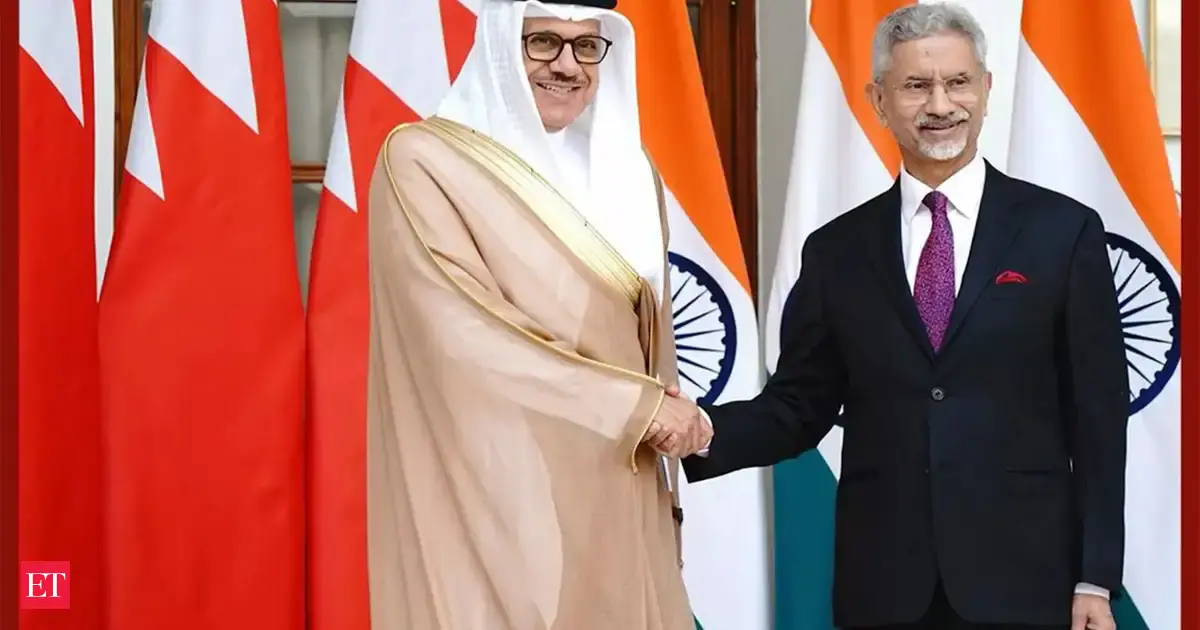
India and Bahrain have exchanged draft terms for a Comprehensive Economic Partnership Agreement (CEPA).
GK and monthly revision
India, Bahrain exchange draft terms to begin trade pact talks
India and Bahrain have exchanged draft terms for a Comprehensive Economic Partnership Agreement (CEPA) and are establishing a joint working group to advance trade talks. This move is significant as it aims to boost Indian exports and diversify trade routes, reflecting India's growing economic diplomacy. For competitive exams, this highlights India's trade policies, bilateral relations, and engagement with Gulf nations.
Revision structure
Monthly events and exam calendar context
Static GK and one-liner notes
Quiz and mock-test revision path
Key points
Exam-ready takeaways
A joint working group is being established by India and Bahrain to facilitate trade pact talks.
The objective of the CEPA is to boost Indian exports and diversify trade routes.
India is also engaged in discussions with the Gulf Cooperation Council (GCC) for a Free Trade Pact (FTA).
Within the GCC framework, terms for a free trade agreement with Qatar have been substantially finalized.
Detailed analysis
Full exam-oriented breakdown
India's proactive engagement in economic diplomacy is once again highlighted by the recent exchange of draft terms for a Comprehensive Economic Partnership Agreement (CEPA) with Bahrain. This move signifies a deeper commitment to strengthening bilateral trade and investment ties, aligning with India's broader strategy to diversify its trade partners and enhance its global economic footprint. The establishment of a joint working group underscores the seriousness and intent of both nations to expedite these crucial talks. **Background Context and Historical Ties:** India and the Gulf region share ancient trade and cultural linkages, predating modern nation-states. For centuries, Indian merchants traded spices, textiles, and precious stones with the Arabian Peninsula. In the post-independence era, while political alignment leaned towards non-alignment, economic ties, particularly driven by energy needs and remittances from the Indian diaspora, grew substantially. The Gulf Cooperation Council (GCC) states, including Bahrain, are critical to India's energy security, supplying a significant portion of its crude oil and natural gas requirements. This dependence has necessitated a robust and multifaceted engagement, evolving from a buyer-seller relationship to a more strategic partnership. India's 'Look West' policy, complementing its 'Act East' strategy, specifically targets strengthening relations with West Asian countries, recognizing their economic potential and geopolitical significance. Bahrain, with its strategic location and well-developed financial sector, serves as a vital gateway to the broader GCC market, making it an attractive partner for India. **What Happened and Key Stakeholders:** The core development is the exchange of draft terms for a CEPA between India and Bahrain. This is a critical first step in formalizing negotiations, outlining the scope and objectives of the agreement. A joint working group, comprising officials and experts from both sides, is being established to facilitate detailed discussions on various aspects, including goods, services, investment, and dispute resolution. Simultaneously, India is also engaged in broader discussions with the Gulf Cooperation Council (GCC) for a Free Trade Agreement (FTA), with terms for a separate FTA with Qatar reported to be substantially finalized. This dual-track approach reflects India's ambition to deepen economic integration both bilaterally and regionally. The key stakeholders involved are primarily the Ministry of Commerce & Industry and the Ministry of External Affairs from the Indian side, and their respective counterparts in Bahrain, such as the Ministry of Industry and Commerce and the Ministry of Foreign Affairs. Indian and Bahraini businesses and investors are also crucial stakeholders, as they stand to benefit directly from reduced tariffs and enhanced market access. **Significance for India:** This potential CEPA holds immense significance for India. Economically, it aims to boost Indian exports across various sectors, including pharmaceuticals, textiles, agriculture, engineering goods, and services. Reduced tariffs and non-tariff barriers will make Indian products more competitive in the Bahraini market, and potentially, as a re-export hub for the wider GCC. It will also encourage foreign direct investment (FDI) from Bahrain into India and vice-versa, fostering job creation and economic growth. Strategically, strengthening ties with Bahrain enhances India's influence in the Gulf region, contributing to regional stability and diversifying India's trade routes, a crucial lesson learned from recent global supply chain disruptions. Bahrain's role as an international financial center could also open avenues for financial services cooperation. This move is part of India's broader strategy of forging robust economic partnerships, as seen with the CEPA signed with the UAE in 2022 and the Economic Cooperation and Trade Agreement (ECTA) with Australia. **Constitutional and Policy Framework:** Such international trade agreements are underpinned by India's constitutional and legal framework. **Article 253** of the Indian Constitution grants Parliament the power to make any law for implementing any treaty, agreement, or convention with any other country or any decision made at any international conference, association, or other body. This article provides the legal authority for the Indian government to enter into and ratify such international agreements. Furthermore, **Article 51** emphasizes the promotion of international peace and security, fostering respect for international law and treaty obligations, and encouraging settlement of international disputes by arbitration – principles that guide India's foreign policy and economic diplomacy. The current Foreign Trade Policy (FTP 2023) explicitly aims to boost exports and integrate India into global value chains, making these CEPAs/FTAs direct instruments for achieving these policy objectives. Relevant acts like the **Customs Act, 1962**, and the **Foreign Exchange Management Act (FEMA), 1999**, would be impacted and instrumental in implementing the provisions of any finalized agreement, particularly concerning tariffs and cross-border financial transactions. **Future Implications:** A successful CEPA with Bahrain could serve as a blueprint and accelerate the ongoing broader FTA negotiations with the GCC. It would signal India's growing economic prowess and its commitment to integrating more deeply into the global economy. The agreement could pave the way for increased collaboration in non-oil sectors, technology transfer, and greater people-to-people exchanges. However, challenges remain, including detailed negotiations on sensitive sectors, ensuring fair competition, and establishing effective dispute resolution mechanisms. Despite these, the move indicates a clear trajectory towards deeper economic engagement, reinforcing India's position as a significant player in international trade and diplomacy.
How to study
Turn news into exam marks
Revise monthly events by exam family instead of reading random updates.
Pair one-liners with mock tests so mistakes become the next revision list.
Keep state job pages, calendar pages and GK packs connected in one path.