

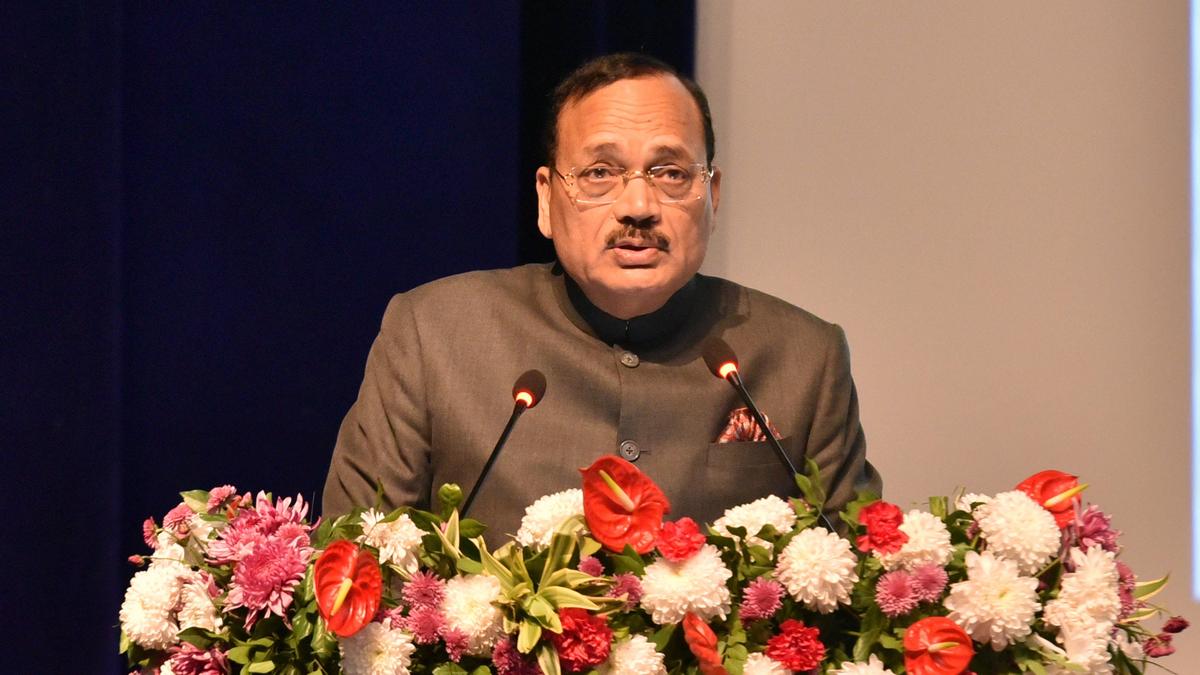
Justice Surya Kant, a Supreme Court judge, pitched for the implementation of a 'multi-door courthouse' system.
GK and monthly revision
CJI Surya Kant pitches for ‘multi-door courthouse’ for comprehensive dispute resolution
Justice Surya Kant, a Supreme Court judge, advocated for a 'multi-door courthouse' system to facilitate comprehensive dispute resolution. He emphasized mediation as a crucial mechanism to reduce judicial pendency, stating it represents the law's highest evolution rather than weakness. This initiative is significant for judicial reforms, promoting alternative dispute resolution methods, and improving access to justice, making it relevant for governance and legal aspects in competitive exams.
Revision structure
Monthly events and exam calendar context
Static GK and one-liner notes
Quiz and mock-test revision path
Key points
Exam-ready takeaways
The primary objective of the 'multi-door courthouse' is to offer comprehensive dispute resolution.
Mediation was highlighted as a key component to effectively reduce judicial pendency.
Justice Surya Kant stated that mediation is not a sign of the law's weakness but its 'highest evolution'.
The 'multi-door courthouse' concept aims to provide various dispute resolution mechanisms under one roof.
Detailed analysis
Full exam-oriented breakdown
India's judicial system, often lauded for its independence and robustness, simultaneously grapples with the enormous challenge of judicial pendency. With over 5 crore cases clogging various courts, the cry for reforms has grown louder over the years. It is against this backdrop that Justice Surya Kant, a sitting Supreme Court judge, recently advocated for the implementation of a 'multi-door courthouse' system. This concept is not merely an incremental change but a potentially transformative approach to dispute resolution, aiming to decongest courts and provide more efficient, accessible, and tailored justice. The 'multi-door courthouse' essentially functions as a single point of entry for all disputes, where litigants are guided towards the most appropriate resolution mechanism after an initial assessment. Instead of the traditional pathway that often defaults to adversarial litigation, a multi-door courthouse offers a spectrum of options under one roof: traditional court litigation, mediation, arbitration, conciliation, negotiation, and even Lok Adalats. Justice Surya Kant's emphasis on mediation as 'not a sign of the law's weakness but its highest evolution' underscores a paradigm shift. It suggests moving beyond the win-lose dynamic of litigation towards collaborative problem-solving, which can preserve relationships and provide more satisfying outcomes. Key stakeholders in this reformative journey include the **Judiciary** itself, from the Supreme Court to the district courts, which would be responsible for implementing and overseeing these new systems. The **Litigants and citizens** are arguably the most important stakeholders, as they are the direct beneficiaries of a more efficient and accessible justice system. Their acceptance and utilization of alternative mechanisms are crucial. **Lawyers** also play a pivotal role, not just as litigators but as advisors guiding clients towards the most suitable dispute resolution method. Their mindset shift from solely adversarial practice to facilitating consensual resolution is vital. The **Government**, particularly the Ministry of Law and Justice, is responsible for providing legislative backing, infrastructure, and funding for these initiatives. Finally, **Alternative Dispute Resolution (ADR) practitioners** – trained mediators, arbitrators, and conciliators – form the backbone of these alternative mechanisms. For India, the significance of embracing a multi-door courthouse approach is profound. Economically, judicial delays are a significant deterrent to investment and can increase the cost of doing business. Faster dispute resolution would improve India's ranking in the 'Ease of Doing Business' index, attracting both domestic and foreign investment. Politically, a more efficient justice system enhances public trust in state institutions and reinforces the rule of law. Socially, it reduces the immense stress and financial burden on ordinary citizens, ensuring that justice is not only delivered but also perceived as fair and timely. It aligns with the constitutional mandate of Article 39A, which directs the State to secure that the operation of the legal system promotes justice on a basis of equal opportunity, and shall, in particular, provide free legal aid to ensure that opportunities for securing justice are not denied to any citizen by reason of economic or other disabilities. Similarly, the right to speedy justice is an integral part of the right to life and personal liberty enshrined under Article 21. Historically, India has been exploring ADR mechanisms for decades. The Arbitration and Conciliation Act, 1996 (subsequently amended in 2015 and 2019) provided a statutory framework for arbitration and conciliation. The Legal Services Authorities Act, 1987, established Lok Adalats as a forum for amicable settlement. Section 89 of the Civil Procedure Code, 1908 (inserted by the 1999 amendment), explicitly mandates courts to refer disputes for settlement through ADR. The current push, therefore, is not about introducing entirely new concepts but integrating them into a comprehensive, user-friendly system. The proposed Mediation Bill, 2021 (which has since evolved into the Mediation Act, 2023), further aims to institutionalize mediation, making pre-litigation mediation mandatory in certain civil and commercial disputes. The future implications are substantial. Successful implementation would require robust infrastructure, a large pool of trained and accredited ADR professionals, and a nationwide awareness campaign to educate the public and legal fraternity. It could lead to a significant reduction in court backlogs, enhance access to justice, and foster a culture of amicable dispute resolution. However, challenges such as ensuring the quality and enforceability of ADR outcomes, maintaining public confidence, and overcoming resistance from traditionalists within the legal system must be addressed. Ultimately, a multi-door courthouse system, if effectively implemented, could redefine justice delivery in India, moving towards a more holistic, efficient, and people-centric model that truly embodies the 'highest evolution' of law.
How to study
Turn news into exam marks
Revise monthly events by exam family instead of reading random updates.
Pair one-liners with mock tests so mistakes become the next revision list.
Keep state job pages, calendar pages and GK packs connected in one path.