

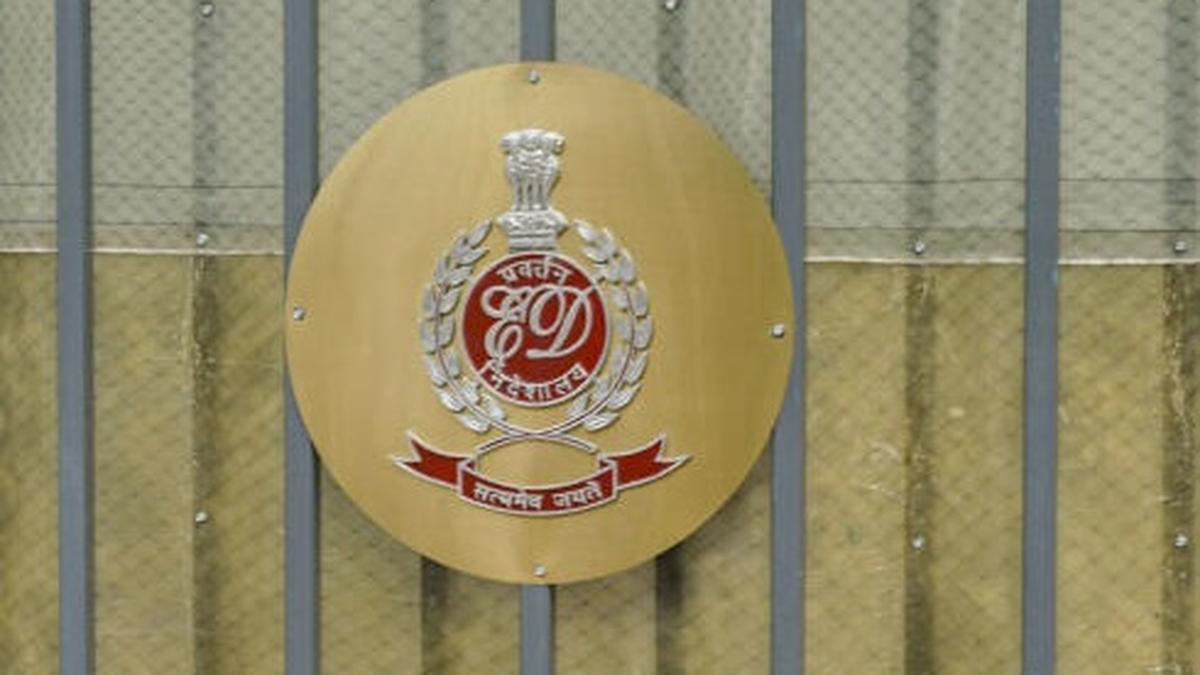
The Enforcement Directorate (ED) filed the final prosecution complaint in the Chhattisgarh liquor scam.
GK and monthly revision
Chhattisgarh liquor scam: ED files final prosecution complaint
The Enforcement Directorate (ED) has filed its final prosecution complaint in the Chhattisgarh liquor scam, implicating 59 new individuals. This development highlights ongoing efforts against corruption involving high-ranking government officials and private entities in the state's excise sector. For competitive exams, this case is significant for understanding the role of central investigative agencies like ED, issues of governance, public administration ethics, and specific individuals involved in major corruption probes.
Revision structure
Monthly events and exam calendar context
Static GK and one-liner notes
Quiz and mock-test revision path
Key points
Exam-ready takeaways
The complaint adds 59 new accused individuals to the ongoing investigation.
Among the prominent new accused is Soumya Chaurasia, former Deputy Secretary at the Chief Minister's office.
Former IAS officer Niranjan Das has also been named as an accused in the complaint.
Other accused categories include liquor licence holders, liquor manufacturers, and excise department officials.
Detailed analysis
Full exam-oriented breakdown
The Chhattisgarh liquor scam, which has seen the Enforcement Directorate (ED) file its final prosecution complaint against 59 new accused, including high-ranking former government officials, offers a critical lens into the challenges of governance, corruption, and the functioning of central investigative agencies in India. This development is not merely a local incident; it resonates with broader themes of public administration ethics, economic crimes, and centre-state relations. **Background Context and What Happened:** Chhattisgarh, like many Indian states, generates significant revenue from excise duties on liquor. The alleged scam, which reportedly came to light around 2022, involved a sophisticated network designed to create an illegal parallel system for liquor sales. Instead of the state-run Chhattisgarh State Marketing Corporation Limited (CSMCL) selling liquor through authorized channels, it's alleged that a syndicate, comprising government officials, liquor manufacturers, and distributors, hijacked the system. This cartel allegedly ensured that only certain manufacturers supplied liquor, which was then sold with an illicit commission collected per case. This 'extra-legal' income was reportedly siphoned off, leading to massive revenue losses for the state exchequer and benefiting private individuals and politically connected entities. The ED's investigation indicates that this syndicate ran a parallel system of liquor sale, bypassing the state's legitimate excise policy, and generated huge illegal profits, estimated to be hundreds of crores of rupees. **Key Stakeholders Involved:** * **Enforcement Directorate (ED):** As a premier central investigative agency, the ED is at the forefront of this probe. Its primary mandate is to enforce the Prevention of Money Laundering Act (PMLA), 2002, and the Foreign Exchange Management Act (FEMA), 1999. In this case, the ED is investigating the money laundering aspect of the alleged scam, tracing the proceeds of crime and attaching assets. Their actions highlight the increasing assertiveness of central agencies in economic offense cases. * **Chhattisgarh Government and Excise Department:** The state machinery, particularly the excise department, is central to the scam. The allegations point to a systemic failure and potential complicity within the department, facilitating the illegal operations. The former Deputy Secretary at the Chief Minister's office, Soumya Chaurasia, and former IAS officer Niranjan Das, being among the accused, underscore the involvement of high-ranking bureaucrats. * **Liquor Manufacturers and License Holders:** Private entities, including distillers and distributors, are alleged to have formed a cartel, manipulating supply chains and benefiting from the illicit commissions. Their involvement highlights the nexus between business interests and corrupt officialdom. * **The Public:** Ultimately, the citizens of Chhattisgarh are the biggest losers, as state revenue meant for public welfare schemes was allegedly diverted into private pockets, eroding public trust in governance. **Why This Matters for India:** This scam is significant for several reasons. Firstly, it exposes the deep-rooted corruption within public administration and the intricate nexus between politicians, bureaucrats, and business interests. Such incidents undermine the integrity of governance and public institutions. Secondly, the financial scale of the alleged scam, involving hundreds of crores, represents a substantial loss to the state exchequer, directly impacting the government's capacity to fund development projects and social welfare programs. Thirdly, the involvement of a central agency like the ED in a state-level matter often sparks debates on federalism and the appropriate balance of power between the Centre and states, especially when political rivalries are at play. Lastly, it reinforces the need for robust transparency and accountability mechanisms in sectors prone to corruption, like excise and mining. **Constitutional Articles, Acts, and Policies:** * **Prevention of Money Laundering Act (PMLA), 2002:** This is the primary legislation under which the ED operates in this case. PMLA aims to prevent money laundering, confiscate property derived from or involved in money laundering, and deal with related matters. Its provisions grant ED significant powers, including arrest, search, seizure, and attachment of property. * **Prevention of Corruption Act (PCA), 1988:** This Act deals with corruption involving public servants. Charges against former IAS officers and excise officials would likely involve sections of this act, focusing on bribery, criminal misconduct, and disproportionate assets. * **Indian Penal Code (IPC):** Various sections related to criminal conspiracy, cheating, and fraud would also be applicable. * **Article 246 (Seventh Schedule - State List - Entry 51 & 8):** This is crucial for understanding the state's role. Entry 51 of the State List (List II) empowers state legislatures to levy duties of excise on alcoholic liquors for human consumption. Entry 8 allows states to regulate intoxicating liquors. This constitutional provision forms the basis of state excise policies, which were allegedly manipulated in this scam. **Future Implications:** The filing of the final prosecution complaint marks a significant step in the legal process. The case will now proceed to trial, which could be lengthy and complex. The outcomes could include convictions, significant asset recovery, and imprisonment for those found guilty. Politically, such high-profile corruption cases can have significant electoral ramifications, especially in a state like Chhattisgarh. Beyond legal outcomes, this case highlights the urgent need for comprehensive reforms in state excise policies to enhance transparency, minimize discretionary powers, and implement robust oversight mechanisms. It also fuels the ongoing debate about the powers and potential misuse of central investigative agencies, underscoring the delicate balance required to ensure accountability without infringing on federal principles. The investigation serves as a stark reminder of the continuous battle against corruption and the critical role of independent law enforcement in upholding the rule of law and public trust.
How to study
Turn news into exam marks
Revise monthly events by exam family instead of reading random updates.
Pair one-liners with mock tests so mistakes become the next revision list.
Keep state job pages, calendar pages and GK packs connected in one path.