

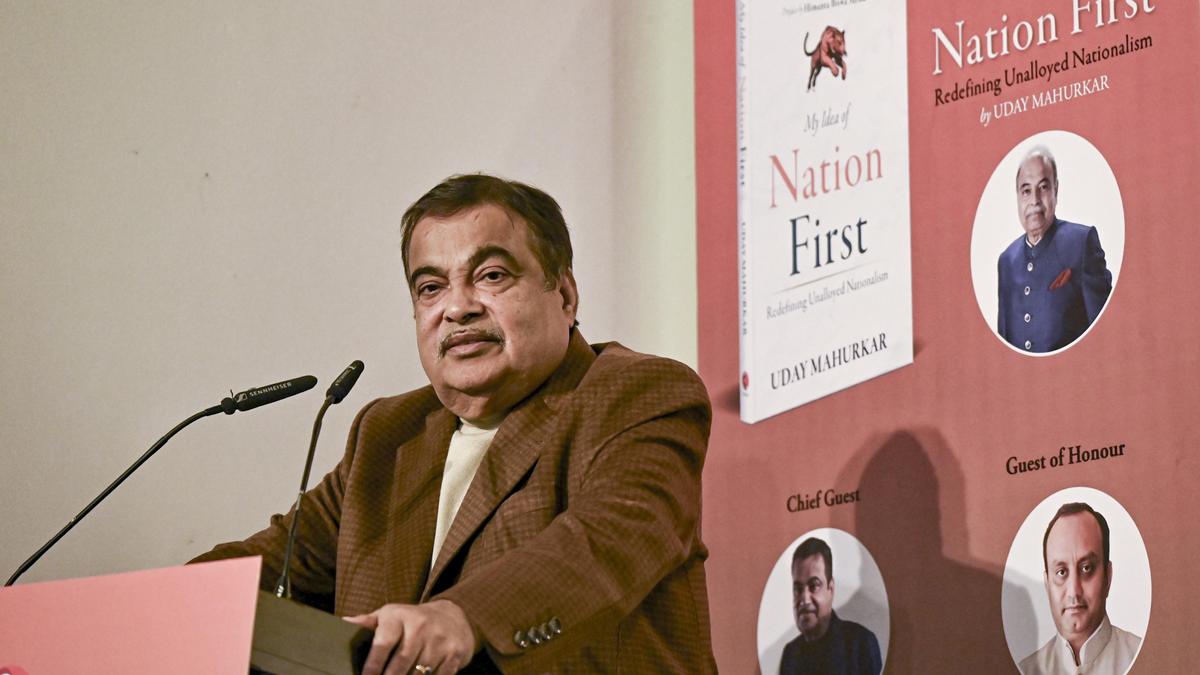
Union Transport Minister Nitin Gadkari attributed "40% pollution" in Delhi directly to the transport sector.
GK and monthly revision
‘I develop infections in Delhi’: Nitin Gadkari acknowledges "40% pollution" linked to transport
Union Transport Minister Nitin Gadkari linked 40% of Delhi's pollution to the transport sector, expressing personal health concerns due to it. He questioned the logic of India's substantial ₹22 lakh crore annual fossil fuel import bill, advocating for greater self-reliance in alternative and biofuels. This statement underscores the government's strategic focus on sustainable transport, energy security, and reducing urban air pollution, making it highly relevant for competitive exam topics on economy and environment.
Revision structure
Monthly events and exam calendar context
Static GK and one-liner notes
Quiz and mock-test revision path
Key points
Exam-ready takeaways
Minister Gadkari personally stated he develops infections in Delhi, linking it to the city's pollution levels.
He highlighted India's significant annual expenditure of ₹22 lakh crore on fossil fuel imports.
Gadkari strongly advocated for increased self-reliance in alternative fuels and biofuels.
The minister's statement questions the economic and environmental logic of India's current fossil fuel dependency.
Detailed analysis
Full exam-oriented breakdown
Union Transport Minister Nitin Gadkari's recent statement, linking 40% of Delhi's air pollution to the transport sector and highlighting India's colossal annual fossil fuel import bill of ₹22 lakh crore, serves as a crucial commentary on the nation's twin challenges: environmental degradation and energy security. This statement is not merely an observation; it's a strategic pronouncement underscoring the government's commitment to pivot towards sustainable transport and alternative fuels, a shift with profound implications for India's economy, public health, and global standing. **Background Context: A City Choking and a Nation Dependent** Delhi's air pollution crisis is a perennial issue, particularly acute during the winter months. Factors like vehicular emissions, industrial pollution, construction dust, and stubble burning from neighbouring states contribute to hazardous air quality, frequently pushing the Air Quality Index (AQI) into 'severe' categories. This has severe public health consequences, leading to respiratory illnesses, cardiovascular problems, and reduced life expectancy, as highlighted by Minister Gadkari's personal experience of developing infections. Simultaneously, India, as the world's third-largest energy consumer and a rapidly developing economy, is heavily reliant on crude oil imports to meet its energy demands. This dependency makes India vulnerable to global oil price volatility and geopolitical tensions, leading to a significant drain on foreign exchange reserves, exemplified by the ₹22 lakh crore annual import bill. **What Happened: A Call for Self-Reliance** Minister Gadkari's direct attribution of 40% of Delhi's pollution to transport is a stark acknowledgement of the sector's environmental footprint. His emphasis on the massive fossil fuel import bill directly challenges the economic logic of this dependency. By advocating for greater self-reliance in alternative and biofuels, he is championing a strategic shift. This isn't a new idea; India has been progressively exploring these avenues, but the Minister's strong public statement from a key portfolio amplifies the urgency and commitment behind such policies. **Key Stakeholders Involved** Several stakeholders are central to this transition. The **Ministry of Road Transport and Highways (MoRTH)**, led by Minister Gadkari, is at the forefront, responsible for policy formulation and infrastructure development for sustainable transport. The **Ministry of Environment, Forest and Climate Change (MoEFCC)** plays a critical role in setting emission standards and enforcing environmental regulations. **NITI Aayog**, as the government's premier think tank, is instrumental in strategizing India's energy transition roadmap. The **automobile industry** is a key player, needing to innovate and manufacture vehicles compatible with alternative fuels, including electric vehicles (EVs) and flex-fuel engines. **Oil Marketing Companies (OMCs)** like IOCL, BPCL, and HPCL are adapting by investing in biofuel production and EV charging infrastructure. **Farmers** stand to benefit significantly as suppliers of biomass for ethanol and biodiesel production, offering new income streams. Ultimately, **Indian citizens** are both the sufferers of pollution and the beneficiaries of cleaner air and a more robust, self-reliant economy. **Significance for India: A Multi-faceted Impact** This strategic shift holds immense significance for India. Environmentally, reducing vehicular emissions directly contributes to cleaner air, improving public health and mitigating climate change impacts, aligning with India's commitments under the Paris Agreement. Economically, cutting down the fossil fuel import bill will save vast amounts of foreign exchange, strengthen the Rupee, and reduce inflationary pressures. It also fosters domestic industries related to biofuels, EV manufacturing, and charging infrastructure, creating jobs and boosting indigenous technological capabilities. From an energy security perspective, diversifying the energy basket reduces India's vulnerability to global oil price shocks and geopolitical instability. Socially, cleaner air translates to better health outcomes and an improved quality of life for millions, particularly in urban areas. **Historical Context and Policy Framework** India's journey towards sustainable transport and energy security has historical roots. Delhi's successful conversion of public transport to Compressed Natural Gas (CNG) in the early 2000s demonstrated the potential for policy-driven change. More recently, the **National Policy on Biofuels 2018 (amended in 2022)** sets ambitious targets, aiming for 20% ethanol blending in petrol by 2025-26. The **Faster Adoption and Manufacturing of Electric Vehicles (FAME India) Scheme**, launched in 2015, provides incentives for EV adoption. The **Vehicle Scrappage Policy** aims to remove older, more polluting vehicles from roads. These policies are bolstered by constitutional provisions such as **Article 21 (Right to Life)**, which courts have interpreted to include the right to a clean environment, and **Article 48A (Directive Principles of State Policy)**, which mandates the State to protect and improve the environment. Furthermore, **Article 51A(g) (Fundamental Duties)** enjoins citizens to protect and improve the natural environment. **Future Implications: A Path to Green Mobility and Self-Reliance** The future implications of this sustained policy push are transformative. We can expect accelerated adoption of electric vehicles, expansion of charging infrastructure, and increased production and blending of biofuels like ethanol (from sugarcane, grains, and agricultural waste) and biodiesel. The development of green hydrogen as a future fuel is also on the government's agenda. This transition will require significant investment in research and development, manufacturing capabilities, and a robust supply chain. While challenges such as initial costs, technological hurdles, and infrastructure gaps remain, the government's clear intent, as articulated by Minister Gadkari, signals a determined move towards a greener, more energy-secure, and economically resilient India. This shift aligns perfectly with the broader global agenda of sustainable development and climate action, positioning India as a leader in innovative environmental and energy solutions.
How to study
Turn news into exam marks
Revise monthly events by exam family instead of reading random updates.
Pair one-liners with mock tests so mistakes become the next revision list.
Keep state job pages, calendar pages and GK packs connected in one path.