

Kyiv has accused Russia of repeatedly targeting the Chernobyl facility.
GK and monthly revision
Russian strike could collapse Chernobyl shelter: plant director
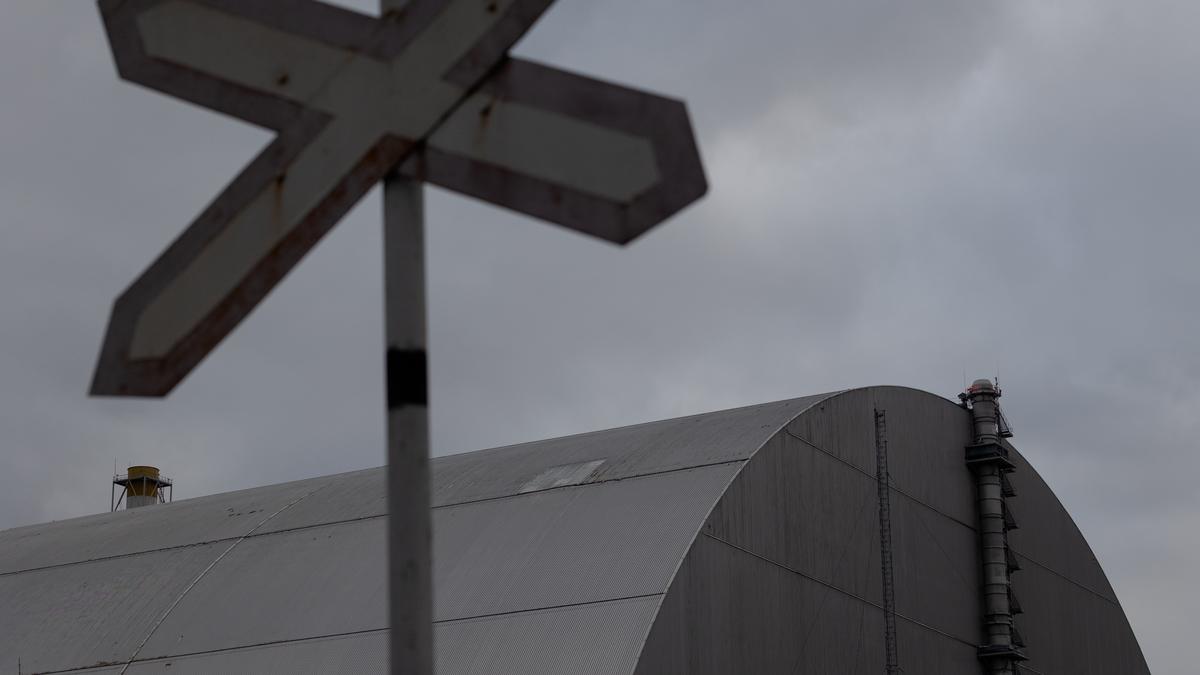
Kyiv has accused Russia of repeatedly targeting the Chernobyl facility, raising fears that Russian strikes could collapse the shelter over the site of the 1986 meltdown. This situation is critical for international relations and environmental safety, highlighting the dangers of military conflict near nuclear installations and the potential for a new environmental catastrophe, making it crucial for general awareness and international affairs sections in competitive exams.
Revision structure
Monthly events and exam calendar context
Static GK and one-liner notes
Quiz and mock-test revision path
Key points
Exam-ready takeaways
Chernobyl was the site of the world's worst nuclear disaster in 1986.
The concern is that Russian strikes could cause the collapse of the Chernobyl shelter.
Russia's invasion of Ukraine, during which these alleged attacks occurred, began in February 2022.
The Chernobyl facility is located in Ukraine, a nation currently in conflict with Russia.
Detailed analysis
Full exam-oriented breakdown
The specter of nuclear disaster, once a grim reality in 1986, looms again over Chernobyl, this time amplified by military conflict. Kyiv's accusations that Russia is repeatedly targeting the Chernobyl facility, risking the collapse of its protective shelter, highlight a critical nexus of international relations, environmental safety, and the rules of war. This situation is not merely a regional concern but a global alarm bell, demanding immediate attention and careful analysis for competitive exam aspirants. To truly grasp the gravity, let's rewind to **April 26, 1986**. The Chernobyl Nuclear Power Plant, then part of the Soviet Union, experienced the worst nuclear accident in history. A flawed reactor design and inadequately trained personnel led to a catastrophic power surge, causing a series of explosions that blew off the reactor's heavy lid, spewing vast amounts of radioactive material into the atmosphere. The immediate aftermath saw widespread evacuations, acute radiation sickness, and long-term health and environmental consequences that continue to affect Ukraine, Belarus, and parts of Europe. To contain the remaining highly radioactive material, a concrete sarcophagus was hastily built. Decades later, a more robust structure, the **New Safe Confinement (NSC)**, a massive arch-shaped steel structure, was slid over the original sarcophagus in 2016, designed to secure the site for at least 100 years. This NSC is the 'shelter' Kyiv fears could collapse. The current crisis began with Russia's full-scale invasion of Ukraine in **February 2022**. In the initial days of the invasion, Russian forces seized control of the Chernobyl Exclusion Zone and the power plant itself. While they later withdrew, Kyiv has since accused Russia of repeatedly targeting the facility, raising fears that military action could compromise the NSC's integrity. Such a collapse could release a new wave of radioactive dust, potentially contaminating vast areas and posing a severe health risk to millions. Several key stakeholders are involved in this precarious situation. **Ukraine**, as the sovereign nation hosting the facility and the victim of the alleged attacks, is at the forefront, grappling with war while trying to ensure nuclear safety. The Ukrainian plant director and workers are crucial in maintaining the facility under extreme duress. **Russia**, as the accused party and the aggressor, holds immense responsibility for de-escalating the threat. The **International Atomic Energy Agency (IAEA)**, the UN's nuclear watchdog, plays a vital role in monitoring the situation, providing technical assistance, and advocating for the establishment of a nuclear safety and security protection zone around the plant. The broader **international community**, including the United Nations, European Union, and individual nations, is a critical stakeholder, responsible for diplomatic pressure, humanitarian aid, and upholding international law concerning the protection of nuclear installations in armed conflicts. For **India**, this situation carries profound significance across multiple dimensions. Geopolitically, it underscores the fragility of international peace and security. India, known for its strategic autonomy and 'multi-alignment' approach, faces the challenge of navigating complex global crises without compromising its core interests. The threat to Chernobyl reinforces the need for robust international norms against attacking critical civilian infrastructure, especially nuclear sites. Economically, any major nuclear incident could trigger global market instability, impacting energy prices, supply chains, and commodity markets, indirectly affecting India's economic growth and inflation. Environmentally, while geographically distant, a major release of radioactivity would be a global concern, highlighting the interconnectedness of our planet and reinforcing India's commitment to environmental protection and disaster management. Furthermore, as a nation with a significant and expanding nuclear energy program (e.g., Kudankulam, Tarapur), India closely observes nuclear safety protocols and international responses, drawing lessons for its own infrastructure security. Historically, the Chernobyl disaster served as a stark lesson in the dangers of nuclear technology and the importance of stringent safety measures. The current crisis adds a layer of complexity: how to protect such sites during armed conflict. This connects to broader themes of international humanitarian law, which generally prohibits attacks on installations containing dangerous forces, like nuclear power plants, if such an attack may cause the release of dangerous forces and consequent severe losses among the civilian population. While India's Constitution does not directly address international nuclear safety in conflict zones, its **Directive Principles of State Policy**, particularly **Article 51**, encourages the promotion of international peace and security, maintenance of just and honourable relations between nations, and respect for international law and treaty obligations. Domestically, India's **Atomic Energy Act, 1962**, and the **Environmental Protection Act, 1986**, govern its nuclear and environmental safety, reflecting a national commitment to preventing such disasters. India's active participation in the IAEA and adherence to international nuclear safety conventions further demonstrate its commitment. The future implications are daunting. A collapse of the Chernobyl shelter would not only be an ecological catastrophe but also a significant setback for international efforts to prevent nuclear incidents. It could set a dangerous precedent, normalizing military actions near nuclear facilities and potentially escalating the conflict. It emphasizes the urgent need for a universally recognized and enforced framework for the protection of nuclear installations in conflict zones, perhaps through UN resolutions or IAEA mandates, creating demilitarized zones around such sites. The world must learn from Chernobyl's past and prevent a tragic repetition, reminding us that the consequences of war extend far beyond the battlefield, threatening our shared global environment.
How to study
Turn news into exam marks
Revise monthly events by exam family instead of reading random updates.
Pair one-liners with mock tests so mistakes become the next revision list.
Keep state job pages, calendar pages and GK packs connected in one path.