
Uttar Pradesh (U.P.) reported a record rise in admissions to private schools under the Right to Education (RTE) Act.
GK and monthly revision
Record rise in admissions to private schools under RTE in U.P., says govt.
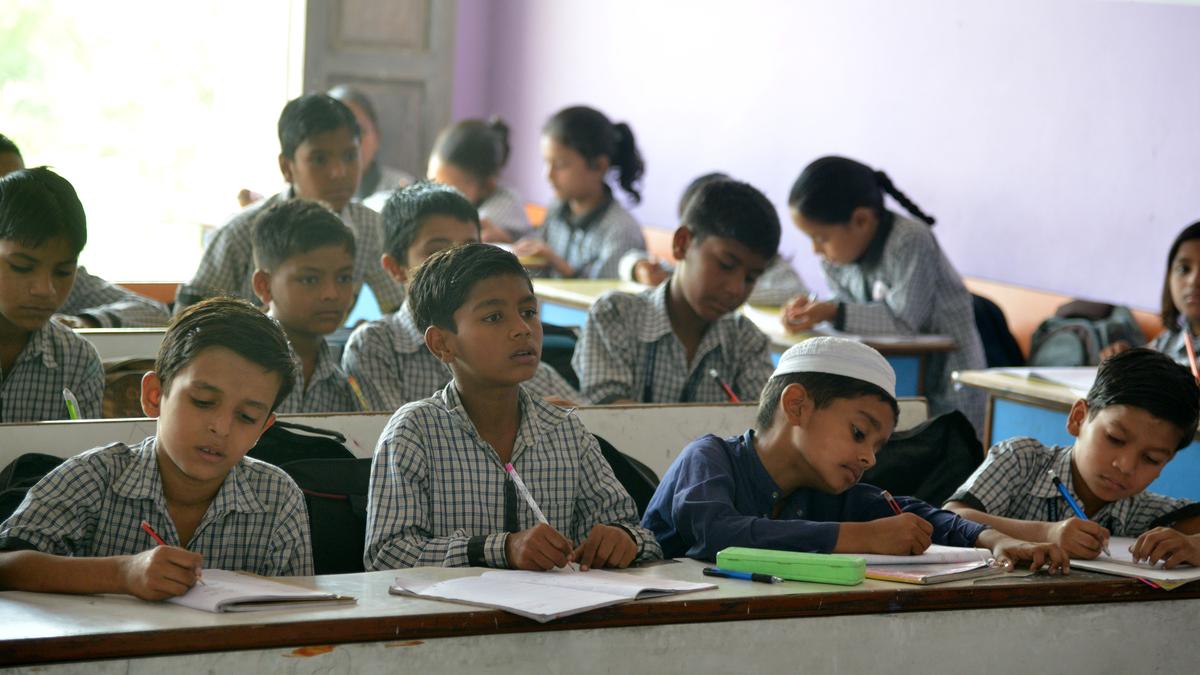
Uttar Pradesh has witnessed a record surge in admissions to private schools under the Right to Education (RTE) Act, with the number of students more than doubling over the last five years. This significant increase underscores improved implementation and awareness of the RTE mandate in the state, promoting inclusive education. It is crucial for competitive exams focusing on government schemes, social welfare, and education policy.
Revision structure
Monthly events and exam calendar context
Static GK and one-liner notes
Quiz and mock-test revision path
Key points
Exam-ready takeaways
The total number of students securing admission under the RTE scheme in U.P. has more than doubled over the last five years.
The RTE Act, 2009, mandates 25% reservation for children from economically weaker sections and disadvantaged groups in private unaided schools.
The increase signifies enhanced access to quality education for underprivileged children in the state's private schooling system.
This trend reflects the growing success of the RTE scheme in promoting educational equity and social inclusion, particularly in U.P.
Detailed analysis
Full exam-oriented breakdown
The news of a record rise in admissions to private schools under the Right to Education (RTE) Act in Uttar Pradesh is a significant development, reflecting both the growing awareness and improved implementation of this crucial legislation. To truly grasp its importance for competitive exams, let's break down its various facets. **Background Context: The Genesis of RTE** Education in India has seen a monumental shift from being a Directive Principle of State Policy to a Fundamental Right. Initially enshrined in Article 45 and Article 39(f) of the Constitution, which urged the state to provide free and compulsory education for all children until they complete the age of fourteen years, this vision took concrete shape with the 86th Constitutional Amendment Act of 2002. This amendment inserted Article 21A, making education a fundamental right for children between 6 and 14 years. To operationalize this, the Right of Children to Free and Compulsory Education (RTE) Act was enacted in 2009. The RTE Act mandates that all private unaided schools reserve 25% of their entry-level seats for children from economically weaker sections (EWS) and disadvantaged groups (DG). The government is then responsible for reimbursing these schools for the cost of educating these children. **What Happened in Uttar Pradesh?** The recent announcement by the Uttar Pradesh government highlights a remarkable achievement: the total number of students securing admission to private schools under the RTE scheme in the state has more than doubled over the last five years. This isn't just a statistic; it represents thousands of children from underprivileged backgrounds gaining access to educational opportunities that were previously out of reach. This surge suggests a combination of factors: increased awareness among parents about their rights, more proactive efforts by the state administration to facilitate admissions, and possibly a more streamlined application and admission process. **Key Stakeholders Involved** Several key players are central to this development. First, the **Central Government** frames the overarching policy and provides financial support through schemes like Samagra Shiksha Abhiyan, which integrates the erstwhile Sarva Shiksha Abhiyan, Rashtriya Madhyamik Shiksha Abhiyan, and Teacher Education. Second, the **State Government (Uttar Pradesh)** is the primary implementer, responsible for creating awareness, managing the admission process, and ensuring timely reimbursement to private schools. Third, **Private Unaided Schools** are crucial as they bear the direct responsibility of reserving and admitting students under the 25% quota. Fourth, **Parents and Guardians** are direct beneficiaries, navigating the application process to secure admissions for their children. Finally, **Civil Society Organizations (CSOs) and NGOs** often play a vital role in creating awareness, assisting parents with applications, and monitoring the implementation of the Act. **Why This Matters for India: Social Equity and Human Capital** This trend in Uttar Pradesh holds immense significance for India. Education is a powerful equalizer, and the RTE Act aims to bridge the socio-economic divide. By enabling children from EWS and DG to study alongside their more privileged peers in private schools, it fosters social inclusion and reduces segregation. This exposure to diverse learning environments can significantly impact a child's overall development and future prospects. From an economic perspective, enhancing access to quality education improves human capital, leading to a more skilled workforce and increased productivity in the long run. It also puts pressure on government schools to improve their standards to remain competitive, ultimately benefiting the entire education ecosystem. The success of RTE implementation in a populous state like UP provides a template and motivation for other states to strengthen their efforts. **Historical Context and Broader Themes** The journey towards universal education has been long and arduous in India. From the colonial era's limited access to the post-independence commitment enshrined in our Constitution's DPSP, the RTE Act marked a paradigm shift by making it an enforceable right. This aligns with broader themes of governance, social justice, and inclusive development. It's a testament to India's commitment to achieving Sustainable Development Goal 4 (SDG 4) – Quality Education – which aims to ensure inclusive and equitable quality education and promote lifelong learning opportunities for all. The implementation of RTE, while facing challenges, is a critical component of India's social welfare architecture. **Future Implications** The record rise in RTE admissions in U.P. is encouraging, but it also brings future implications and challenges. The sustainability of the reimbursement model for private schools remains a key concern. Ensuring the quality of education for RTE students within private schools, preventing discrimination, and addressing infrastructure gaps are ongoing challenges. Furthermore, the success of RTE should not overshadow the need to strengthen government schools, which continue to cater to the majority of India's children. The National Education Policy (NEP) 2020 also emphasizes equitable and inclusive education, suggesting further policy refinements to harmonize RTE provisions with broader educational reforms. Future efforts will likely focus on digitizing the application process, improving grievance redressal mechanisms, and fostering stronger collaboration between state governments and private school associations to ensure the spirit of RTE is fully realized across the nation.
How to study
Turn news into exam marks
Revise monthly events by exam family instead of reading random updates.
Pair one-liners with mock tests so mistakes become the next revision list.
Keep state job pages, calendar pages and GK packs connected in one path.