

Christian Michel James was granted bail in the AgustaWestland money laundering case.
GK and monthly revision
Christian Michel James gets bail in AgustaWestland money laundering case, to stay in CBI custody
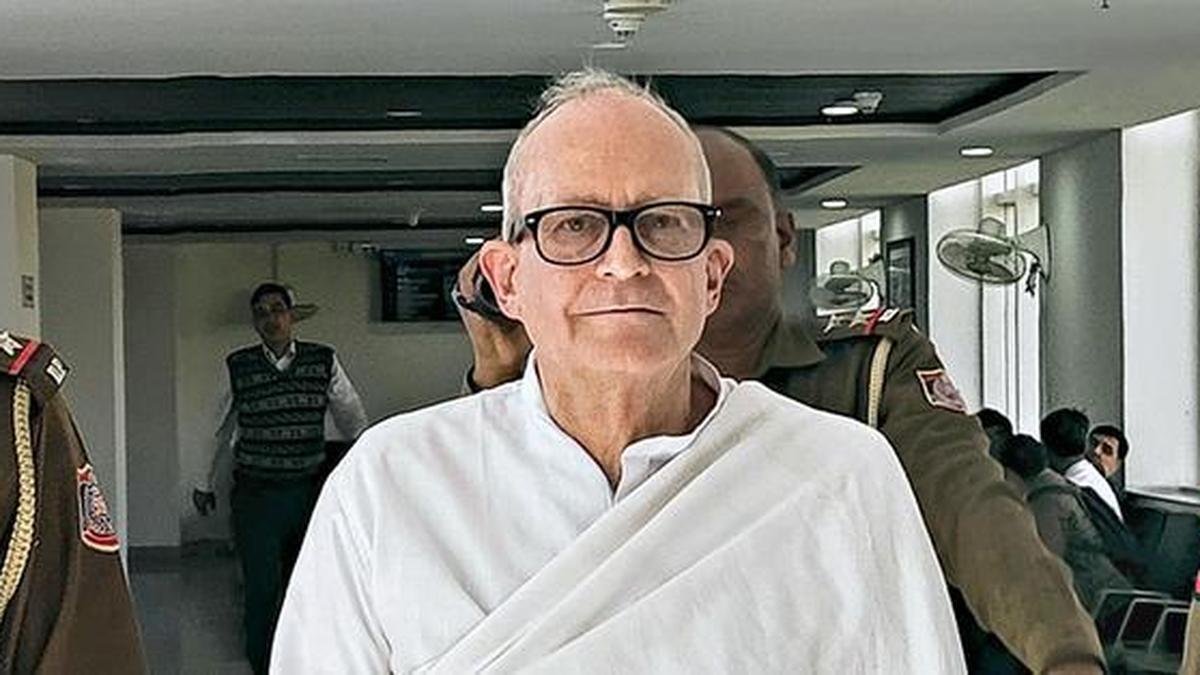
Christian Michel James, an alleged middleman in the AgustaWestland VVIP chopper scam, has been granted bail in the money laundering case. He sought release citing completion of the maximum 7-year sentence in custody, a significant legal argument. Despite the bail, he will remain in CBI custody due to other ongoing investigations, making it a key development in a high-profile corruption case relevant for competitive exams.
Revision structure
Monthly events and exam calendar context
Static GK and one-liner notes
Quiz and mock-test revision path
Key points
Exam-ready takeaways
He is an alleged middleman implicated in the AgustaWestland VVIP chopper scam.
The bail plea was based on his argument of having completed the maximum sentence of 7 years in custody.
Despite being granted bail in the money laundering case, James will continue to be held in CBI custody.
The AgustaWestland scam pertains to alleged irregularities in the procurement of 12 VVIP helicopters.
Detailed analysis
Full exam-oriented breakdown
The granting of bail to Christian Michel James in the AgustaWestland money laundering case marks a significant, albeit complex, development in one of India's most high-profile defence corruption scandals. To truly grasp its implications, one must delve into the background, the legal framework, and the broader context of governance in India. **Background Context: The AgustaWestland VVIP Chopper Scam** The AgustaWestland scam dates back to 2010 when the Indian Ministry of Defence (MoD) signed a contract worth approximately ₹3,600 crore (around €560 million at the time) with AgustaWestland, a subsidiary of Italian defence major Finmeccanica (now Leonardo S.p.A.), for the procurement of 12 AW-101 VVIP helicopters. These choppers were intended for the use of the President, Prime Minister, and other VVIPs. The controversy erupted in 2012 when allegations surfaced that bribes had been paid to Indian officials and politicians to secure the deal. Italian authorities initiated an investigation, leading to the arrest of Giuseppe Orsi, then CEO of Finmeccanica, in 2013. The Indian government promptly cancelled the contract in January 2014, citing a breach of the Pre-Contract Integrity Pact and payment of kickbacks. **What Happened: Christian Michel's Bail and Continued Custody** Christian Michel James, a British national, is alleged to have acted as a middleman, facilitating the payment of bribes in the AgustaWestland deal. He was extradited from the UAE to India in December 2018, a significant diplomatic and legal victory for India. Since then, he has been in judicial custody, facing investigations by both the Central Bureau of Investigation (CBI) for corruption and the Enforcement Directorate (ED) for money laundering. The recent development saw Michel granted bail by a Delhi court in the money laundering case. His legal team successfully argued that he had completed the maximum period of 7 years in custody for the alleged offence under the Prevention of Money Laundering Act (PMLA), 2002. However, despite this bail, Michel will remain in CBI custody as he is still being investigated in the corruption case, meaning his release from jail is not imminent. **Key Stakeholders Involved** * **Christian Michel James:** The alleged middleman, central to the bribery allegations and the focus of the current legal proceedings. * **AgustaWestland/Finmeccanica (Leonardo S.p.A.):** The defence company that secured the contract and is accused of paying bribes. * **Indian Ministry of Defence (MoD) and Indian Air Force (IAF):** The entities responsible for the procurement and the intended users of the helicopters. * **Central Bureau of Investigation (CBI):** India's premier investigative agency, probing the corruption aspects under the Prevention of Corruption Act, 1988. * **Enforcement Directorate (ED):** A specialized financial investigation agency, handling the money laundering aspects under the PMLA, 2002. * **Indian Judiciary:** The courts, from trial courts to the Supreme Court, are crucial in upholding the rule of law, deciding on bail applications, and ensuring fair trials. * **Government of India:** Politically invested in demonstrating its commitment to fighting corruption, especially in high-profile defence deals. **Why This Matters for India: Significance and Implications** This case has profound implications for India. Firstly, it underscores the persistent issue of **corruption in defence procurement**, a critical area for national security. Such scams not only lead to financial losses but also compromise the readiness and morale of the armed forces. Secondly, it highlights the challenges and successes in **international legal cooperation and extradition**. Michel's extradition from the UAE was a landmark event, demonstrating India's growing ability to bring alleged offenders to justice from abroad. Thirdly, the legal arguments surrounding bail, particularly the 'maximum sentence in custody' argument, bring to the forefront **constitutional principles of personal liberty and speedy trial**, enshrined in **Article 21** of the Indian Constitution. It tests the balance between the rights of the accused and the state's imperative to investigate serious crimes. The case also sheds light on the intricacies of the **Prevention of Money Laundering Act (PMLA), 2002**, and its enforcement mechanisms, as well as the **Prevention of Corruption Act, 1988**. **Historical Context and Future Implications** India has a long history of defence procurement scandals, from the Bofors scam in the 1980s to the Tehelka expose in the early 2000s. These incidents have often led to political turmoil and calls for greater transparency. The AgustaWestland case fits into this narrative, emphasizing the need for robust **Defence Procurement Procedures (DPP)** and stringent oversight. The future implications of Michel's bail are multi-faceted. While it provides him temporary relief in one case, his continued CBI custody means the overall trial will proceed. It signals the judiciary's adherence to legal provisions regarding custody limits, even in high-profile cases. The outcome of the corruption trial will be crucial, potentially setting precedents for future investigations involving alleged middlemen and international bribery. It will also test the efficacy of India's anti-corruption legal framework and its ability to secure convictions in complex, cross-border cases. This case reinforces the need for continuous reforms in defence procurement, strengthening investigative agencies, and ensuring judicial independence to safeguard public funds and maintain the integrity of India's governance structure.
How to study
Turn news into exam marks
Revise monthly events by exam family instead of reading random updates.
Pair one-liners with mock tests so mistakes become the next revision list.
Keep state job pages, calendar pages and GK packs connected in one path.