

The Centre is planning an online portal for the processes related to the Forest Rights Act (FRA).
GK and monthly revision
Centre plans portal to take process of forest rights’ recognition, management online
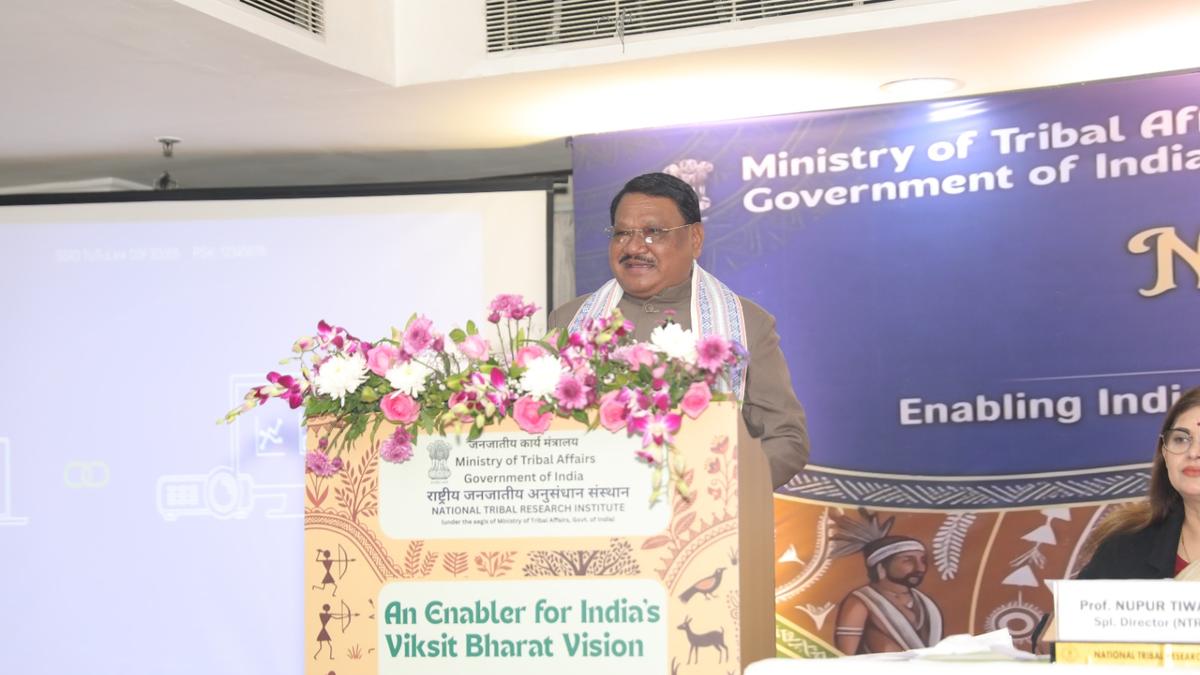
The Tribal Affairs Ministry is planning an online portal to digitize all processes under the Forest Rights Act (FRA). This initiative aims to create a single window for claim filing, processing, issuing digital title deeds, and storing legacy data, enhancing transparency and efficiency in recognizing forest rights. It is significant for competitive exams as it pertains to government policy, tribal welfare, and the implementation of a key environmental and social legislation.
Revision structure
Monthly events and exam calendar context
Static GK and one-liner notes
Quiz and mock-test revision path
Key points
Exam-ready takeaways
The initiative is being undertaken by the Tribal Affairs Ministry.
The portal will function as a single window for filing and processing claims under the FRA.
Key features include issuing digital title deeds and storing legacy data on granted titles.
The Forest Rights Act is officially known as the Scheduled Tribes and Other Traditional Forest Dwellers (Recognition of Forest Rights) Act, 2006.
Detailed analysis
Full exam-oriented breakdown
The Centre's plan to launch an online portal for managing processes under the Forest Rights Act (FRA), 2006, spearheaded by the Ministry of Tribal Affairs, marks a significant step towards digitizing governance and ensuring social justice. This initiative aims to create a single-window system for filing and processing claims, issuing digital title deeds, and storing legacy data, promising enhanced transparency and efficiency in the recognition of forest rights. **Background Context and Historical Injustices:** For centuries, forest-dwelling communities, particularly Scheduled Tribes and Other Traditional Forest Dwellers, have lived in close symbiotic relationship with forests. However, colonial forest laws, such as the Indian Forest Act of 1927, dispossessed these communities of their traditional rights, treating them as encroachers on their ancestral lands. Post-independence, various conservation policies, while well-intentioned, often exacerbated this historical injustice, leading to forced evictions and denial of access to forest resources vital for their livelihoods and cultural identity. This historical marginalization and the subsequent struggles for recognition culminated in the enactment of The Scheduled Tribes and Other Traditional Forest Dwellers (Recognition of Forest Rights) Act, 2006, commonly known as the FRA. The FRA was revolutionary as it recognized and vested forest rights and occupation in forest land to forest-dwelling Scheduled Tribes and other traditional forest dwellers who had been residing in such forests for generations but whose rights could not be recorded. **What Happened: The Digital Leap:** Despite the progressive nature of the FRA, its implementation has been fraught with challenges. Manual processes, lack of awareness, bureaucratic hurdles, and often, resistance from forest department officials have led to a slow pace of claim processing and high rejection rates. To address these systemic inefficiencies, the Ministry of Tribal Affairs is developing an online portal. This digital platform is designed to be a 'single window' for all FRA-related activities, from the initial filing of claims by individuals and communities to their verification, processing, and the eventual issuance of digital title deeds. Critically, it will also serve as a repository for legacy data, ensuring that historical records of granted titles are preserved and accessible, thereby streamlining record-keeping and reducing disputes. **Key Stakeholders:** Several key stakeholders are involved in this initiative. The **Ministry of Tribal Affairs** is the nodal ministry, responsible for policy formulation and overseeing the implementation of the FRA. The **Gram Sabhas** (village assemblies) are the bedrock of the FRA, holding the primary authority to initiate and verify claims, making their active participation crucial. **Forest-dwelling communities** themselves are the primary beneficiaries, whose rights are being recognized. **State Governments** and their respective Forest and Tribal Welfare Departments are responsible for the on-ground implementation. **Civil Society Organizations (CSOs) and NGOs** play a vital role in awareness generation, capacity building, and assisting claimants in navigating the complex legal and administrative processes. The **Ministry of Environment, Forest and Climate Change** (and its Forest Department) is another significant stakeholder, often with differing perspectives on forest governance. **Significance for India:** This digitization effort holds immense significance for India. From a **social justice** perspective, it aims to rectify historical wrongs faster and more efficiently, empowering millions of marginalized individuals and communities. By securing land tenure, it provides **economic security** and opens avenues for sustainable livelihood activities, potentially reducing poverty. Environmentally, recognized community forest rights often lead to better **forest conservation** as communities have a vested interest in protecting their resources. From a **governance** standpoint, the portal embodies the principles of 'Digital India' and 'Minimum Government, Maximum Governance,' promoting transparency, accountability, and reducing corruption. It will provide robust data for policy-making, monitoring, and evaluation, enabling a more targeted and effective approach to tribal welfare and forest management. **Constitutional and Legal Framework:** The FRA 2006 is deeply rooted in India's constitutional ethos, particularly Article 46, which mandates the State to promote with special care the educational and economic interests of the weaker sections of the people, and, in particular, of the Scheduled Castes and the Scheduled Tribes, and to protect them from social injustice and all forms of exploitation. The **Fifth Schedule** of the Constitution deals with the administration and control of Scheduled Areas and Scheduled Tribes in states other than Assam, Meghalaya, Tripura, and Mizoram, providing a framework for tribal self-governance. Furthermore, the **Panchayats (Extension to Scheduled Areas) Act (PESA), 1996**, which empowers Gram Sabhas with significant decision-making authority over natural resources in Scheduled Areas, forms a crucial complementary legal framework to the FRA, strengthening community control over forest resources. The portal's success will depend on its seamless integration with these existing legal and constitutional provisions. **Future Implications:** The online portal has the potential to dramatically accelerate the recognition of forest rights, reducing the backlog of pending claims. It could lead to improved land records, minimize land disputes, and foster a more harmonious relationship between forest departments and local communities. However, challenges remain. Issues such as digital literacy among tribal communities, internet connectivity in remote forest areas, and potential resistance from entrenched local bureaucracies need careful consideration and proactive mitigation strategies. Training and awareness campaigns will be crucial for the successful adoption of the portal. If implemented effectively, this initiative could serve as a model for leveraging technology to deliver social justice and sustainable development, aligning with India's broader commitment to inclusive growth and environmental stewardship.
How to study
Turn news into exam marks
Revise monthly events by exam family instead of reading random updates.
Pair one-liners with mock tests so mistakes become the next revision list.
Keep state job pages, calendar pages and GK packs connected in one path.