

Delhi's air quality index (AQI) settled in the 'severe' zone.
GK and monthly revision
Air quality worsens in Delhi, AQI settles in ‘severe’ zone
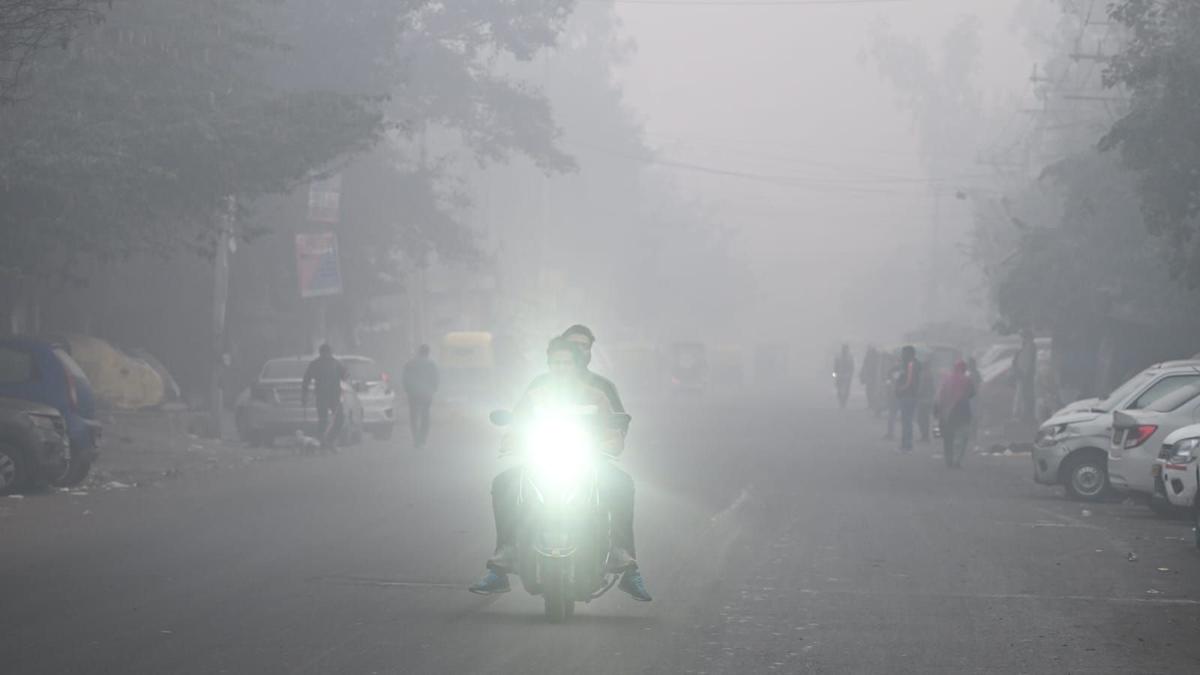
Delhi's air quality significantly worsened, entering the 'severe' zone overnight, leading to a thick layer of smog and causing respiratory distress for residents. This recurring environmental crisis highlights the urgent need for effective pollution control measures and is a critical topic for competitive exams, covering environmental science, public health, and governance challenges. Understanding AQI categories and their implications is crucial.
Revision structure
Monthly events and exam calendar context
Static GK and one-liner notes
Quiz and mock-test revision path
Key points
Exam-ready takeaways
The city was blanketed by a thick layer of smog overnight.
The 'severe' category of AQI typically ranges from 401 to 500.
High AQI in the 'severe' zone can cause respiratory illnesses and seriously impact those with existing diseases.
Air quality in India is monitored by the Central Pollution Control Board (CPCB).
Detailed analysis
Full exam-oriented breakdown
The recurring phenomenon of Delhi's air quality plummeting into the 'severe' zone, as highlighted by the recent incident of a thick layer of smog blanketing the city, represents a grave environmental and public health crisis for India. This isn't merely a seasonal inconvenience; it's a complex, multi-faceted challenge demanding urgent and sustained attention from all levels of governance and society. **Background Context:** Delhi's geographical location in the Indo-Gangetic Plains makes it particularly vulnerable to air pollution. During winter months, specific meteorological conditions, such as low wind speeds and temperature inversions, trap pollutants close to the ground, preventing their dispersion. This natural vulnerability is exacerbated by massive anthropogenic activities. Key contributors include vehicular emissions from an ever-growing fleet of vehicles, industrial pollution from surrounding areas, dust from construction and demolition activities, and biomass burning, especially stubble burning by farmers in neighboring states like Punjab and Haryana during October-November. Domestic burning of solid fuels for heating and cooking also contributes significantly. This cocktail of pollutants, predominantly fine particulate matter (PM2.5 and PM10), nitrogen oxides, and sulfur dioxide, creates the toxic smog that chokes the city every year. **What Happened:** The recent report of Delhi's Air Quality Index (AQI) settling in the 'severe' zone (typically ranging from 401 to 500) signifies an immediate health emergency. Such high levels of pollution mean that even healthy individuals can experience respiratory effects, while those with existing lung or heart diseases face serious health impacts. The visible manifestation of this crisis is the thick, suffocating layer of smog that reduces visibility and causes widespread respiratory distress, eye irritation, and other health complications for millions of residents overnight. **Key Stakeholders:** Addressing this issue requires coordinated efforts from multiple stakeholders. The **Central Pollution Control Board (CPCB)**, operating under the Ministry of Environment, Forest and Climate Change (MoEFCC), is the primary body responsible for monitoring air quality nationwide and setting standards. State Pollution Control Boards (SPCBs) like the Delhi Pollution Control Committee (DPCC) implement these regulations locally. The **Delhi Government** is crucial for local policy implementation, traffic management, and promoting cleaner fuels. **Governments of neighboring states** (Punjab, Haryana, Uttar Pradesh) play a critical role in controlling stubble burning. The **Supreme Court of India** and the **National Green Tribunal (NGT)** have frequently intervened, issuing directives and holding authorities accountable. Farmers, industries, construction companies, and individual citizens are also vital stakeholders, as their practices and choices directly impact pollution levels. **Why This Matters for India:** The severe air pollution in Delhi has profound implications for India. Firstly, it's a **public health crisis**, leading to increased incidence of respiratory diseases, cardiovascular problems, and even premature deaths. This strains the healthcare system and reduces overall productivity. Secondly, there's a significant **economic cost** due to lost workdays, reduced tourism, and increased healthcare expenditure. Thirdly, it impacts India's **international image** and ability to attract global talent and investment. Socially, it degrades the quality of life, particularly for vulnerable populations, and raises concerns about environmental justice. Politically, it often becomes a blame game between central and state governments, highlighting challenges in cooperative federalism and environmental governance. **Constitutional and Policy Framework:** India's Constitution provides a framework for environmental protection. **Article 21** guarantees the 'Right to Life and Personal Liberty,' which has been interpreted by the judiciary to include the right to a clean and healthy environment. **Article 48A**, a Directive Principle of State Policy, mandates that "the State shall endeavor to protect and improve the environment and to safeguard the forests and wild life of the country." Furthermore, **Article 51A(g)** lists it as a fundamental duty of every citizen "to protect and improve the natural environment including forests, lakes, rivers and wild life, and to have compassion for living creatures." Specific legislative measures include the **Air (Prevention and Control of Pollution) Act, 1981**, which empowers central and state boards to prevent, control, and abate air pollution, and the broader **Environment Protection Act, 1986**. In response to the crisis, the government launched the **National Clean Air Programme (NCAP)** in 2019, aiming for a 20-30% reduction in particulate matter concentrations by 2024. The **Graded Response Action Plan (GRAP)** outlines emergency measures to be taken based on AQI levels (e.g., banning construction, odd-even scheme). The **Commission for Air Quality Management (CAQM) in NCR and Adjoining Areas Act, 2021**, was established to provide a permanent statutory body for coordinated action across the NCR region. **Future Implications:** The persistent severe air pollution demands a paradigm shift from reactive emergency measures to proactive, long-term, and sustainable solutions. This includes a transition to cleaner energy sources, promoting public transport and electric vehicles, stricter enforcement of industrial emission norms, sustainable agricultural practices to eliminate stubble burning, and improved waste management. Inter-state cooperation, facilitated by bodies like CAQM, is paramount. Technological interventions, such as air purifiers and smog towers, offer limited relief and are not long-term solutions. Ultimately, achieving cleaner air requires sustained political will, robust policy implementation, public awareness, and behavioral changes across all segments of society, ensuring a healthier future for generations to come and upholding the fundamental right to a clean environment.
How to study
Turn news into exam marks
Revise monthly events by exam family instead of reading random updates.
Pair one-liners with mock tests so mistakes become the next revision list.
Keep state job pages, calendar pages and GK packs connected in one path.