

A court in Jammu & Kashmir issued a proclamation notice against the brother of an arrested Kashmir doctor.
GK and monthly revision
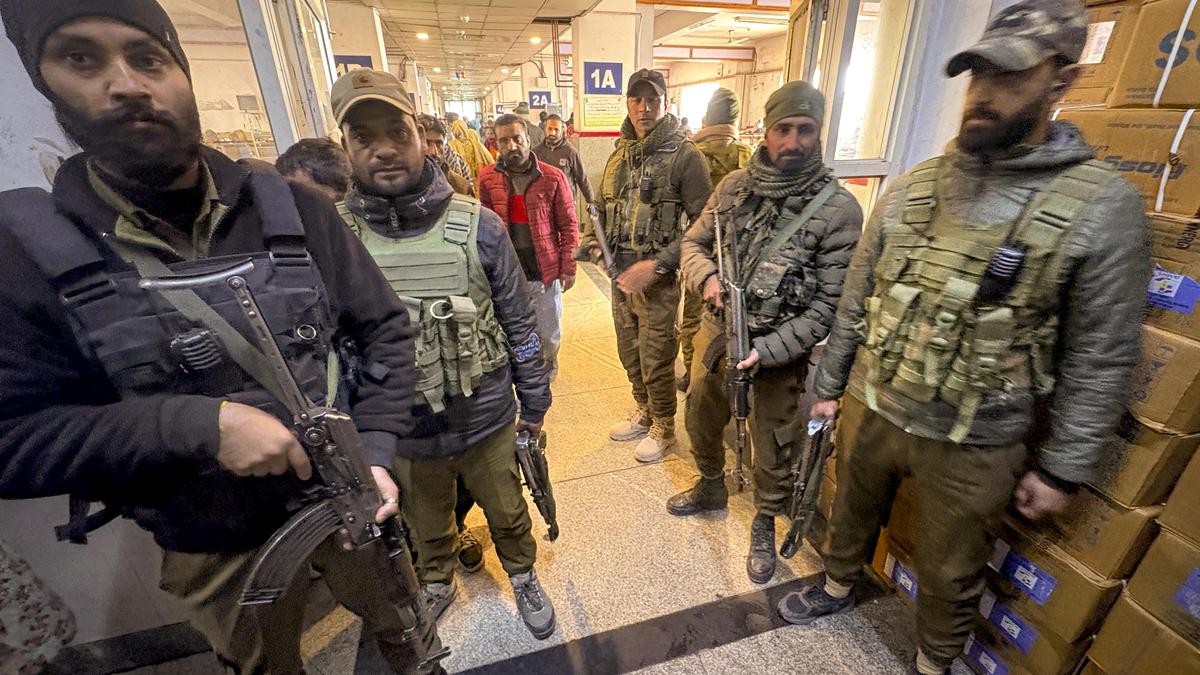
J&K court issues proclamation notice against brother of arrested Kashmir doctor in terror case
A J&K court issued a proclamation notice against the brother of an arrested doctor in a terror case, citing the Bharatiya Nagarik Suraksha Sanhita (BNSS). This marks a significant application of India's new criminal justice legislation, replacing the colonial-era Criminal Procedure Code. It highlights the operationalization of the BNSS in addressing untraceable accused in serious cases like terrorism, crucial for understanding legal reforms and their practical implications.
Revision structure
Monthly events and exam calendar context
Static GK and one-liner notes
Quiz and mock-test revision path
Key points
Exam-ready takeaways
The notice was issued in connection with a terror case where the individual could not be traced despite warrants.
The legal provision invoked for issuing the proclamation notice is the Bharatiya Nagarik Suraksha Sanhita (BNSS).
The Bharatiya Nagarik Suraksha Sanhita (BNSS) is one of the three new criminal laws enacted by the Indian Parliament.
The BNSS replaced the colonial-era Code of Criminal Procedure (CrPC) as of July 1, 2024, marking a major reform in India's criminal justice system.
Detailed analysis
Full exam-oriented breakdown
The recent issuance of a proclamation notice by a Jammu & Kashmir court against the brother of an arrested doctor in a terror case, invoking the Bharatiya Nagarik Suraksha Sanhita (BNSS), marks a pivotal moment in India's legal landscape. This event is not merely a procedural step but a tangible demonstration of the operationalization of India's new criminal justice legislation, which came into effect on July 1, 2024. Understanding this incident requires delving into the historical context of India's criminal laws, the reforms undertaken, and their implications. For decades, India's criminal justice system was governed by a trio of colonial-era laws: the Indian Penal Code (IPC) of 1860, the Code of Criminal Procedure (CrPC) of 1898, and the Indian Evidence Act of 1872. These laws, drafted under British rule, were primarily designed to maintain order and control rather than to deliver justice in a modern, victim-centric manner. Over time, various commissions and committees, including the Malimath Committee Report (2003), highlighted the need for comprehensive reforms to make the system more efficient, just, and aligned with contemporary societal needs. This push for reform culminated in the parliamentary enactment of three new laws: the Bharatiya Nyaya Sanhita (BNS) replacing the IPC, the Bharatiya Nagarik Suraksha Sanhita (BNSS) replacing the CrPC, and the Bharatiya Sakshya Adhiniyam (BSA) replacing the Indian Evidence Act. The specific incident involves a J&K court issuing a proclamation notice under the BNSS because an individual, reportedly involved in a terror case, could not be traced despite warrants. A proclamation notice, under Section 82 of the erstwhile CrPC (now an equivalent provision in BNSS), is issued when a court has reason to believe that a person against whom a warrant has been issued is absconding or concealing themselves to avoid execution of the warrant. This notice publicly declares the person as a 'proclaimed offender' and requires them to appear before the court by a specified date. Failure to comply can lead to attachment of property and other legal consequences. In the context of a terror case, such a measure is crucial for ensuring that justice is not thwarted by the non-appearance of accused individuals. Several key stakeholders are involved in this development. The **Judiciary**, represented by the J&K court, is at the forefront, responsible for interpreting and applying the new laws. Their initial rulings under BNSS will set important precedents. **Law Enforcement Agencies**, such as the police and specialized anti-terror units, play a critical role in investigations, tracing absconders, and seeking appropriate court orders. The **Government of India** and **Parliament** are the architects of these reforms, aiming to modernize the justice system. The **accused individual and their legal representatives** are also key, as their rights and legal recourse under the new framework will be tested. Finally, the **citizens of Jammu & Kashmir**, a region with a complex security landscape, are directly impacted by the effectiveness of these laws in maintaining peace and order. This event holds immense significance for India. Firstly, it marks the practical implementation of the BNSS, signaling the effective transition from colonial-era procedural law. This is a crucial step towards realizing the government's vision of a modern, efficient, and victim-centric criminal justice system. Secondly, the context of a terror case underscores the government's resolve to strengthen legal frameworks against national security threats, particularly vital in regions like J&K. The BNSS introduces several changes aimed at expediting trials, including provisions for electronic evidence, audio-visual recording of statements, and enhanced timelines for various procedural steps, which could significantly impact the prosecution of complex cases like terrorism. Thirdly, this case will serve as an early test for the judiciary and law enforcement in navigating the nuances of the new laws, potentially highlighting areas requiring further clarification or training. Historically, the abrogation of Article 370 in August 2019 and the subsequent reorganization of Jammu & Kashmir into Union Territories brought the region fully under the purview of all central laws. This makes the application of the new criminal codes in J&K particularly pertinent, aligning its legal framework with the rest of the country. The move from CrPC to BNSS is part of a broader national effort to decolonize Indian statutes and align them with the aspirations of a sovereign republic. Looking ahead, the future implications are vast. We can expect more such instances of BNSS being invoked across India as the new laws become fully integrated into the legal system. There will likely be initial challenges, including the need for extensive training for judicial officers, public prosecutors, and police personnel on the new provisions. Legal challenges to specific sections of the new codes are also anticipated, which will further shape their interpretation. The ultimate goal is to reduce case pendency, enhance conviction rates, and ensure quicker justice delivery. For competitive exams, understanding the constitutional basis for these reforms is crucial. Criminal law and criminal procedure fall under the Concurrent List of the Seventh Schedule of the Indian Constitution, allowing both the Union and State governments to legislate. Furthermore, the application of these laws must always be balanced with fundamental rights, particularly Article 21, which guarantees the right to life and personal liberty, including the right to a fair trial and due process. In conclusion, the J&K court's action is a clear signal that India's criminal justice system is undergoing a fundamental transformation. It is a testament to the nation's commitment to shedding colonial legacies and building a legal framework that is responsive, efficient, and aligned with democratic values, while also bolstering its capacity to tackle complex challenges like terrorism.
How to study
Turn news into exam marks
Revise monthly events by exam family instead of reading random updates.
Pair one-liners with mock tests so mistakes become the next revision list.
Keep state job pages, calendar pages and GK packs connected in one path.