

UPI payments remain free for all consumers as per government announcement
GK and monthly revision
UPI to remain free for users; nominal MDR may apply to select merchant transactions
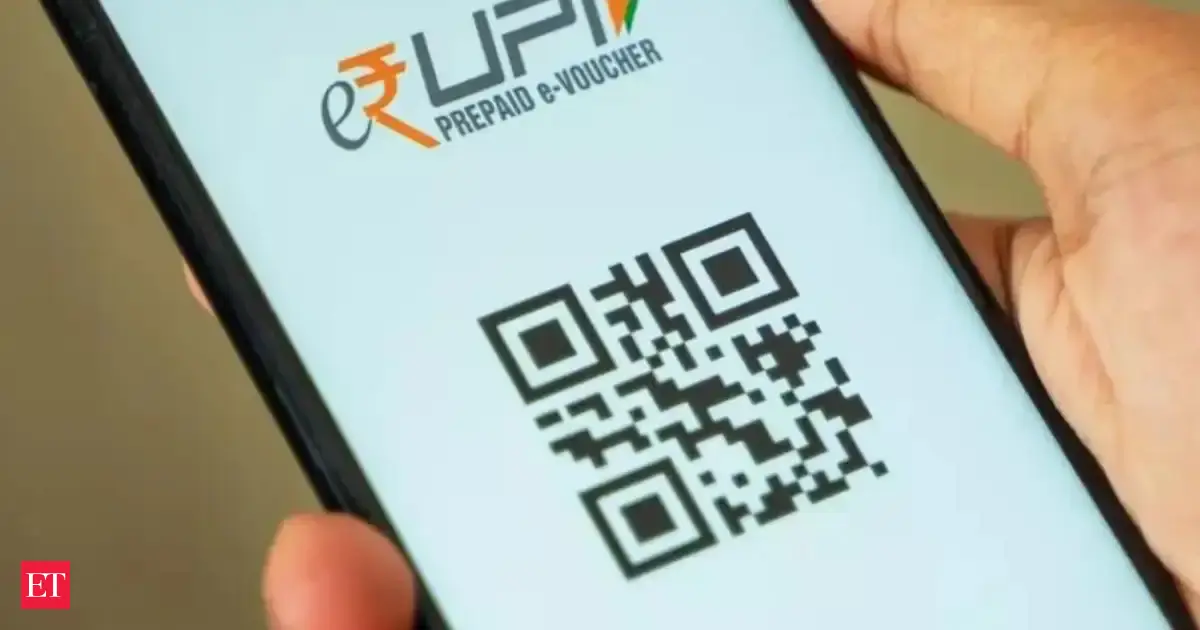
The government confirmed UPI will remain free for consumers, with most merchant transactions also free. Any future Merchant Discount Rate (MDR) will apply only to select high-value merchant transactions above a threshold. This ensures UPI's long-term sustainability and technological advancement while protecting citizens from charges.
Revision structure
Monthly events and exam calendar context
Static GK and one-liner notes
Quiz and mock-test revision path
Key points
Exam-ready takeaways
Most merchant transactions will continue to be free of cost
Nominal MDR may apply only to limited merchant transactions above a specified threshold
Decision aims to ensure UPI's long-term sustainability and technological advancement
Government explicitly stated UPI will remain free for citizens
Detailed analysis
Full exam-oriented breakdown
The government's recent announcement that Unified Payments Interface (UPI) will remain free for consumers marks a pivotal moment in India's digital payment revolution. Launched in April 2016 by the National Payments Corporation of India (NPCI), UPI has transformed from a nascent payment system into the world's largest real-time payment platform, processing over 13 billion transactions worth ₹20 lakh crore monthly as of early 2024. This decision comes after years of debate around Merchant Discount Rate (MDR) - the fee merchants pay to payment service providers for processing digital transactions. In 2019, the Finance Ministry mandated zero MDR for UPI and RuPay debit card transactions under Section 10A of the Payment and Settlement Systems Act, 2007, absorbing costs through budgetary allocation. However, payment service providers and banks argued this model was unsustainable, threatening innovation and infrastructure investment. The key stakeholders in this ecosystem include NPCI (the umbrella organization for retail payments), the Reserve Bank of India (regulator), commercial banks (issuers and acquirers), payment service providers like PhonePe, Google Pay, and Paytm, merchants (from kirana stores to large enterprises), and most importantly, 350+ million active UPI users. The government's decision to maintain zero charges for consumers while allowing nominal MDR only on select high-value merchant transactions above a threshold strikes a delicate balance. It protects financial inclusion gains - critical for schemes like PM-JDY (Pradhan Mantri Jan Dhan Yojana) and Direct Benefit Transfer (DBT) - while addressing sustainability concerns. This aligns with Article 39(b) and (c) of the Constitution (Directive Principles), which direct the state to ensure ownership and control of material resources serve the common good and prevent concentration of wealth. Economically, this decision reinforces India's digital public infrastructure (DPI) model - often called the "India Stack" - comprising Aadhaar, UPI, DigiLocker, and Account Aggregator framework. The UPI's zero-cost model has been instrumental in formalizing the economy, reducing cash dependency (currency in circulation to GDP ratio fell from 12% pre-demonetization to ~13% currently from a peak of 14.5%), and expanding tax base. Politically, it strengthens the government's "Digital India" narrative ahead of general elections. Socially, it empowers women (who constitute ~45% of UPI users in rural areas per NPCI data) and small merchants by eliminating entry barriers. Internationally, India's UPI model is being exported - with linkages operational in Singapore (PayNow), UAE, Bhutan, Nepal, and France (via NPCI International Payments Limited). The zero-MDR stance enhances India's credibility in G20 discussions on digital public infrastructure. However, future implications require monitoring: the threshold for MDR applicability needs transparent definition; cross-subsidization mechanisms must be clarified; and the NPCI's governance structure (currently a Section 8 company under Companies Act, 2013) may need evolution as UPI scales globally. The RBI's 2022 discussion paper on charges in payment systems and the upcoming Digital India Act will shape this landscape. For aspirants, this exemplifies the tension between populist policy and institutional sustainability - a recurring theme in Indian governance.
How to study
Turn news into exam marks
Revise monthly events by exam family instead of reading random updates.
Pair one-liners with mock tests so mistakes become the next revision list.
Keep state job pages, calendar pages and GK packs connected in one path.