

Regulator: Securities and Exchange Board of India (SEBI)
GK and monthly revision
REITs, publicly-listed InvITs may get to raise foreign capital via DRs
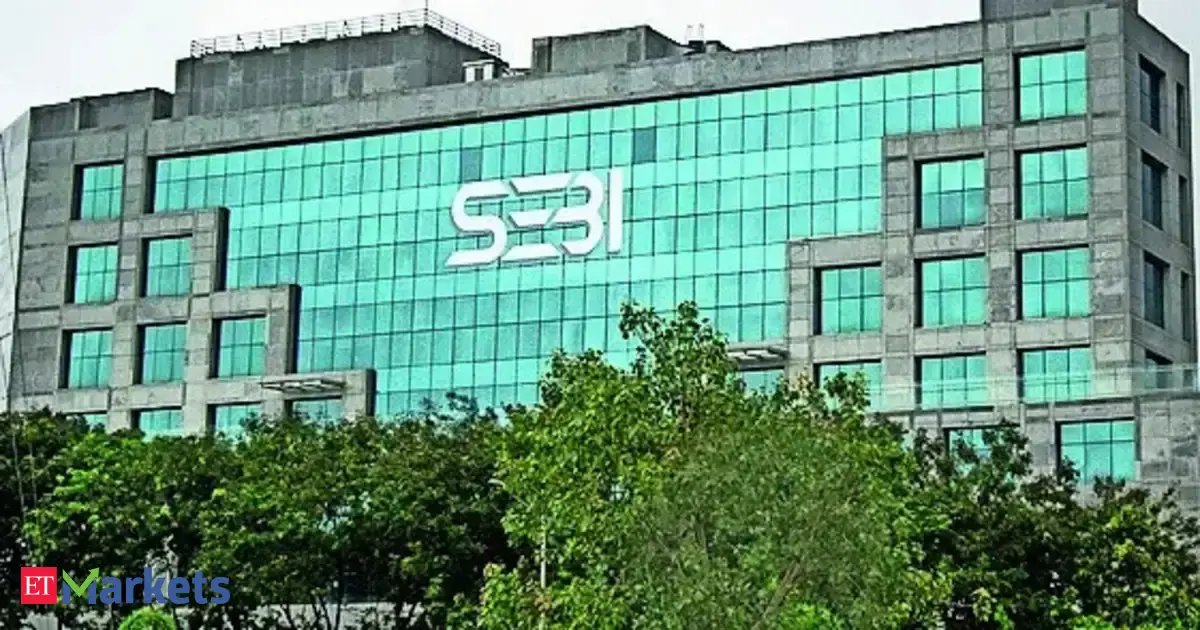
SEBI proposed allowing publicly-listed REITs and InvITs to raise foreign capital through depository receipts (DRs), enabling trading in foreign currency on international exchanges. Privately-listed InvITs are excluded from this facility. The move aims to broaden foreign investor access and attract global capital into India's investment trust market, enhancing liquidity and depth for these instruments.
Revision structure
Monthly events and exam calendar context
Static GK and one-liner notes
Quiz and mock-test revision path
Key points
Exam-ready takeaways
Instruments: Real Estate Investment Trusts (REITs) and publicly-listed Infrastructure Investment Trusts (InvITs)
Mechanism: Depository Receipts (DRs) for foreign capital raising
Exclusion: Privately-listed InvITs not eligible for DR facility
Objective: Broaden foreign investor access and attract global capital to investment trusts
Detailed analysis
Full exam-oriented breakdown
The Securities and Exchange Board of India (SEBI) has proposed a landmark regulatory shift by allowing publicly-listed Real Estate Investment Trusts (REITs) and Infrastructure Investment Trusts (InvITs) to raise foreign capital through Depository Receipts (DRs). This move marks a significant evolution in India's capital market architecture, aiming to integrate domestic investment trusts with global financial markets. To understand the gravity of this proposal, we must first trace the journey of REITs and InvITs in India. REITs were introduced in 2007 under SEBI regulations but gained traction only after 2014 when the regulatory framework was revamped. The first REIT, Embassy Office Parks, listed in 2019, followed by Mindspace and Brookfield. InvITs, regulated since 2014, saw their first listing with IRB InvIT Fund in 2017. Both instruments were designed to monetize income-generating assets and provide retail investors access to real estate and infrastructure yields. The key stakeholders in this development include SEBI as the regulator, the Ministry of Finance which sets policy direction, stock exchanges (NSE, BSE) providing listing platforms, custodians and depositories (NSDL, CDSL) managing DR issuance, and foreign institutional investors (FIIs/FPIs) who gain a new avenue for Indian exposure. The exclusion of privately-listed InvITs is deliberate — these lack the transparency, disclosure norms, and liquidity of publicly-listed counterparts, making them unsuitable for cross-border DR structures. Economically, this proposal addresses a critical gap: India's infrastructure financing needs are estimated at $1.5 trillion by 2030 (per NITI Aayog), and domestic savings alone cannot bridge this. By enabling DR issuance, REITs/InvITs can tap into global pension funds, sovereign wealth funds, and insurance capital — investors with long-term horizons matching infrastructure assets. This aligns with the National Infrastructure Pipeline (NIP) and PM Gati Shakti masterplan. Politically, it signals India's commitment to capital account liberalization in a calibrated manner, enhancing credibility with international rating agencies. Socially, deeper capital markets can lower cost of capital for affordable housing and green infrastructure projects. Constitutionally, this falls under Union List entries: Entry 36 (currency, coinage, legal tender), Entry 37 (foreign exchange), Entry 43 (incorporation, regulation of trading corporations), and Entry 44 (regulation of stock exchanges). The SEBI Act, 1992 empowers SEBI to regulate securities markets, while the Foreign Exchange Management Act (FEMA), 1999 governs cross-border capital flows. The DR framework will likely be operationalized through amendments to SEBI (REITs) Regulations, 2014 and SEBI (InvITs) Regulations, 2014, read with FEMA (Transfer or Issue of Security by a Person Resident Outside India) Regulations, 2017. Broader themes include financial sector reforms (like the 2021 Bad Bank setup, 2022 LIC IPO), India's push for inclusion in global bond indices (JP Morgan GBI-EM from 2024), and the G20 agenda on sustainable finance. Future implications are profound: successful DR issuance could pave the way for rupee-denominated overseas bonds (masala bonds 2.0), encourage REIT/InvIT listings by state-owned entities (NHAI, IRCTC), and deepen the corporate bond market. However, risks remain — currency volatility, regulatory arbitrage, and the need for robust investor protection frameworks. Aspirants should track SEBI's consultation paper feedback, final regulations, and the first DR issuance as real-time case studies in financial sector reform.
How to study
Turn news into exam marks
Revise monthly events by exam family instead of reading random updates.
Pair one-liners with mock tests so mistakes become the next revision list.
Keep state job pages, calendar pages and GK packs connected in one path.