

Union Textiles Minister Giriraj Singh reiterated focus on Rs 5,659 crore Cotton Productivity Mission
GK and monthly revision
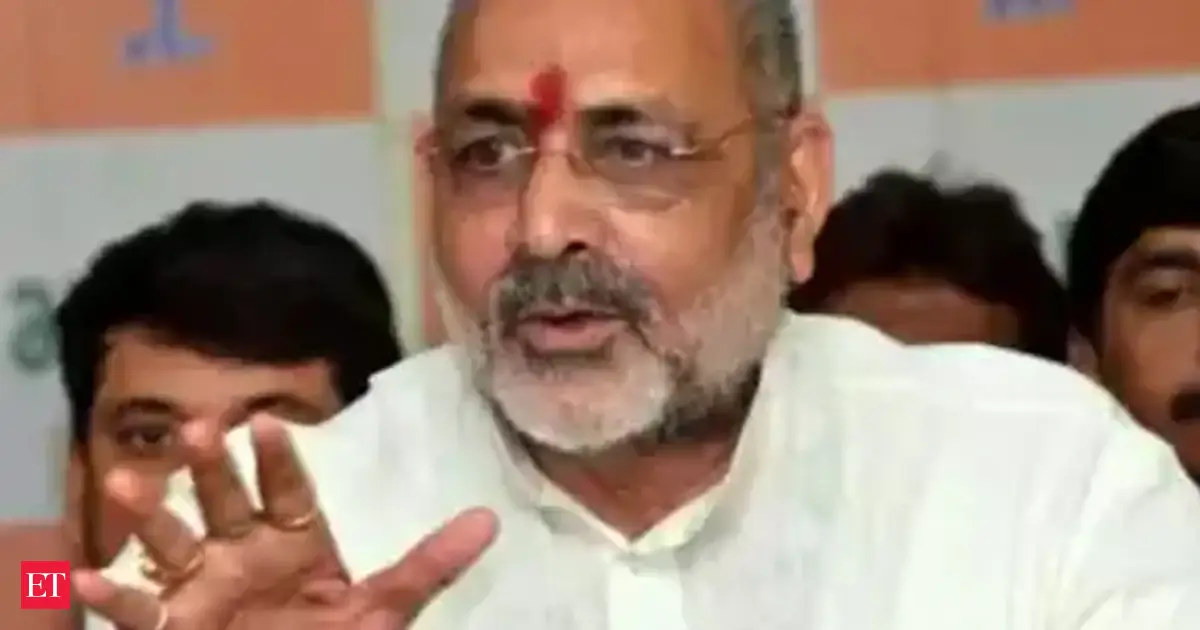
Textile minister Giriraj Singh reiterates focus on cotton sector
Union Textiles Minister Giriraj Singh emphasized the Rs 5,659 crore Cotton Productivity Mission to enhance farm productivity and fibre quality. Cotton Corporation of India procured over 522 lakh quintals of seed cotton, and four MoUs were signed to strengthen quality standards and market access. These initiatives aim to position Indian cotton as a premium global fibre, boosting exports and farmer income. The mission aligns with Atmanirbhar Bharat and Make in India goals for the textile sector.
Revision structure
Monthly events and exam calendar context
Static GK and one-liner notes
Quiz and mock-test revision path
Key points
Exam-ready takeaways
Mission aims to significantly boost farm productivity and fibre quality of Indian cotton
Cotton Corporation of India procured over 522 lakh quintals of seed cotton
Four MoUs signed to strengthen quality standards and market access for Indian cotton
Initiatives target positioning Indian cotton as premium global fibre under Atmanirbhar Bharat
Detailed analysis
Full exam-oriented breakdown
The announcement by Union Textiles Minister Giriraj Singh regarding the Rs 5,659 crore Cotton Productivity Mission marks a significant policy intervention in India's agricultural and industrial landscape. Cotton, often called 'white gold,' has been the backbone of India's textile sector for centuries, with historical references dating back to the Indus Valley Civilization where cotton fragments were found at Mehrgarh (circa 5000 BCE). Today, India stands as the world's largest cotton producer, accounting for approximately 23% of global production, and the second-largest exporter after the United States. However, despite this dominant position, Indian cotton has long struggled with productivity and quality challenges — average yields hover around 450-500 kg/hectare, significantly below the global average of 750-800 kg/hectare, and contamination issues have often relegated Indian cotton to lower price bands in international markets. The Cotton Productivity Mission, launched under the aegis of the Ministry of Textiles, directly addresses these structural bottlenecks. With an outlay of Rs 5,659 crore, the mission focuses on three critical pillars: enhancing farm-level productivity through high-density planting systems (HDPS), improving fibre quality via better ginning and testing infrastructure, and strengthening the value chain from farm to fabric. This aligns with the government's broader vision under Atmanirbhar Bharat and Make in India, where textiles is identified as a champion sector capable of generating massive employment — the sector currently employs over 45 million people directly and another 60 million indirectly, making it the second-largest employer after agriculture. Key stakeholders in this ecosystem include the Cotton Corporation of India (CCI), a Central Public Sector Enterprise under the Ministry of Textiles, which plays a pivotal role as the nodal agency for Minimum Support Price (MSP) operations. The recent procurement of over 522 lakh quintals (52.2 million quintals) of seed cotton by CCI during the 2023-24 season underscores the scale of government intervention to protect farmer incomes. This procurement, conducted under the Price Support Scheme (PSS), is mandated under the Agricultural Produce Market Committee (APMC) framework and supported by constitutional provisions under Article 282 (grants for public purposes) and Entry 33 of the Concurrent List (trade and commerce in cotton). The four MoUs signed — likely with institutions like ICAR-CICR (Central Institute for Cotton Research), textile research associations, and international quality certification bodies — aim to standardize testing protocols, promote contamination-free cotton, and open premium export markets in the EU, USA, and Bangladesh. The significance extends beyond economics. Cotton cultivation supports nearly 6 million farmers, predominantly in rain-fed regions of Maharashtra, Gujarat, Telangana, Andhra Pradesh, and Punjab. Improving productivity and quality directly impacts rural livelihoods and addresses agrarian distress — a recurring theme in electoral politics and policy discourse. Moreover, positioning Indian cotton as a 'premium global fibre' has geopolitical implications: it reduces import dependence on extra-long staple (ELS) cotton from Egypt and the USA, strengthens India's bargaining power in WTO negotiations on agricultural subsidies, and supports the 'China Plus One' sourcing strategy of global textile brands. Constitutionally, agriculture falls under the State List (Entry 14), but cotton's inter-state trade and commerce dimensions bring it under Union purview via Entry 33 (Concurrent List) and Article 301 (freedom of trade). The mission also resonates with Directive Principles under Article 39 (equitable distribution of resources) and Article 43 (living wage for workers). Looking ahead, success will depend on effective last-mile delivery — ensuring HDPS adoption by smallholders, upgrading ginning infrastructure, and integrating digital tools like the Cotton Advisory Board's e-platform for real-time advisories. If implemented well, this mission could transform India from a volume leader to a quality leader in global cotton trade by 2030, turning 'white gold' into true economic gold for millions.
How to study
Turn news into exam marks
Revise monthly events by exam family instead of reading random updates.
Pair one-liners with mock tests so mistakes become the next revision list.
Keep state job pages, calendar pages and GK packs connected in one path.