

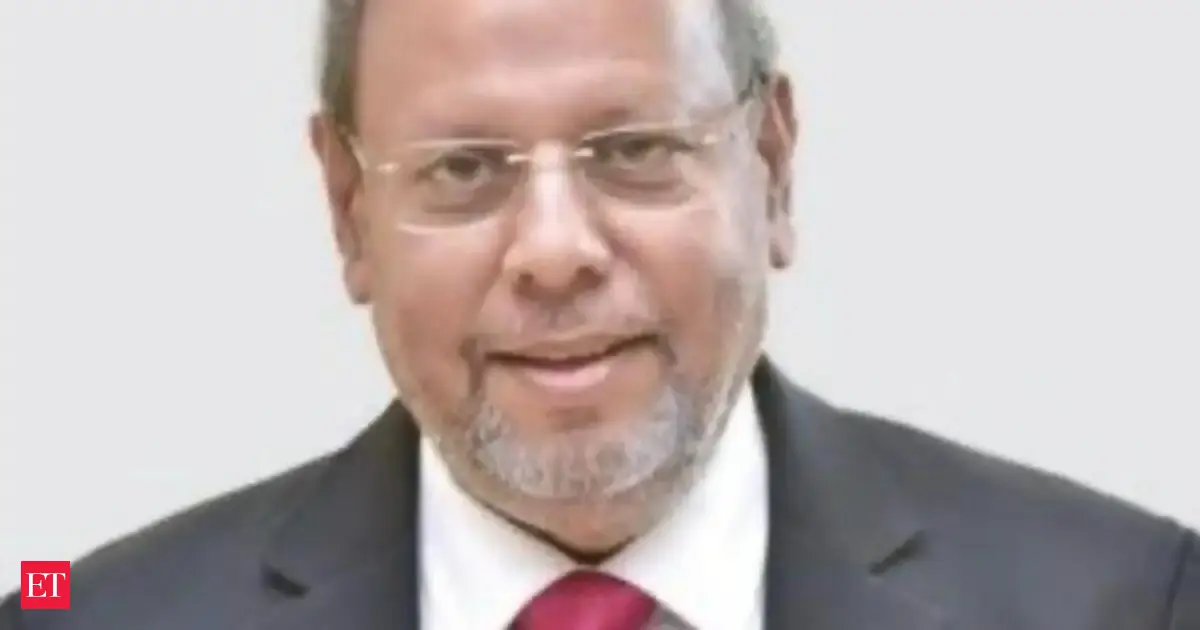
S Mahendra Dev, Chairman of Economic Advisory Council to PM (EAC-PM), advocated income-centric agricultural policies
GK and monthly revision
India needs income-centric agri policies, greater Centre-state coordination: EAC-PM chairman
EAC-PM Chairman S Mahendra Dev emphasized the need for India to shift agricultural policies from production-centric to income-centric approaches, highlighting crop diversification and market reforms as key drivers. He stressed greater Centre-state coordination to implement these reforms effectively, noting that current policies focus excessively on procurement and MSP for few crops. This recommendation aligns with the government's goal of doubling farmers' income and addresses structural issues like fragmented landholdings and market inefficiencies. The statement is significant for exams as it reflects high-level policy thinking on agricultural transformation and cooperative federalism.
Revision structure
Monthly events and exam calendar context
Static GK and one-liner notes
Quiz and mock-test revision path
Key points
Exam-ready takeaways
Emphasized crop diversification and market reforms over production-centric approach
Stressed need for greater Centre-state coordination in agriculture policy implementation
Current policies criticized for over-focus on MSP and procurement for limited crops
Recommendation supports government's target of doubling farmers' income
Detailed analysis
Full exam-oriented breakdown
India's agricultural policy landscape is undergoing a critical paradigm shift, as articulated by S Mahendra Dev, Chairman of the Economic Advisory Council to the Prime Minister (EAC-PM). His call for transitioning from production-centric to income-centric agricultural policies reflects a growing consensus among economists and policymakers that merely increasing output — as achieved during the Green Revolution of the 1960s and 1970s — is no longer sufficient to ensure farmer welfare. The Green Revolution, while successful in making India food-secure through high-yielding varieties of wheat and rice, entrenched a procurement-MSP (Minimum Support Price) regime focused predominantly on these two crops. This has led to skewed cropping patterns, over-exploitation of groundwater in Punjab and Haryana, soil degradation, and fiscal burdens on the Food Corporation of India (FCI), whose buffer stocks often far exceed strategic requirements. The current policy framework, rooted in the Essential Commodities Act, 1955, and the Agricultural Produce Market Committee (APMC) Acts of states, has created fragmented markets and restricted farmer access to better price discovery. The three farm laws enacted in 2020 — later repealed in 2021 after prolonged protests — attempted to address these structural rigidities by enabling barrier-free inter-state trade, contract farming, and deregulation of essential commodities. However, their top-down design and lack of stakeholder consultation undermined cooperative federalism, a principle enshrined in Article 246 and the Seventh Schedule of the Constitution, where agriculture is a State subject (Entry 14, List II), while trade and commerce fall under the Union (Entry 33, List III). This constitutional tension necessitates greater Centre-state coordination, as emphasized by Dev, to design reforms that respect federal balance while addressing national objectives. Crop diversification — shifting from water-intensive paddy and wheat to pulses, oilseeds, millets, horticulture, and livestock — is central to the income-centric vision. India imports nearly 60% of its edible oil and significant quantities of pulses, representing a massive outflow of foreign exchange. Promoting these crops through assured procurement, price support, and value-chain development can reduce import dependency, improve nutritional outcomes (aligned with National Nutrition Mission), and raise farm incomes. The Millet Mission, declared during the International Year of Millets 2023, exemplifies this direction. Market reforms must include strengthening e-NAM (National Agriculture Market), investing in rural infrastructure (cold storage, rural haats under the Agriculture Infrastructure Fund), and enabling Farmer Producer Organizations (FPOs) to achieve economies of scale. The goal of doubling farmers' income by 2022 (set in 2016) remains unmet, underscoring the urgency. With 86% of farmers being small and marginal (operating less than 2 hectares), fragmented landholdings limit bargaining power and access to credit, insurance, and technology. The PM-KISAN scheme (income support of ₹6,000/year), crop insurance (PMFBY), and interest subvention on farm credit are steps toward income security, but they are supplements, not substitutes for structural reform. Looking ahead, the 16th Finance Commission (constituted in 2023) may recommend greater fiscal devolution for agriculture, while NITI Aayog's proposed Model Agricultural Land Leasing Act, 2016, could unlock land markets. Climate resilience — through climate-smart agriculture, micro-irrigation (Per Drop More Crop), and parametric insurance — will be pivotal. Ultimately, an income-centric approach demands a holistic ecosystem: remunerative prices, risk mitigation, market access, and sustainable practices — all requiring sustained political will and cooperative federalism in action.
How to study
Turn news into exam marks
Revise monthly events by exam family instead of reading random updates.
Pair one-liners with mock tests so mistakes become the next revision list.
Keep state job pages, calendar pages and GK packs connected in one path.