

Department for Promotion of Industry and Internal Trade (DPIIT) announced the FDI policy review
GK and monthly revision
Govt opens inventory-based e-commerce to foreign direct investment for exports only
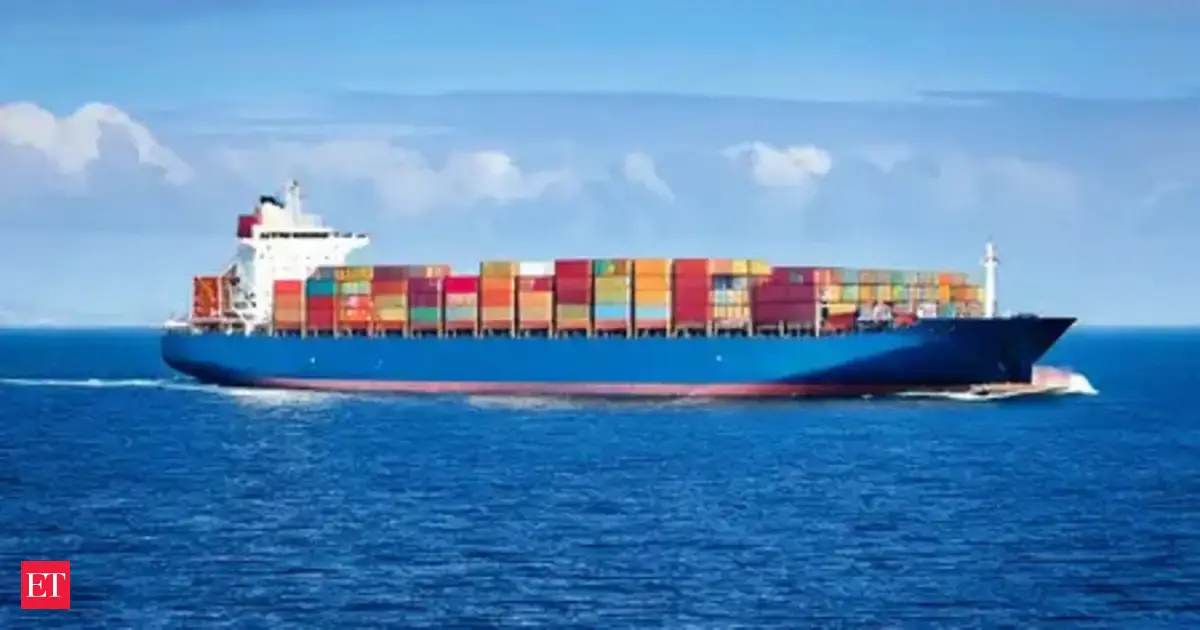
The government has permitted 100% FDI in inventory-based e-commerce models exclusively for exports of Indian manufactured goods. Announced by DPIIT, this policy aims to boost outbound shipments and global market access for domestic sellers while protecting small retailers. The move marks a significant shift from the previous marketplace-only FDI framework and is expected to enhance India's export competitiveness.
Revision structure
Monthly events and exam calendar context
Static GK and one-liner notes
Quiz and mock-test revision path
Key points
Exam-ready takeaways
100% FDI now permitted in inventory-based e-commerce model under automatic route
Policy applies exclusively to export of Indian manufactured goods
Aims to boost India's outbound shipments and global market access for sellers
Designed to not impact small retailers or domestic retail e-commerce space
Detailed analysis
Full exam-oriented breakdown
The Department for Promotion of Industry and Internal Trade (DPIIT) recently announced a landmark policy shift permitting 100% Foreign Direct Investment (FDI) under the automatic route in inventory-based e-commerce models — but exclusively for the export of Indian manufactured goods. This decision marks a significant departure from India's long-standing FDI framework in e-commerce, which since the 2016 Consolidated FDI Policy had restricted foreign investment to the marketplace model only, explicitly prohibiting inventory-based models where the e-commerce entity owns the goods sold on its platform. The rationale then was to protect small retailers and kirana stores from predatory pricing and deep discounting by deep-pocketed foreign players like Amazon and Walmart-owned Flipkart. Now, the government has carved out a targeted exception: foreign investors can hold inventory, but only for goods manufactured in India and destined for export markets. This policy evolution reflects a nuanced balancing act. On one hand, India remains committed to protecting its vast unorganized retail sector — employing over 40 million people — which falls under the broader directive principles of state policy, particularly Article 39(c) that seeks to prevent concentration of wealth and means of production. On the other, the government recognizes that to achieve the $1 trillion merchandise export target by 2030 (up from ~$450 billion in FY24), Indian manufacturers — especially MSMEs — need efficient global market access, logistics integration, and branding support that large foreign e-commerce players can provide. The move aligns with the 'Make in India' initiative (launched 2014) and the Foreign Trade Policy 2023, which emphasizes e-commerce exports as a key growth driver. Key stakeholders include DPIIT (the nodal body for FDI policy), the Ministry of Commerce and Industry, foreign e-commerce giants (Amazon Global Selling, eBay, Alibaba.com), Indian MSMEs, and domestic retail associations like CAIT. For foreign platforms, this opens a legal pathway to build export-oriented fulfillment centers in India — something they've long sought. For Indian sellers, especially in clusters like Moradabad (brassware), Tirupur (textiles), and Surat (diamonds), this could mean better discovery, lower logistics costs, and access to global buyers without intermediaries. Constitutionally, FDI policy flows from the Union's executive power under Article 73, read with the Foreign Exchange Management Act (FEMA), 1999, and the FDI Policy Circulars issued by DPIIT under FEMA regulations. The automatic route means no prior government approval is needed — only post-facto reporting to RBI. This reduces entry barriers significantly. The broader significance lies in export-led growth strategy. With global supply chains diversifying away from China (China+1 strategy), India has a window to capture manufacturing and export share. E-commerce exports — currently just $2-3 billion annually — could scale to $200-300 billion by 2030 per industry estimates. This also supports the Production Linked Incentive (PLI) schemes by creating demand pull for Indian-made goods. However, risks remain. Strict monitoring is essential to ensure no 'backdoor' entry into domestic B2C retail — a concern raised by CAIT. The policy must define 'Indian manufactured goods' clearly (likely using domestic value addition norms) and prevent re-routing of imported goods. Future implications include potential WTO scrutiny if seen as export subsidy, and the need for robust digital infrastructure (like the Open Network for Digital Commerce - ONDC) to ensure fair access. Ultimately, this is a calibrated reform: opening the door for capital and technology in exports, while keeping the domestic retail door firmly shut — a pragmatic example of 'Atmanirbhar Bharat' engaging with globalization on India's terms.
How to study
Turn news into exam marks
Revise monthly events by exam family instead of reading random updates.
Pair one-liners with mock tests so mistakes become the next revision list.
Keep state job pages, calendar pages and GK packs connected in one path.