

US President Trump announced a two-year duty-free window for generic drug imports before imposing steep tariffs
GK and monthly revision
Trump's Generic Drug Tariffs Explained: What it means for Indian pharma before the 200% storm
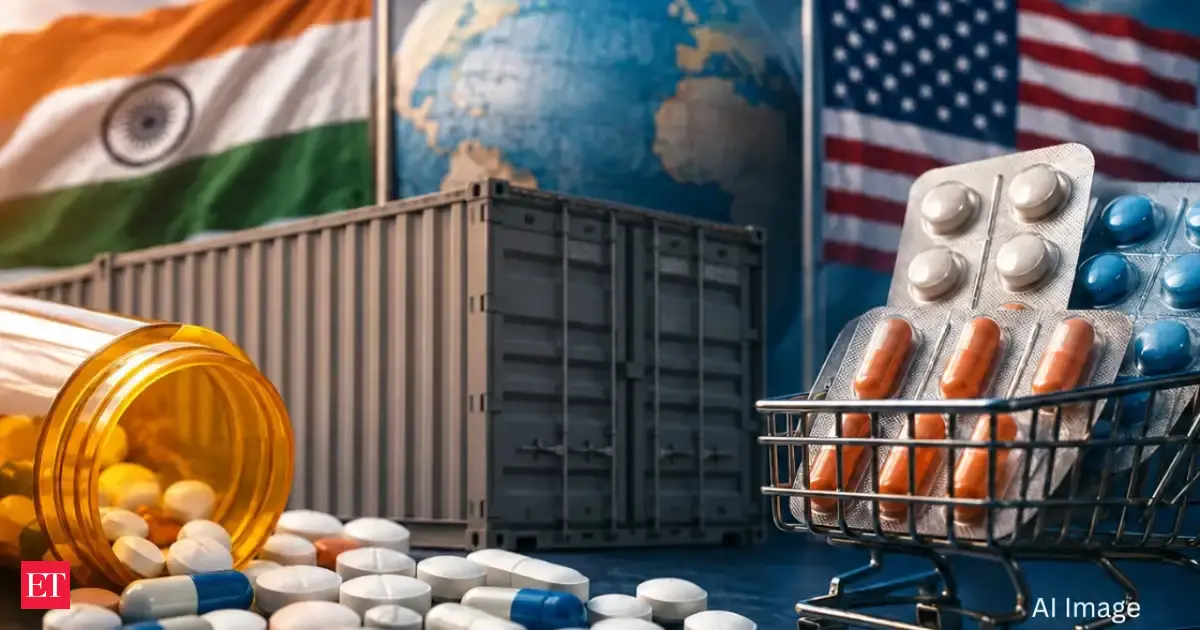
US President Trump announced a two-year duty-free window for generic drug imports, after which tariffs could escalate up to 200%. This gives Indian pharma companies time to restructure supply chains and expand US manufacturing. India is the largest supplier of generic drugs to the US, making this policy shift critical for export economics and strategic planning.
Revision structure
Monthly events and exam calendar context
Static GK and one-liner notes
Quiz and mock-test revision path
Key points
Exam-ready takeaways
After the two-year period, tariffs on generic drugs could escalate up to 200%
India is the largest supplier of generic medicines to the US market
Several Indian pharmaceutical firms already operate manufacturing facilities in the US for strategic flexibility
The policy shift will significantly impact export economics and supply chain strategies of Indian drugmakers
Detailed analysis
Full exam-oriented breakdown
The announcement by former US President Donald Trump regarding a two-year duty-free window for generic drug imports, followed by potential tariffs escalating up to 200%, marks a pivotal moment in India-US pharmaceutical trade relations. To understand the gravity of this development, we must first appreciate the historical context: India has long been hailed as the 'pharmacy of the world,' supplying over 40% of generic drug demand in the United States by volume. This dominance stems from India's robust manufacturing ecosystem, cost advantages, and compliance with stringent US FDA standards — a reputation built over decades since the 1970 Indian Patents Act, which allowed process patents and enabled reverse engineering of life-saving drugs. The current policy shift, therefore, is not merely a trade measure but a strategic recalibration by the US to reduce dependency on foreign supply chains, especially after the vulnerabilities exposed during the COVID-19 pandemic. Key stakeholders include Indian pharmaceutical giants like Sun Pharma, Dr. Reddy's Laboratories, Cipla, Aurobindo Pharma, and Lupin, which derive 30-50% of their revenues from the US market. These firms have already invested in US manufacturing facilities — Sun Pharma in Michigan, Dr. Reddy's in New York, and Cipla in Florida — as hedging strategies against regulatory and trade uncertainties. The US government, driven by 'America First' industrial policy and national security concerns over drug supply resilience, is the primary architect. Meanwhile, the Indian government, through the Department of Pharmaceuticals under the Ministry of Chemicals and Fertilizers, and the Commerce Ministry, must navigate this challenge within the framework of WTO commitments and the India-US Trade Policy Forum. For India, the economic stakes are enormous. Pharmaceutical exports to the US stood at approximately $8.7 billion in FY2023-24, constituting a significant share of India's total pharma exports of $25.4 billion. A 200% tariff would render Indian generics uncompetitive, threatening thousands of jobs and undermining the Production Linked Incentive (PLI) scheme for pharmaceuticals, which aims to boost domestic manufacturing of key starting materials (KSMs) and active pharmaceutical ingredients (APIs). Constitutionally, this intersects with Article 246 (Union List entries on foreign trade and industries) and Article 253 (legislation for implementing international agreements), empowering the Centre to negotiate trade terms. The policy also tests India's Atmanirbhar Bharat vision — reducing API import dependence from China while expanding global footprint. Broader themes include the shifting paradigm of global trade from multilateralism to bilateralism and strategic autonomy. The move reflects a growing trend of 'friend-shoring' and supply chain securitization, where economic efficiency is subordinated to geopolitical reliability. India must leverage its G20 presidency legacy, the Quad framework, and the Indo-Pacific Economic Framework (IPEF) to negotiate equitable terms. Future implications hinge on the next two years: Indian firms will likely accelerate US capacity expansion, pursue complex generics and biosimilars for higher margins, and deepen R&D investments. Simultaneously, India may push for a bilateral trade agreement (BTA) with the US to lock in market access. For aspirants, this case exemplifies the interplay of trade policy, industrial strategy, constitutional federalism, and international diplomacy — a microcosm of 21st-century economic statecraft.
How to study
Turn news into exam marks
Revise monthly events by exam family instead of reading random updates.
Pair one-liners with mock tests so mistakes become the next revision list.
Keep state job pages, calendar pages and GK packs connected in one path.