

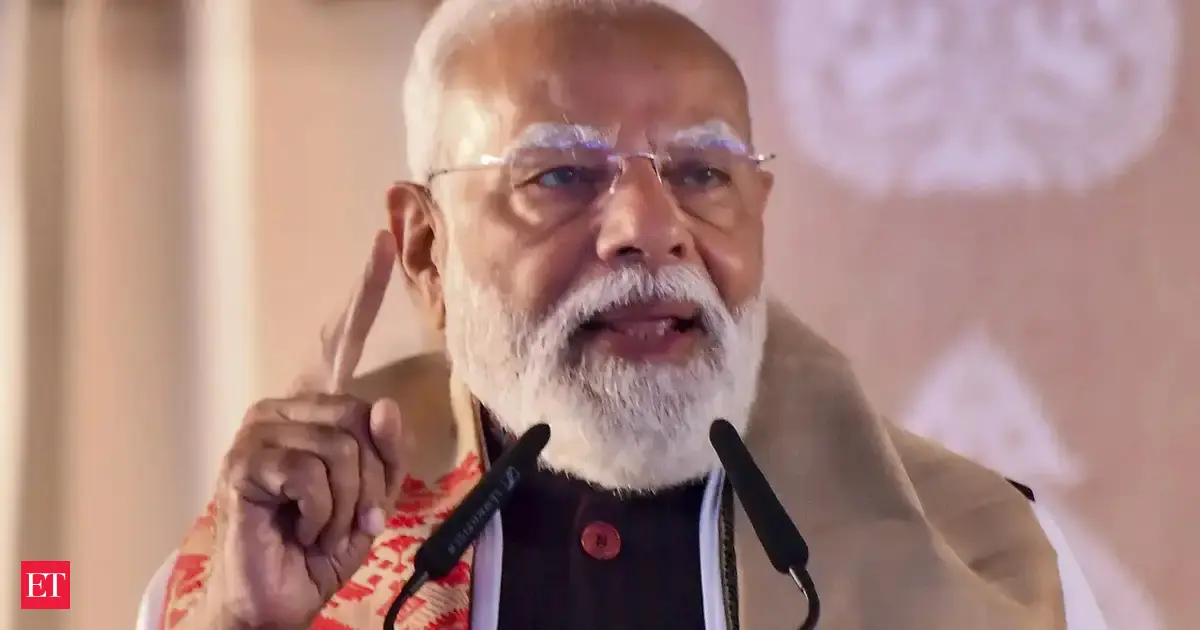
PM Narendra Modi announced India-UK CETA and Social Security Agreement on Wednesday
GK and monthly revision
India-UK CETA to give fresh momentum to farmers, MSMEs and entrepreneurs, says PM Modi
Prime Minister Narendra Modi announced that the India-UK Comprehensive Economic and Trade Agreement (CETA) and Social Security Agreement mark a major milestone in bilateral relations. The agreements aim to strengthen economic ties, create new opportunities for businesses and skilled professionals, and provide fresh momentum to farmers, MSMEs, and entrepreneurs. This development is significant for exam preparation as it covers international trade agreements, bilateral diplomacy, and economic policy — key topics in UPSC, SSC, Banking, and other competitive exams.
Revision structure
Monthly events and exam calendar context
Static GK and one-liner notes
Quiz and mock-test revision path
Key points
Exam-ready takeaways
Agreements aim to strengthen bilateral economic ties and create opportunities for businesses
Focus on benefiting farmers, MSMEs, and entrepreneurs in India
Social Security Agreement to facilitate movement of skilled professionals between both nations
CETA covers comprehensive trade in goods, services, and investment cooperation
Detailed analysis
Full exam-oriented breakdown
Prime Minister Narendra Modi's announcement of the India-UK Comprehensive Economic and Trade Agreement (CETA) and Social Security Agreement marks a transformative milestone in India's post-Brexit diplomatic and economic strategy. To understand the magnitude of this development, we must first trace the historical trajectory of India-UK relations. After India's independence in 1947, economic ties remained modest, constrained by India's inward-looking socialist policies and UK's European orientation. The liberalization of 1991 opened new avenues, but it was the UK's exit from the European Union in 2020 that created a strategic window for a bilateral trade framework unshackled from EU common commercial policy. Negotiations for CETA formally launched in January 2022, spanning 14 rounds of intense talks covering goods, services, investment, intellectual property, digital trade, and sustainable development. The agreement's conclusion in 2024 reflects a recalibration of India's trade diplomacy — moving from defensive protectionism to proactive engagement with high-value partners. Key stakeholders span multiple domains. For India, the Ministry of Commerce and Industry, led by Minister Piyush Goyal, spearheaded negotiations, while the Ministry of External Affairs managed diplomatic coordination. British stakeholders include the Department for Business and Trade under Kemi Badenoch, and UK industry bodies like CBI and FSB. Domestically, Indian farmers gain market access for agricultural products like basmati rice, tea, spices, and processed foods — critical given that agriculture employs 42% of India's workforce but contributes only 18% to GDP. MSMEs, which constitute 99% of Indian enterprises and contribute 30% to GDP, stand to benefit from reduced tariffs on engineering goods, textiles, leather, and gems & jewellery — sectors where India enjoys comparative advantage. Entrepreneurs in fintech, edtech, healthtech, and IT services gain from mutual recognition agreements and eased data flow provisions. The Social Security Agreement addresses a long-standing irritant: Indian professionals in the UK (estimated at 300,000+) and British workers in India will avoid double social security contributions, enhancing labor mobility and remittance flows — India received $125 billion in remittances in 2023, the highest globally. Constitutionally, Article 246 read with Entry 41 of the Union List (trade and commerce with foreign countries) empowers Parliament to legislate on international trade agreements. Article 253 enables implementation of international treaties through domestic legislation. The Foreign Trade (Development and Regulation) Act, 1992, and the Customs Act, 1962, provide the statutory backbone for tariff concessions under CETA. The agreement also aligns with India's Atmanirbhar Bharat vision by integrating domestic manufacturing into global value chains, and supports the Production Linked Incentive (PLI) schemes in sectors like electronics, pharmaceuticals, and telecom. Strategically, CETA elevates India-UK relations beyond the Commonwealth framework into a 21st-century comprehensive partnership. It complements the India-UK Roadmap 2030, covering defense, climate, science, and people-to-people ties. Geopolitically, it signals India's deepening engagement with Western democracies amid shifting global supply chains — a hedge over-reliance on any single bloc. The agreement includes robust labor and environment chapters, reflecting India's growing comfort with sustainable development conditionalities, a shift from its historical resistance at WTO. Future implications are profound. CETA could serve as a template for ongoing negotiations with the EU, Canada, and EFTA. Successful implementation may boost India's goods exports to UK from $10.5 billion (2023) to $20 billion by 2030. However, challenges remain: non-tariff barriers, rules of origin compliance, and domestic regulatory harmonization. For aspirants, this case study encapsulates the interplay of constitutional federalism, trade diplomacy, economic reform, and geopolitical strategy — a microcosm of New India's global aspirations.
How to study
Turn news into exam marks
Revise monthly events by exam family instead of reading random updates.
Pair one-liners with mock tests so mistakes become the next revision list.
Keep state job pages, calendar pages and GK packs connected in one path.