

Retail prices of rice, oilseeds, and major pulses rose in June 2024 due to reduced Kharif sowing
GK and monthly revision
Rice, oilseed, pulses prices rise as Kharif crop sowing declines
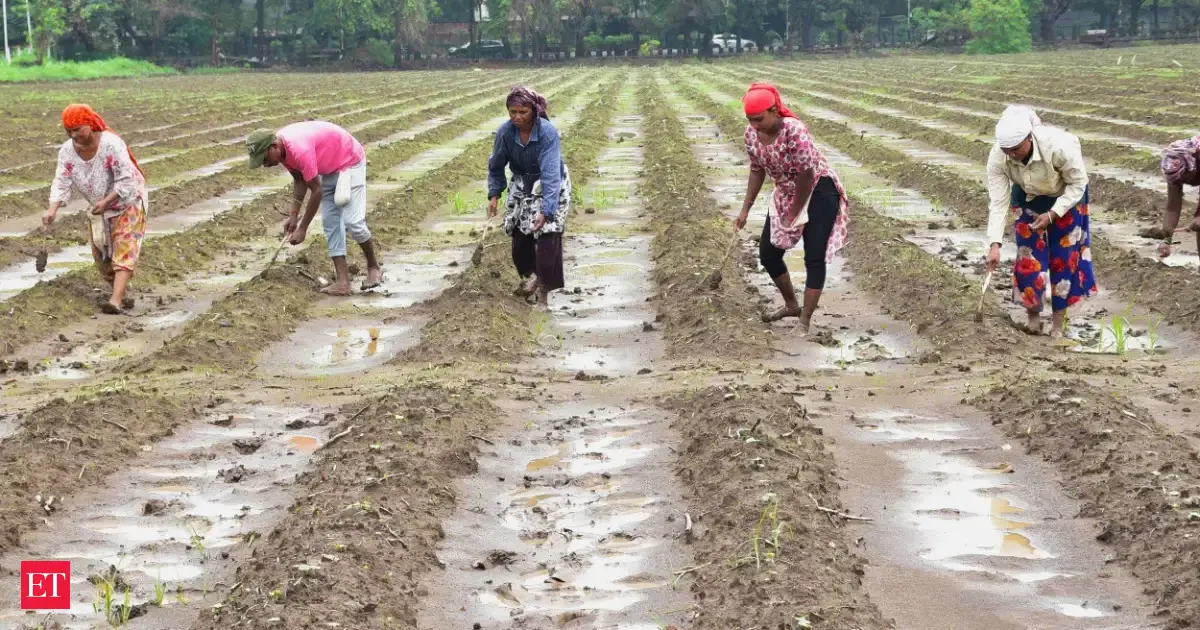
Retail prices of rice, oilseeds, and major pulses surged in June 2024 due to a significant decline in Kharif crop sowing acreage compared to the previous year. Below-normal rainfall has intensified concerns over future crop availability, while traders holding back produce have further restricted supply, driving inflationary pressures. This development is critical for exams as it directly links to food inflation trends, agricultural policy responses, and RBI's monetary policy considerations, making it highly relevant for economy and agriculture sections.
Revision structure
Monthly events and exam calendar context
Static GK and one-liner notes
Quiz and mock-test revision path
Key points
Exam-ready takeaways
Kharif crop acreage declined significantly in 2024 compared to 2023
Below-normal rainfall in 2024 monsoon season worsened crop availability concerns
Traders holding produce limited market supply, contributing to price rise
Food inflation spike may influence RBI's monetary policy and government procurement decisions
Detailed analysis
Full exam-oriented breakdown
The surge in retail prices of rice, oilseeds, and major pulses in June 2024 reflects a deepening structural vulnerability in India's agricultural supply chain, triggered by a significant decline in Kharif sowing acreage compared to 2023. This development is not merely a seasonal fluctuation but a symptom of converging climatic, economic, and policy challenges. The 2024 southwest monsoon arrived late and progressed sluggishly, with the India Meteorological Department (IMD) reporting below-normal rainfall in critical sowing weeks across central and peninsular India — regions that dominate production of paddy, soybean, groundnut, tur, and urad. As a result, farmers delayed or reduced planting, leading to a measurable drop in sown area by mid-July 2024, as confirmed by the Ministry of Agriculture & Farmers' Welfare's weekly sowing reports. Historically, Kharif crops account for nearly 50% of India's annual foodgrain output, making their performance pivotal to national food security and inflation dynamics. The current price spike echoes the 2015-16 and 2018-19 episodes when deficient monsoons led to double-digit food inflation, prompting RBI to maintain a hawkish stance. Under the Flexible Inflation Targeting Framework (FITF), adopted in 2016 under the amended RBI Act, 1934, the central bank is mandated to keep CPI inflation at 4% (±2%). Persistent food inflation — which carries a 45.86% weight in the CPI-Combined index — directly constrains monetary policy space, delaying rate cuts even when core inflation moderates. Key stakeholders include small and marginal farmers (constituting 86% of holdings per Agriculture Census 2015-16), who face input cost volatility and climate risk; traders and aggregators, accused of hoarding under the Essential Commodities Act, 1955 (amended in 2020 to deregulate cereals, pulses, oilseeds, onions, and potatoes — though stock limits can be reimposed under extraordinary circumstances); and the government, which must balance procurement for the National Food Security Act (NFSA), 2013 — covering 81.35 crore beneficiaries — with open market operations to cool prices. The Food Corporation of India (FCI) and NAFED play crucial roles in buffer stock management, but their effectiveness depends on timely procurement, which shrinks when market prices exceed Minimum Support Prices (MSP). Constitutionally, agriculture falls under the State List (Entry 14, List II, Seventh Schedule), but the Centre wields influence through trade, commerce, and price control (Entries 33, 34, List III). The NFSA, 2013 derives from Article 21 (Right to Life) and Directive Principles (Articles 39, 47), making food security a justiciable obligation. Any sustained price rise risks litigation and political backlash, as seen in 2008 and 2013. Broader themes link this to climate resilience — India's National Action Plan on Climate Change (NAPCC) and the National Mission for Sustainable Agriculture (NMSA) — and global food systems, as India is the world's largest rice exporter (21.5 MMT in FY24). Export restrictions on non-basmati rice (imposed July 2023, extended 2024) reflect domestic priority over WTO commitments, inviting trade tensions. Future implications are significant: if the 2024 monsoon deficit persists, the government may impose stock limits, ban futures trading (as done for chana in 2021), or release buffer stocks. RBI's August 2024 MPC meeting will closely watch July CPI data. For aspirants, this episode underscores the interplay of monsoon economics, federalism, inflation targeting, and social protection — a microcosm of India's development challenge.
How to study
Turn news into exam marks
Revise monthly events by exam family instead of reading random updates.
Pair one-liners with mock tests so mistakes become the next revision list.
Keep state job pages, calendar pages and GK packs connected in one path.