

India and EU to soon finish legal scrubbing of trade pact text — Commerce Minister Piyush Goyal
GK and monthly revision
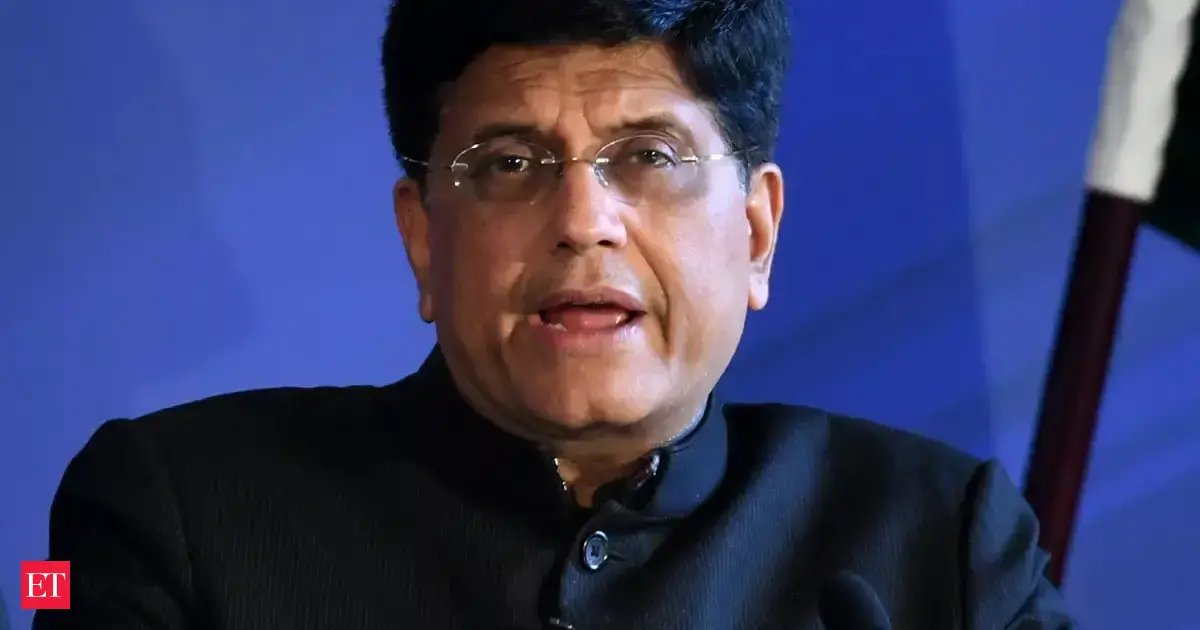
India, EU to soon finish legal scrubbing of trade pact text: Commerce and Industry Minister Piyush Goyal
India and the EU are nearing completion of legal scrubbing for their proposed trade agreement, which will become operational a few months after the India-UK FTA. Commerce Minister Piyush Goyal confirmed full support from all EU member states and highlighted a tenfold target for India-Spain trade, tourism, and investments over the next decade. This development signals deepening economic ties with Europe and is significant for questions on international trade agreements, bilateral relations, and economic diplomacy in competitive exams.
Revision structure
Monthly events and exam calendar context
Static GK and one-liner notes
Quiz and mock-test revision path
Key points
Exam-ready takeaways
India-EU trade agreement to become operational a few months after India-UK FTA
All EU member states fully support the India-EU partnership — Piyush Goyal
India and Spain aim to increase bilateral trade, tourism, and investments tenfold over ten years
Piyush Goyal is the Union Minister of Commerce and Industry
Detailed analysis
Full exam-oriented breakdown
India's pursuit of a comprehensive Free Trade Agreement (FTA) with the European Union (EU) represents one of the most significant economic diplomacy initiatives in recent years. The announcement by Union Minister of Commerce and Industry, Piyush Goyal, that legal scrubbing of the trade pact text is nearing completion marks a crucial milestone in negotiations that have spanned over a decade. The India-EU FTA talks were formally launched in June 2007 but stalled in 2013 due to differences over intellectual property rights, automotive tariffs, and agricultural market access. They were relaunched in June 2022 during the visit of European Commission President Ursula von der Leyen to India, reflecting renewed political will on both sides. The legal scrubbing phase involves meticulous review of the negotiated text by legal experts from both sides to ensure clarity, consistency, and enforceability of provisions — a standard but critical step before formal signing and ratification. The strategic sequencing mentioned by Minister Goyal — that the India-EU FTA will become operational a few months after the India-UK FTA — reveals important diplomatic choreography. The India-UK FTA negotiations, launched in January 2022, have progressed rapidly with multiple rounds completed. As the UK is no longer an EU member post-Brexit (January 31, 2020), India is negotiating separately with both entities, but the EU remains India's third-largest trading partner (after the US and China), with bilateral trade in goods reaching €120 billion in 2023. The EU is also India's largest source of foreign direct investment (FDI), with cumulative inflows exceeding $100 billion since 2000. A comprehensive FTA could unlock significant gains: studies by the European Commission and Indian think tanks estimate potential GDP increases of 1.5-2% for India and 0.5% for the EU over the long term. Key stakeholders include the European Commission (negotiating on behalf of 27 member states), India's Ministry of Commerce and Industry, sectoral ministries (Agriculture, Pharmaceuticals, Automobiles, IT/Services), and domestic industry associations like CII, FICCI, and ASSOCHAM. Sensitive areas include EU demands for greater market access in automobiles (current tariffs up to 125%), wines and spirits, and dairy products, while India seeks liberalization in Mode 4 services (movement of professionals), data adequacy status under GDPR, and recognition as a 'data secure' nation — critical for its $250+ billion IT services sector. The Minister's statement that "all EU member states fully support this partnership" is politically significant, as earlier negotiations were hampered by divergent national positions within the EU, particularly from France and Germany on agricultural subsidies and industrial tariffs. Constitutionally, Article 246 read with Entry 41 of the Union List (Seventh Schedule) empowers Parliament to legislate on "trade and commerce with foreign countries," while Article 253 enables implementation of international treaties. The FTA will require parliamentary approval under Article 110 (Money Bill provisions if tariff changes involve revenue implications) and likely ratification via a resolution under Article 253. The Foreign Trade (Development and Regulation) Act, 1992, and the Customs Act, 1962, provide the statutory framework for implementing tariff concessions. The India-Spain dimension adds a fascinating bilateral layer. Spain is India's seventh-largest trading partner within the EU, with bilateral trade at €8.5 billion (2023). The tenfold target over ten years — while ambitious — aligns with Spain's growing strategic interest in India as a manufacturing and digital hub. Spanish companies like Inditex (Zara), Telefonica, and Acciona have significant Indian operations, while Indian IT firms (TCS, Infosys, Wipro) employ thousands in Spain. Enhanced tourism and investment flows could be facilitated by improved air connectivity and Spain's Golden Visa program. Broader themes include India's 'Act East' and 'Neighbourhood First' policies now complemented by a proactive 'Engage Europe' strategy. The FTA supports India's goal of becoming a $5 trillion economy and a trusted node in global supply chains (China+1 strategy). It also intersects with the India-EU Trade and Technology Council (TTC), launched in 2023, covering digital governance, green hydrogen, and resilient supply chains. Future implications: Once legal scrubbing concludes, the text will go for translation into all 24 EU official languages, followed by signature, European Parliament consent, and Council adoption (qualified majority voting). In India, Cabinet approval and parliamentary scrutiny will follow. Operationalization by late 2025 or early 2026 is plausible. Success could catalyze similar agreements with other blocs (EFTA, GCC, RCEP review) and strengthen India's bargaining power in WTO reform debates. For aspirants, this exemplifies the interplay of constitutional law, international economics, and diplomatic strategy in shaping India's global engagement.
How to study
Turn news into exam marks
Revise monthly events by exam family instead of reading random updates.
Pair one-liners with mock tests so mistakes become the next revision list.
Keep state job pages, calendar pages and GK packs connected in one path.