

BSE plans to launch new monthly index option products.
GK and monthly revision
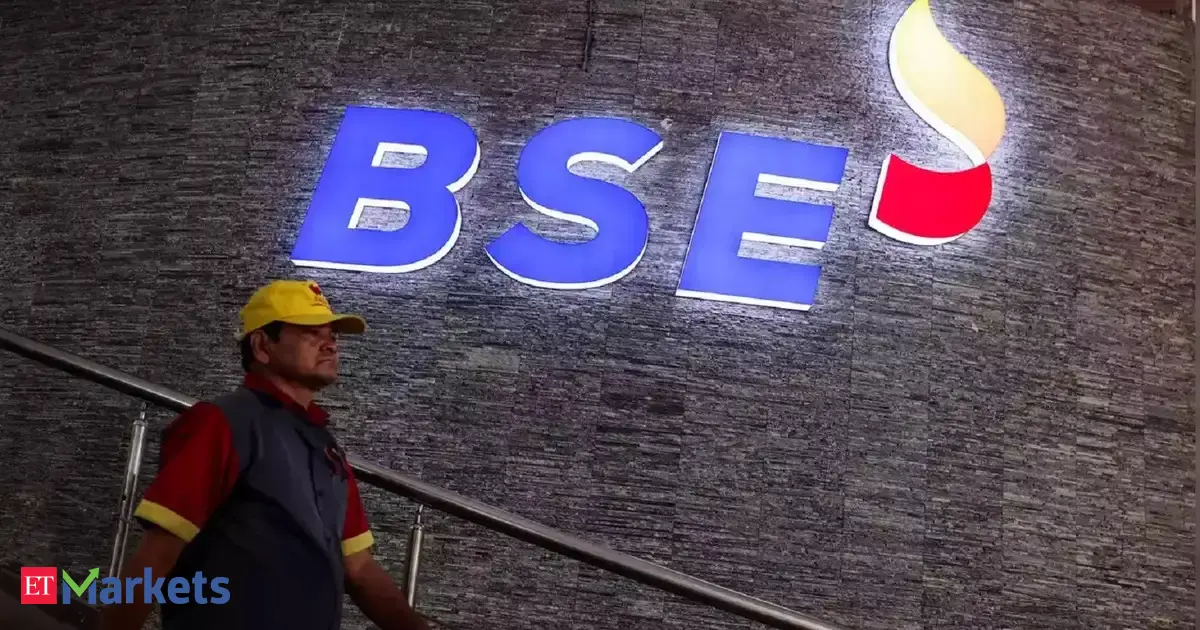
BSE shares jump 3% on plans to launch new monthly index options, revamp Bankex
BSE plans to launch new monthly index option products and revamp its Bankex index. This strategic move aims to boost BSE's derivatives market share beyond weekly expiries. The exchange is betting on cheaper monthly options and improved liquidity to attract more traders, making it a significant development in India's financial markets for competitive exams.
Revision structure
Monthly events and exam calendar context
Static GK and one-liner notes
Quiz and mock-test revision path
Key points
Exam-ready takeaways
BSE intends to revamp its existing Bankex index.
The primary objective is to boost BSE's derivatives market share.
The strategy involves offering cheaper monthly options to traders.
The move aims to improve liquidity and deepen trader participation in BSE's derivatives segment.
Detailed analysis
Full exam-oriented breakdown
India's financial markets are dynamic, constantly evolving to meet the needs of investors and economic growth. The recent announcement by the Bombay Stock Exchange (BSE) to launch new monthly index option products and revamp its Bankex index is a significant strategic move that underscores this evolution. To truly grasp its importance, we must delve into the intricate layers of India's financial landscape. **Background Context: India's Exchange Landscape and Derivatives Market** To understand BSE's current strategy, it's crucial to appreciate the historical context of India's stock exchanges and the growth of its derivatives market. The BSE, established in 1875 as 'The Native Share & Stock Brokers' Association', is Asia's oldest stock exchange. For decades, it was the dominant player. However, with the advent of the National Stock Exchange (NSE) in 1992, particularly its early adoption of electronic trading and a robust derivatives segment, the market dynamics shifted significantly. The derivatives market in India, which includes instruments like futures and options, was formally introduced in the early 2000s, following the recommendations of committees like the L.C. Gupta Committee. These instruments allow investors to hedge risks, speculate on price movements, and enhance returns. While both exchanges offer cash equity trading, the NSE has historically commanded a substantial lead in the derivatives segment, especially with its Nifty50 index options and futures. BSE's previous attempts to capture a larger share of the derivatives market, including launching Sensex options and weekly expiries, have met with limited success against NSE's entrenched dominance. This new initiative is a renewed effort to challenge the status quo, aiming to carve out a niche by offering differentiated products and improved liquidity. **What Happened: BSE's Strategic Play** The core of the news is BSE's two-pronged strategy: first, the introduction of new monthly index option products, and second, the revamp of its existing Bankex index. Currently, BSE primarily offers weekly options, which cater to short-term trading strategies. Monthly options, by contrast, offer a longer expiry period, making them potentially cheaper per unit of time and suitable for traders with different investment horizons and hedging needs. This move is designed to attract a broader base of traders who might find weekly expiries too volatile or too frequent for their strategies. The revamp of the Bankex index is equally strategic. The Bankex is BSE's sectoral index for banking stocks. By revamping it, BSE aims to make it more representative, liquid, and attractive for traders who wish to take positions specifically on the performance of the banking sector, a critical component of the Indian economy. The ultimate objective is to boost BSE's derivatives market share by fostering deeper trader participation through enhanced product offerings and improved liquidity. **Key Stakeholders Involved** Several key stakeholders are directly impacted by this development: 1. **BSE (Bombay Stock Exchange):** As the initiator, BSE is betting on this strategy to rejuvenate its derivatives segment and increase its overall market share and revenues. 2. **SEBI (Securities and Exchange Board of India):** As the primary regulator of India's securities market (established under the SEBI Act, 1992), SEBI plays a crucial role. Any new product launch or significant market change requires SEBI's approval to ensure market integrity, investor protection, and systemic stability. 3. **Traders and Investors:** Both retail and institutional traders will be the direct beneficiaries or users of these new products. They will have more choices, potentially cheaper options, and improved liquidity for their trading and hedging strategies. 4. **Brokerage Firms:** These firms facilitate trading on the exchanges. Increased activity on BSE's derivatives platform would mean more business for them. 5. **National Stock Exchange (NSE):** As BSE's primary competitor, NSE will closely monitor these developments. Increased competition from BSE might prompt NSE to innovate further or adjust its own offerings. 6. **Indian Banks:** The revamp of the Bankex index directly impacts the visibility and tradability of derivatives based on the banking sector, affecting how investors perceive and interact with these financial institutions. **Significance for India and Future Implications** This move holds significant implications for India's financial markets and broader economy. Firstly, it fosters **healthy competition** between exchanges, which is crucial for market efficiency. Greater competition often leads to innovation, lower transaction costs, and better services for market participants. Secondly, it contributes to the **deepening of India's financial markets**. By offering a wider array of derivatives products with different expiries, BSE is enhancing the sophistication and breadth of available financial instruments, allowing for more nuanced risk management and investment strategies. This is vital for capital formation and efficient allocation of resources within the economy. From an economic perspective, a robust and diverse derivatives market is essential for hedging against market volatility, which can protect businesses and investors from adverse price movements. The banking sector, represented by Bankex, is the backbone of the Indian economy. Enhanced derivatives trading around this sector could provide better price discovery and risk transfer mechanisms for financial institutions. Looking ahead, if BSE's strategy proves successful, we might witness a shift in derivatives market share, potentially challenging NSE's long-standing dominance. This could lead to a more balanced market structure. However, the path to success involves significant efforts in market outreach, technological infrastructure, and consistent liquidity provision. Regulatory oversight by SEBI will remain paramount to prevent any market manipulation or systemic risks arising from increased derivatives activity. This initiative aligns with India's broader goal of strengthening its position as a global financial hub, attracting both domestic and international capital. **Related Constitutional Articles, Acts, or Policies** While this specific news doesn't directly invoke a constitutional article, the underlying regulatory framework is firmly rooted in the Indian legal system. The power to legislate on 'Stock Exchanges and Futures Markets' falls under **Entry 48 of the Union List in the Seventh Schedule** of the Constitution of India, granting the Parliament exclusive authority. This power manifests through key legislations: * **Securities Contracts (Regulation) Act, 1956 (SCRA):** This Act provides the legal framework for the regulation of stock exchanges and contracts in securities. It defines what constitutes a 'security' and regulates dealings in securities, including derivatives. * **Securities and Exchange Board of India Act, 1992 (SEBI Act):** This Act established SEBI as the statutory regulatory body for the securities market. SEBI's powers include regulating the business in stock exchanges, registering and regulating various market intermediaries, prohibiting fraudulent and unfair trade practices, and promoting investor education. All new product launches by exchanges like BSE must comply with SEBI regulations and often require its explicit approval. These acts ensure that the expansion and innovation in India's financial markets occur within a robust and supervised environment, safeguarding investor interests and maintaining market integrity.
How to study
Turn news into exam marks
Revise monthly events by exam family instead of reading random updates.
Pair one-liners with mock tests so mistakes become the next revision list.
Keep state job pages, calendar pages and GK packs connected in one path.